
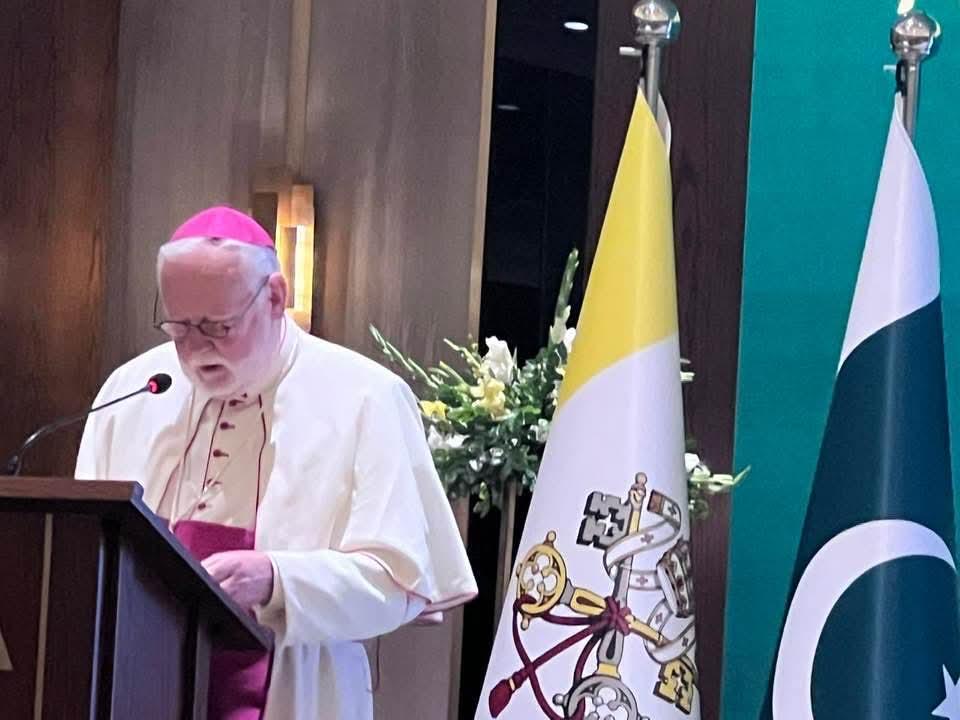
Pakistan: Archbishop Paul Richard Gallagher of the Holy See is visiting Pakistan to mark the 75th anniversary of the establishment of diplomatic re
3rd Anniversary of Nawab Akbar Bugti marked with protest by Baluch in USA.

WASHINGTON DC: August 27, 2009. (Ahmar Mustikhan) The third death anniversary of a Baluch statesman who was killed on the orders of a Pakistani dictator and coup plotter was observed as "Down with Pakistan" day in the U.S. capital Wednesday.
Nawab Akbar Khan Bugti, 79, former governor and chief minister of Baluchistan, who was lovingly called the Tiger of Baluchistan, was killed on August 26, 2006, on the orders of Pakistan's last military ruler General Pervez Musharraf.
The protest in Washington D.C. was organized by the pro-liberation American Friends of Baluchistan.
A.F.B. activists began their protest early Wednesday in front of the Woodrow Wilson International Center for Scholars, where Muslim Lakhani, who had heaped praise on the military regime of Musharraf is a council member.
The A.F.B. shamed Lakhani in a handbill that read "Looters can't be philanthropists."
Under the tutelage of Musharraf regime, while the Pakistani soldiers were busy in the army operation that saw Bugti annihilated, Lakhani had transferred one of the largest copper and gold deposits in the world at Reko Diq in his company's name – though he had no prior experience in gold and copper mining -- and later sold it to Barrick Gold Corporation of Canada and Antofagasta of Chile.
"This innovative project shared its profits with the Balochi people in a manner that made its presence welcome in the region," Lakhani's profile on the Woodrow Wilson site says, but a case is pending against him in Pakistan's Supreme Court over the controversial sale of the gold and copper mines as it was widely deemed as detrimental to Baluchistan interests.
"There is no such thing as Balochi people. Balochi is the language of the Baloch [also spelled Baluch] people," an A.F.B. worker told a local radi channel in Washington DC. "It's a shame someone who does not know the proper name of the Baluch, ganged up with the Pakistani occupation forces to make a windfall at Reko Diq."
Lakhani, who came to the US in 2006, donated more than $82,000 to the ruling Democratic Party in the U.S. and last year sponsored the visit of five Pakistani journalists – two of them brothers of military spokesman Major General Athar Abbas.
The Karachi-based journalists, among other things, discussed the challenges in reporting from tribal areas.
The A.F.B. handbill was based on a report by Basque journalist, Karlos Zurutuza, and elaborated the abject poverty of the Baluch and violation of their basic human rights under Pakistani military thumb.
hough Lakhani boasts his controversial sale of the gold and copper mines as a development, locals from Reko Diq provided the A.F.B. with a list of 42 persons in the administration of the mining company none of whom is a Baluch.
Later an A.F.B. activist toured downtown DC with a banner "DOWN WITH PAKISTAN" and was cheered by motorists in the American capital. Many U.S. citizens feel their government is not doing enough to check Pakistan over its army's role in the spread of global Islamic terrorism.
Some D.C. residents took pictures of the protest with their cell phones.
In an interview with a local radio network reporter Pete Tucker, an A.F.B. worker narrated the story of blood and tears of
Baluchistan since its forced annexation by Pakistan on March 27, 1948 – more than seven months after the British left India divided in August 1947.
Musharraf had called the Baluch leaders pygmies and said they would be hit in a manner they won't even know. After the killing of Bugti, the army killed another major leader Bala'ach Marri on November 20, 2007, among more than 3,000 victims of war.
In April this year, the army killed three other nationalist leaders Ghulam Mohammed Baluch, Lala Munir Baluch and Sher Mohammed Baluch.
More than 2,000 are still missing in Baluchistan and tens of thousands are internally displaced persons in Baluchistan, having the sky as their roof.
After Bugti's extra judicial killing, Pakistan army did not allow a proper burial for one of the most loved Baluch leader and for two years all members of the late leader's family were barred from visiting his grave.
Pakistan's interior minister Rahman Malik described Nawab Bugti as a martyr, but his killer Musharraf has not been booked in spite of appeals of the late leader's family members and other Baluch political and human rights activists.
Since the killing of Nawab Bugti three years ago, the situation in Baluchistan plummeted from bad to worse. Reports from Baluchistan said a complete strike was observed in the length and breadth of Baluchistan on the call of nationalist parties and at least 10 people were killed in violence.
Bugti's mantle has now been taken over by is political heir and grandson Sardar Brahamdagh Bugti, 30. Pakistani intelligence agencies are busy in trying to pit members of the Bugti family one against the other.
Nawab Bugti epitomized the 15th century Baluch warrior Chakar Khan Rind. Like Rind who fought for the honor of a wronged woman named Gohar, the Baluch leader threw the gauntlet at the fourth largest army in the world after an army Captain Hammad raped a women medic Dr. Shazia Khalid on the wintry night of January 2, 2005 in Bugti's hometown of Sui.
Women or other weaker sections of society in a chieftain's territory is called their bahut, or ward, and in Baluchi culture and tradition, the chieftain is duty bound to protect them even at the risk of his own life. Bugti sacrificed his life but upheld the time-honored tradition.
Other than killing, abduction and torture of tens of thousands of Baluch, one of the worst crimes of the Pakistani occupation was the testing of nuclear weapons in Baluchistan in May 1998.
"Pakistan has no business to keep nuclear weapons. If nothing is done about it each and every Westerner from London to New York will be endangered," the A.F.B. worker who chose anonymity warned, while advocating freedom for Baluchistan.
You May Also Like
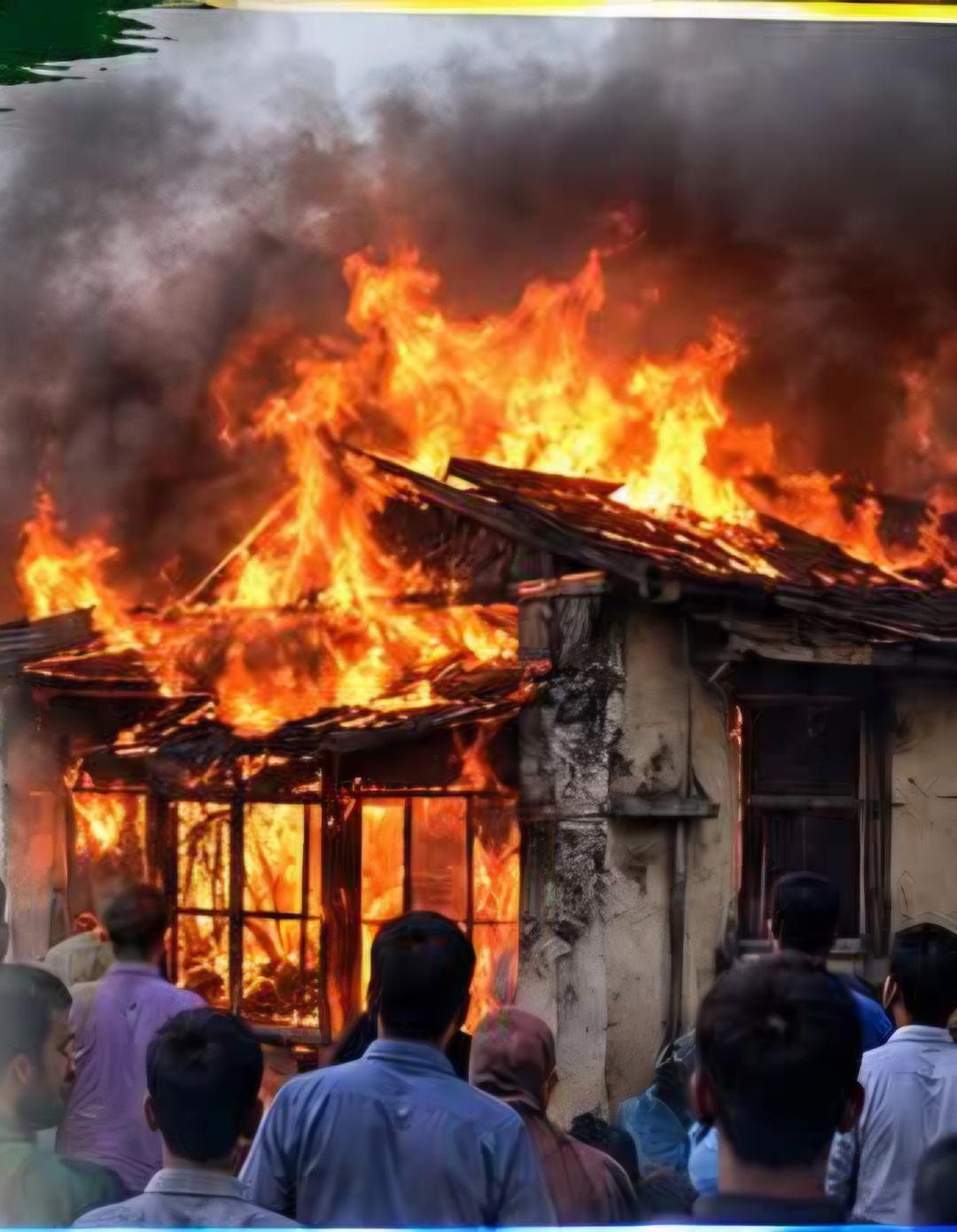
Narang Mandi, Pakistan: Human Rights Focus Pakistan (HRFP) has strongly condemned a mob violence, arson, and threats against members of the C

NARANG MANDI, PAKISTAN — October 10, 2026 — Sardar Mushtaq Gill, founder of LEAD Ministries, has strongly condemned the reported mob at


PCP need your support that we may provide you better services: click on donate


"Trial of Pakistani Christian Nation" By Nazir S Bhatti
On demand of our readers, I have decided to release E-Book version of "Trial of Pakistani Christian Nation" on website of PCP which can also be viewed on website of Pakistan Christian Congress www.pakistanchristiancongress.org . You can read chapter wise by clicking tab on left handside of PDF format of E-Book.