

Islamabad: A remarkable photograph taken by a British doctor approaching Islamabad Airport prompted an internet search that uncovered reports of an
Archaeologists Discover Solomon-era Linens
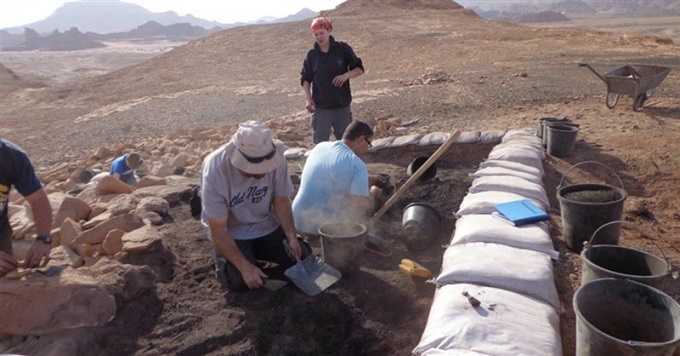
Israel: July 18, 2017. (Julie Borg) Archaeologists from Tel Aviv University have unearthed 3,000-year-old dyed wool fabric samples from the time of Kings David and Solomon. The archaeologists discovered the samples at a large, ancient Edomite copper smelting site and nearby temple in the Timna Valley, a desert region in southern Israel. They date the cloth from the 13th to 10th centuries B.C. The fabric was so well dyed that even now the original colors are visible.
The discovery, reported in Plos One, highlights several aspects of cultural life in the Timna Valley at that time. It shows highly skilled weavers made the fabric and that it could not have been produced in the Timna region, an area too arid to grow the plants needed for dyeing or to provide a water source needed for the process. The people of the Timna Valley would have needed a long-distance trade route to obtain the fabric. And the cloth would have been costly, indicating the presence of a socially stratified society led by an elite group.
“It is apparent that there was a dominant elite in this society that took pains to dress according to their ‘class,’ and had the means to engage in long-distance trade to transport these textiles—and other materials and resources—to the desert,” lead researcher Erez Ben-Yosef said in a statement.
The textile makers used a sophisticated process in which they cooked colorful plants in water and then added the fleece and used alum to chemically bond the dye to the fabric, producing a colored textile resistant to fading by washing or sun exposure.
The weavers appeared to have taken great care to create fine, thin threads, which they twisted together to make thicker, stronger strands before weaving the yarn flawlessly into fabric.
The researchers are not certain where the cloth was produced, but much evidence points to somewhere along the Mediterranean coast and nearby regions, such as Judea and Transjordan.
According to the researchers, dyed and finely woven textiles were a desired luxury item that conveyed the owner’s status and wealth. The fact that they found the exquisite linens in the area of a copper mine suggests the metalworkers at the mines enjoyed an elite social status because they were esteemed for their high level of skill.
“Metalworkers played a substantial role in ancient societies, holding knowledge of one of the most sophisticated crafts of the ancient world,” the researchers wrote.
You May Also Like
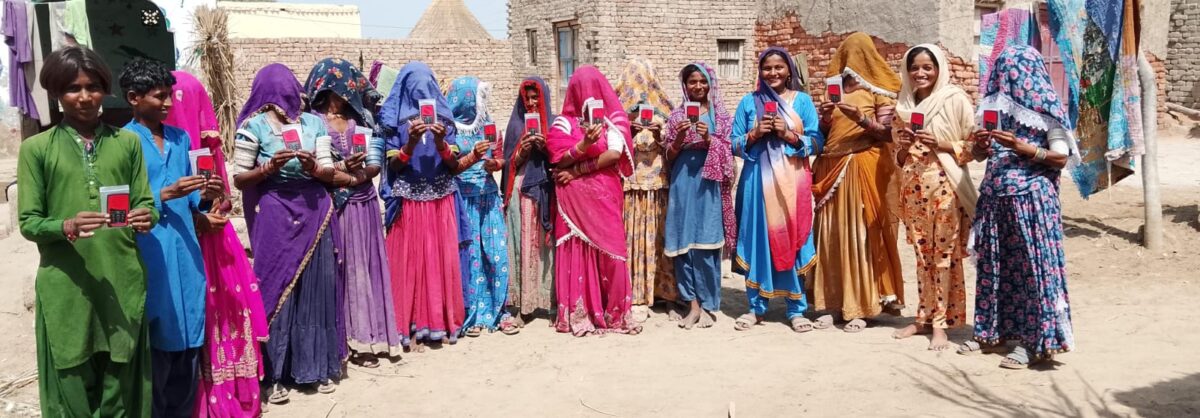
Sindh, Pakistan: BACA Compassionate Outreach: Audio Bibles Bring the Word of God to Christian Community in Berani, Sindh
BACA distributed

Punjab, Pakistan: A Christian doctor’s home and clinic were attacked and set on fire in Narang Mandi village, Gharial Kalan, following an all


PCP need your support that we may provide you better services: click on donate


"Trial of Pakistani Christian Nation" By Nazir S Bhatti
On demand of our readers, I have decided to release E-Book version of "Trial of Pakistani Christian Nation" on website of PCP which can also be viewed on website of Pakistan Christian Congress www.pakistanchristiancongress.org . You can read chapter wise by clicking tab on left handside of PDF format of E-Book.