

Pakistan: After weeks of living apart and hiding at different locations, Azeem Javed and his family have finally been reunited in a secure home arr
Jamiat Ulema, Chief Justice, and Minorities. Report by Khalid Shahzad
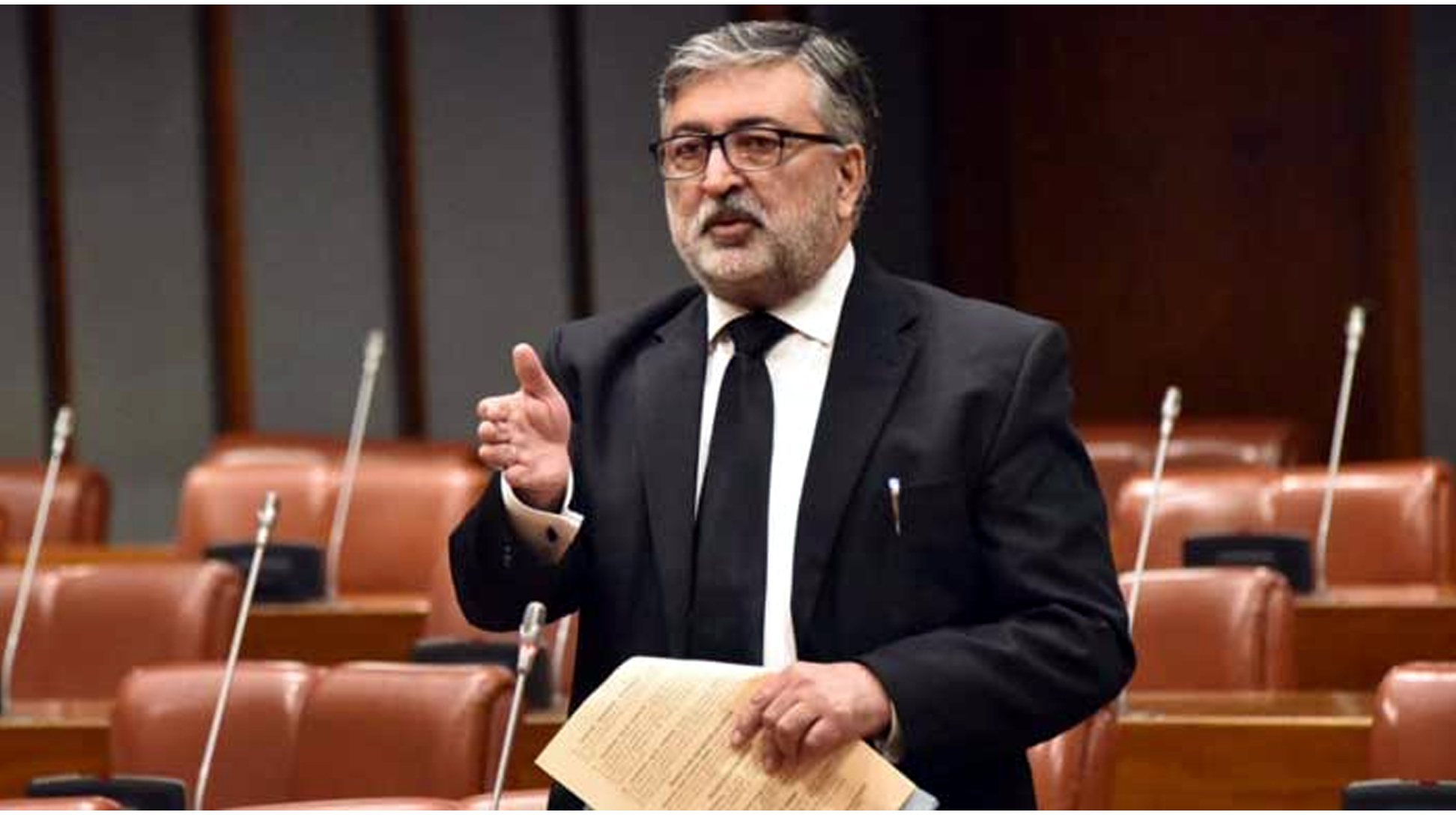
Islamabad: JUI-F Senator Kamran Murtaza filed a Sharia petition in the Federal Sharia Court, declaring certain provisions of the Child Marriage Restraint Act 2025 as contrary to the Quran, Sunnah and Article 227 of the Constitution of Pakistan.
On the other hand, the Lahore High Court dismissed the official objection to the petition for the recovery of the Christian student girl and ordered the petition to be scheduled for hearing. Chief Justice Lahore High Court Justice Alia Neelam heard the petition. Advocate Maryam Ayesha Shirazi appeared on behalf of the petitioner Fauzia and said that the Registrar’s Office has objected to the petition.
The Registrar’s Office has objected to filing the petition in the Multan Bench. The petitioner is a resident of Faisalabad. The petition should be ordered to be scheduled for hearing in the Lahore High Court Lahore Bench.
The court, while dismissing the office objection, ordered to schedule the petition for hearing. The petition has taken the position that the petitioner’s daughter is studying in Islamia College, Eidgah Road, Faisalabad. She was kidnapped on May 7, 2026, while she was returning home. The girl is with a woman named Munira in Borewala. Munira is a Muslim woman while the petitioner is Sachin. She has no relation with Munira Bibi, a resident of Borewala.
The court should order the recovery of the daughter. Earlier, no progress has been made in the Maria Shahbaz case. Why are the policy-making bureaucracy and law enforcement agencies turning a blind eye to international laws and the Constitution of Pakistan by causing hardship to minorities?
Senator Kamran Murtaza’s petition in the Federal Sharia Court and his recourse to Article 227 of the Constitution (under which all laws shall be molded in the mold of the Quran and Sunnah) reflects the traditional and religious resistance that stands in the way of legislation against child marriage in Pakistan. While Pakistan has ratified the International Convention on the Rights of the Child (CRC), there are still attempts to create ambiguity on the determination of age (puberty versus legal age) at the national level. Such petitions create obstacles in the implementation of recent legislation to prevent child marriages (such as the Child Marriage Restraint Act 2025), which has had the greatest impact on young girls from disadvantaged classes and minority communities, who are often abducted and forced into "consensual marriage" to provide legal protection to rape, which has led to the tradition of snatching the young girl away from her parents and siblings overnight and protecting the accused by invoking religion.
The registration of 105,244 cases between 2021 and 2026 shows that the abduction and disappearance of women and girls are not isolated incidents, but have taken the form of a systemic crisis. Although the police may have shown a large number of recoveries, the fact that nearly two thousand girls and women are still missing proves that the police do not have modern investigation tools, geo-fencing, and a solid system of rapid response.
The four-year struggle of a mother (Salma Bibi) for her daughter (Muqaddas Bibi) and the lack of justice is a testimony to the fact that unless the higher judiciary intervenes, the voice of the common and poor citizen cannot get out of the closed rooms of police stations and bureaucracy. The abduction of a Christian student of Islamia College Faisalabad on May 7, 2026, and the detention of a Muslim woman in Burewala, alleges forced conversion or human trafficking, as a traditional practice.
The slow pace of justice in the Maria Shahbaz case (and dozens of other similar cases, such as the Sadaf Khanpur case or the Arzoo Raja case) and the failure to bring the perpetrators to justice are the main reasons why such incidents continue unabated. This cycle will not stop until the state gives precedent-setting sentences in such cases.
Chief Justice Alia Neelam’s rejection of the police’s request for a two-month respite and granting a final deadline of June 18, 2026 is a very welcome and bold move.
Why is the court’s pressure necessary? Traditionally, the police and administration in Pakistan do not mobilize unless they are threatened with contempt of court or suspension from service. This ultimatum of the Chief Justice to put the IG Punjab and the entire force on a defensive position shows political and administrative accountability. This ultimatum was necessary to break the cold-blooded attitude of the bureaucracy, which was making a mockery of the right to protection of life and property (Article 9) given to citizens under international laws and the Constitution of Pakistan. When there is this situation of law and order and protection of women in the province as a whole, then minority communities (like Christians or Hindus) become doubly unsafe. On the one hand, they are victims of general deterioration of law and order, and on the other hand, they also have to face the systematic nexus of religious sensitization and forced conversion.
The filing of a petition against the Child Marriage Act by Senator Kamran Murtaza and on the other hand, the disappearance of thousands of girls like this shows the contradiction of the society where attempts are made to stop legislation but in practice no solid mechanism is It is the constitutional responsibility of civil society, columnists, human rights organizations and the media to keep a close eye on the performance of the police till June 18. This case should remain a part of the public debate so that the police cannot escape by presenting traditional “paperwork” or temporary figures. Recovery to the extent of this one case will not be enough. What is needed is for the judiciary to force the government to devise a permanent “Amber Alert” digital system of long-term reforms in the province under which the state machinery can be mobilized within a few hours in case of any child or woman going missing. This notice and strict ultimatum from the Lahore High Court is an excellent opportunity to break the deadlock that has gripped our bureaucracy and law enforcement agencies. made to protect girls
You May Also Like
London: The withdrawal of a prestigious interfaith award presented by the Archbishop of Canterbury to Pakistani cleric Hafiz Muhammad Tahir Mehmood
London: Britain has strengthened its laws against child and forced marriage, yet a series of disturbing cases demonstrates why legislation alone is


PCP need your support that we may provide you better services: click on donate


"Trial of Pakistani Christian Nation" By Nazir S Bhatti
On demand of our readers, I have decided to release E-Book version of "Trial of Pakistani Christian Nation" on website of PCP which can also be viewed on website of Pakistan Christian Congress www.pakistanchristiancongress.org . You can read chapter wise by clicking tab on left handside of PDF format of E-Book.