

Islamabad: A remarkable photograph taken by a British doctor approaching Islamabad Airport prompted an internet search that uncovered reports of an
In the Shadow of Blasphemy and Forced Conversion: Pakistan’s Christians Seek Justice: By Sardar Mushtaq Gill
Pakistan: It is true that Pakistan’s Constitution promises, at least in principle, equality before the law and protection of fundamental rights for every citizen. Yet, for religious minorities, especially Christians, these constitutional guarantees often appear conditional in practice and remain far removed from reality.
Cases involving blasphemy, mob violence, religious conversion, and marriage are among the most sensitive issues in Pakistan. When such cases involve Islam, allegations of religious extremism or coercion, Christian victims and their families can face enormous pressure and fear.
The cases of Shama Bibi and Shahzad Masih, and of Maria Shahbaz, represent two different but deeply troubling sides of this problem.
Shama and Shahzad: A Tragedy Without Accountability
In November 2014, Christian couple Shama Bibi and Shahzad Masih were accused of desecrating Qur’anic material at a brick kiln in Kot Radha Kishan.
A mob attacked the couple and threw them into a brick kiln, where they were burned alive. Shama was reportedly pregnant.
The case initially resulted in convictions. However, after years of legal proceedings, Pakistan’s Supreme Court, in July 2026, acquitted the remaining three men facing capital punishment, citing weaknesses and inconsistencies in the prosecution’s evidence. The court also dismissed the Punjab government’s appeal concerning the earlier acquittal of 102 other accused.
The right to a fair trial must always be respected. No person should be convicted without evidence meeting the required legal standard.
But the outcome also raises serious questions about investigations, witness protection, and the ability of the justice system to hold perpetrators of mob violence accountable.
For Pakistan’s Christian community, the outcome is deeply painful.
A Christian couple was killed in one of the country’s most horrific acts of mob violence, yet the case has ended without a surviving conviction among those prosecuted for the killings.
Maria Shahbaz: A Child at the Centre of a Religious Dispute
The case of Maria Shahbaz raises different but equally serious concerns.
Her family alleges that she was abducted, forcibly converted to Islam, and married to a Muslim man significantly older than her while she was still a child.
The case involves difficult questions concerning her age, consent, religious conversion, and marriage. A previous judicial ruling returned custody of Maria to the man identified as her husband.
In July 2026, Pakistan’s Federal Constitutional Court agreed to hear a review petition filed by Maria’s father challenging that decision.
The central question should be straightforward:
Was Maria free and able to give genuine and informed consent?
Freedom of religion must be respected, and genuine religious conversion must be protected. But when a child is involved, her safety, dignity, and welfare must come first.
Allegations of abduction, coercion, or forced conversion involving a minor require careful, independent, and evidence-based investigation.
A Sensitive Issue That Cannot Be Ignored
Both cases involve highly sensitive issues concerning Islam, blasphemy, and religious conversion. They must therefore be discussed honestly and responsibly.
The real concern is religious extremism, coercion, and social pressure, which can make Christians and other minorities particularly vulnerable.
When religion enters a legal dispute, the law must remain stronger than fear and pressure.
A police officer must be able to investigate freely. A witness must be able to testify without intimidation. A prosecutor must be able to present evidence without pressure. And a judge must be able to decide according to the law and the evidence.
LEAD Ministries’ Advocacy for Justice
Under the leadership of Pastor Imran Amanat and Farzana Imran, LEAD Ministries continues its legal and human-rights advocacy for persecuted Christians and other vulnerable people.
Its work seeks to document cases involving violence, discrimination, alleged forced conversion, and violations of minority rights, while bringing these cases to public attention and advocating for protection and accountability.
The principle is simple:
Justice must protect the rights of the accused without abandoning the rights of the victim.
Due process is essential. But due process must work for everyone—including religious minorities, children, victims, and witnesses.
The Need for Equal Justice
Pakistan needs stronger witness-protection mechanisms, professional investigations, reliable age verification, and better safeguards for children and religious minorities.
These are not special protections for Christians.
They are basic requirements of the rule of law.
The true test of a justice system is not how it treats the powerful.
It is how it protects the vulnerable.
The cases of Shama and Shahzad and Maria Shahbaz should remind Pakistan that constitutional guarantees cannot remain merely words on paper.
For Christians and other religious minorities, equality before the law must become more than a promise.
It must become a lived reality—even when religion, power, and fear collide.
You May Also Like
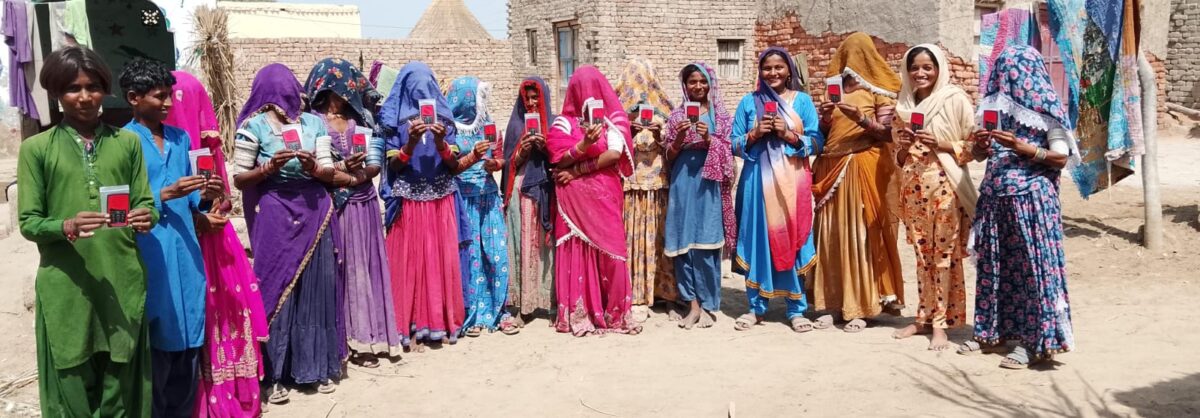
Sindh, Pakistan: BACA Compassionate Outreach: Audio Bibles Bring the Word of God to Christian Community in Berani, Sindh
BACA distributed
Punjab, Pakistan: A Christian doctor’s home and clinic were attacked and set on fire in Narang Mandi village, Gharial Kalan, following an all


PCP need your support that we may provide you better services: click on donate


"Trial of Pakistani Christian Nation" By Nazir S Bhatti
On demand of our readers, I have decided to release E-Book version of "Trial of Pakistani Christian Nation" on website of PCP which can also be viewed on website of Pakistan Christian Congress www.pakistanchristiancongress.org . You can read chapter wise by clicking tab on left handside of PDF format of E-Book.