

Islamabad: A remarkable photograph taken by a British doctor approaching Islamabad Airport prompted an internet search that uncovered reports of an
Shaping Tomorrow Responsibly: The Long-Term Stakes of Sindh's Christian Family Bill. By Nasir Saeed and Jacob Daniel Gill
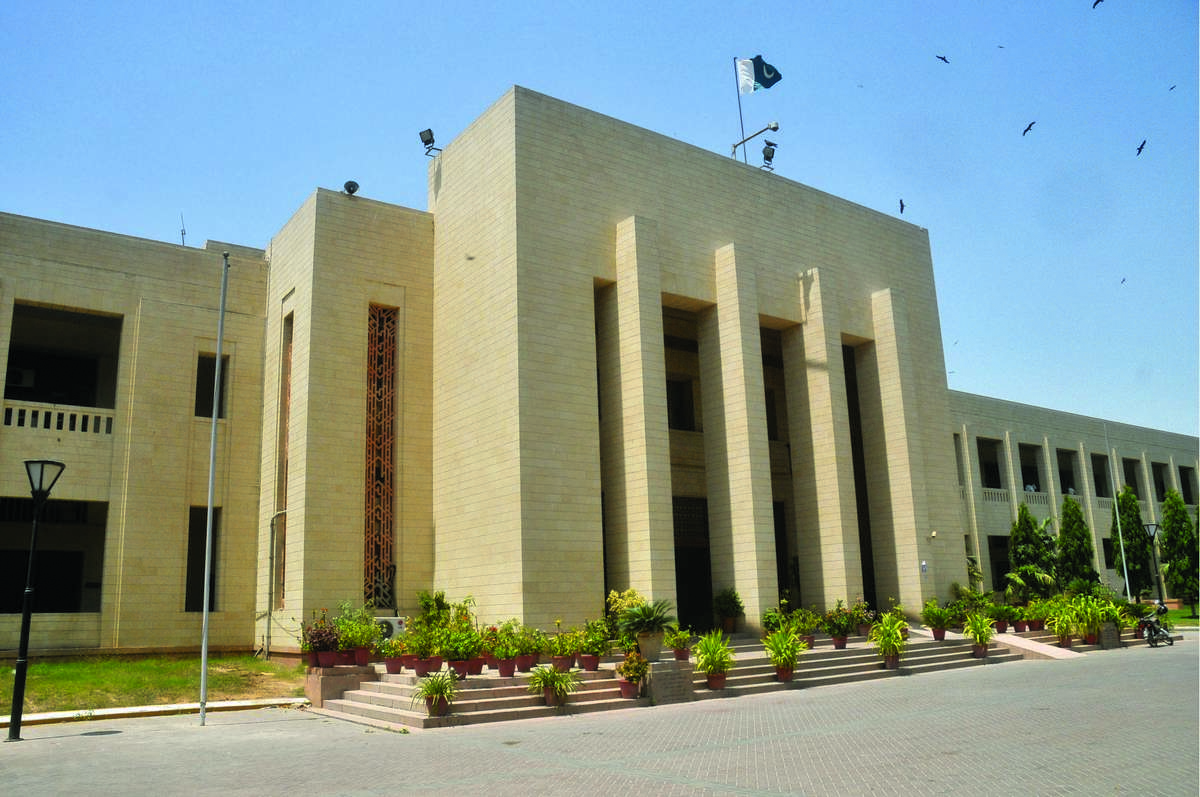
Christian families in Sindh are still married and divorced under laws written in 1869 and 1872, for a colonial India that no longer exists. The Sindh Christian Family Laws Bill, 2026 is the most serious attempt yet to replace them. It deserves neither a rubber stamp nor a rejection. It deserves careful revision.
The debate has become a contest over who speaks for Christians. Some church leaders have rejected the bill in its present form; others have welcomed it. Lost in that argument are the people the law is meant to serve: a girl at risk of early marriage, a wife abandoned without maintenance, a child caught in a custody dispute. Their needs should set the terms of the debate.
We have studied the full 28-page bill, Private Bill No. 05 of 2026, clause by clause. Our conclusion is simple. Keep what protects families, fix what is badly drafted, and do it through a consultation that is open, documented and fair to every Christian tradition in Sindh.
Where the bill stands
The bill is a proposal, not a law. Deputy Speaker Anthony Naveed introduced it as a private member's bill, and on 8 September the Provincial Assembly of Sindh referred it to the Standing Committee on Minorities Affairs (notification PAS/LEGIS-PB-05/2026/1749). A committee meeting was called for 24 September, and reporting in mid-October describes continuing consultation with Christian leaders.
The bill would repeal the Christian Marriage Act 1872 and the Divorce Act 1869 as they apply in Sindh. That repeal clause has no effect until the Assembly passes the bill. Until then, the old laws remain in force.
What deserves support
The bill gets several important things right, and they should not be lost in the argument.
- A minimum age of 18 for both spouses (section 3). This is the single most protective provision in the bill. It closes the door the old law left open to child marriage. The final text should also set out acceptable proof of age, how disputed records are resolved, and the civil consequences when an underage marriage takes place anyway.
- Notice and registration (sections 9–38). Official records protect inheritance, maintenance and children, and make fraud harder.
- Civil remedies. Dissolution, nullity, judicial separation, maintenance and child-related orders (sections 41–71) give a route out for a spouse facing violence, desertion or financial abandonment.
- Protection for clergy conscience (section 68). This clause has been widely misread. It states that no ordained Christian minister shall be compelled to solemnise the marriage of a divorced person, or be liable for refusing. It is a safeguard for the churches, not a threat to them.
Section 68 matters to the whole debate. Many church leaders fear the State will force them to act against their doctrine on remarriage. The bill already says it will not. That protection should be kept and, if anything, widened to cover authorised celebrants in churches that do not ordain in the episcopal way.
What must be fixed
The bill's weaknesses are mostly in its drafting, not its aims. Six areas need work before the committee reports.
1. Who counts as a Christian (section 2). The bill defines a "Christian" by the Apostles' Creed and a "Church" as a consecrated place of worship, and refers to episcopal ordination. The Creed carries deep meaning for many believers. But a civil statute should not make conformity to one creed the gatekeeper for family-law protection. These definitions risk excluding house churches, congregations in rented halls and traditions without bishops. The State should define who the law covers without ruling on theology, with a workable way to settle disputed cases.
2. Conversion as a ground for divorce (section 41(g)). The bill appears to treat a change of religious belief as a ground for dissolving a marriage. That sits uneasily with Article 20 of the Constitution, which protects freedom of religion. A change of belief should not, by itself, be a matrimonial wrong. Courts should decide on breakdown, violence, desertion or other clear civil grounds. There is one case where the law should keep a specific protection for women. Where a husband both changes his religion and marries another woman, his wife alone should have the right to petition for divorce. The marriage should not end automatically when he converts or remarries. It should end only if she chooses to seek a decree, through a court and with due process. This keeps a protection women have long relied on, while respecting freedom of religion and fair civil procedure.
3. Church decrees (section 41(h)). The civil effect of a church tribunal's decision must be stated precisely. No denomination's internal ruling should automatically become a court decree, and no civil court should judge sacramental validity.
4. Privacy and safety (sections 9–15 and 21–30). Public marriage notices help prevent fraud. They can also expose a couple's address and religious identity where families or others are hostile. The bill needs a confidential route for cases of credible danger, without removing genuine objections.
5. Women and children. Many maintenance and property provisions use old, gender-specific language. Remedies should protect whoever is economically vulnerable, taking account of caring duties, disability, pregnancy and abuse. Mediation must never be compulsory where it would put a survivor at risk. Courts should be able to make interim maintenance and protection orders quickly, in step with the Sindh Domestic Violence (Prevention and Protection) Act 2013. For children, the law needs a clear best-interests test, a voice for the child according to age, and a guarantee that no child loses maintenance, inheritance or status because a parent's marriage is annulled. These provisions should be tested against the UN Convention on the Rights of the Child.
6. Repeal and transition (sections 92, 95 and 96). Repealing two 150-year-old laws in one line is risky. The bill must say exactly what happens to existing marriages, court orders, pending cases and maintenance. It must also fit cleanly with the Sindh Child Marriage Restraint Act 2013 rather than relying on a bare cross-reference. And since the churches dispute whether this subject now belongs to the provinces or the federation, Pakistani legislative counsel should give a formal view on competence before the bill goes further.
Two spheres, one settlement
Much of the disagreement dissolves once two things are kept apart: the sacrament and the civil status.
The churches have every right to decide their own rites, doctrine and who they will marry or remarry. Article 20 protects that. The State, under Articles 9, 14 and 25, has a duty to protect every citizen's security, dignity and equal access to justice. The Constitution's Principles of Policy point the same way. Article 35 states that "the State shall protect the marriage, the family, the mother and the child". Article 36 requires the State to "safeguard the legitimate rights and interests of minorities", including their due representation in federal and provincial services. These principles cannot be enforced in court as Fundamental Rights can, but they set the standard a family law for a minority community should meet. The State can register marriages, enforce maintenance and decide custody without deciding which denomination holds the true doctrine of marriage.
The principle works both ways. The State must not compel a minister to perform a religious rite. Equally, no church should hold a veto over a citizen's access to civil protection, maintenance or the courts. A sound law states both rules plainly, and offers a civil registrar to anyone a church declines to serve.
What the Standing Committee should do now
The committee can turn a quarrel into a process people trust. We ask it to:
- Publish the latest text of the bill, with any amendments since 8 September, in English, Urdu and Sindhi.
- Invite written submissions from every Christian tradition: Catholic, Church of Pakistan, Presbyterian, Baptist, Methodist, Pentecostal, Orthodox, evangelical and independent congregations.
- Hear beyond the clergy. Include Christian women, survivors of domestic abuse, young adults, lawyers, legal-aid workers, disability advocates and child-protection specialists, with confidentiality where they need it.
- Publish a response matrix showing each objection, the clause it concerns, the proposed change and the committee's reason for accepting or rejecting it.
- Send sections 2, 41, 92, 95 and 96 for redrafting by legislative counsel.
- Keep the age of 18 and section 68 as fixed points of any revised text.
No single church leader, and no single denomination, should be presented as speaking for all Christians in Sindh. Every position should be attributed to the people who actually hold it, in their own dated statements. That is the only kind of consensus that will last.
A settlement worth waiting for, but not for ever
The goal is not that every church agrees about divorce and remarriage. They will not, and the law does not need them to. The goal is a workable settlement between two legitimate claims: the churches' freedom to keep their doctrines and rites, and the State's duty to protect equal civil rights, personal safety, fair process and children.
To church leaders: put your objections in writing, on the record, and stay at the table. To legislators: take the time to earn trust, but do not let reform die in committee. To Christian families: read the bill, ask your pastor and your MPA what it means for you, and make your voice heard.
The Divorce Act has outlived the empire that wrote it by almost eighty years. Sindh now has the chance to give its Christian citizens a law they helped to write.
Nasir Saeed and Jacob Daniel Gill have prepared an independent clause-by-clause analysis of the bill with model amendments for submission to the Standing Committee. This article does not claim the endorsement of any church or institution.
You May Also Like
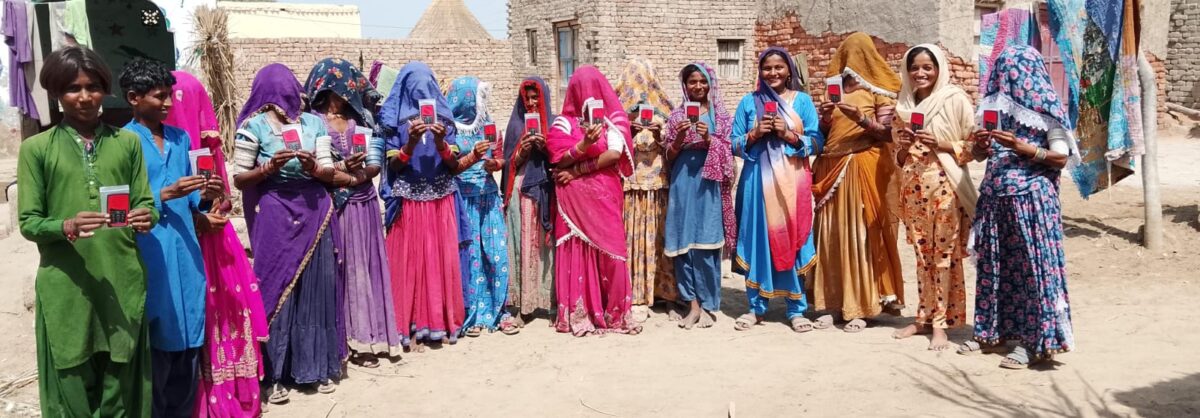
Sindh, Pakistan: BACA Compassionate Outreach: Audio Bibles Bring the Word of God to Christian Community in Berani, Sindh
BACA distributed
Punjab, Pakistan: A Christian doctor’s home and clinic were attacked and set on fire in Narang Mandi village, Gharial Kalan, following an all


PCP need your support that we may provide you better services: click on donate


"Trial of Pakistani Christian Nation" By Nazir S Bhatti
On demand of our readers, I have decided to release E-Book version of "Trial of Pakistani Christian Nation" on website of PCP which can also be viewed on website of Pakistan Christian Congress www.pakistanchristiancongress.org . You can read chapter wise by clicking tab on left handside of PDF format of E-Book.