
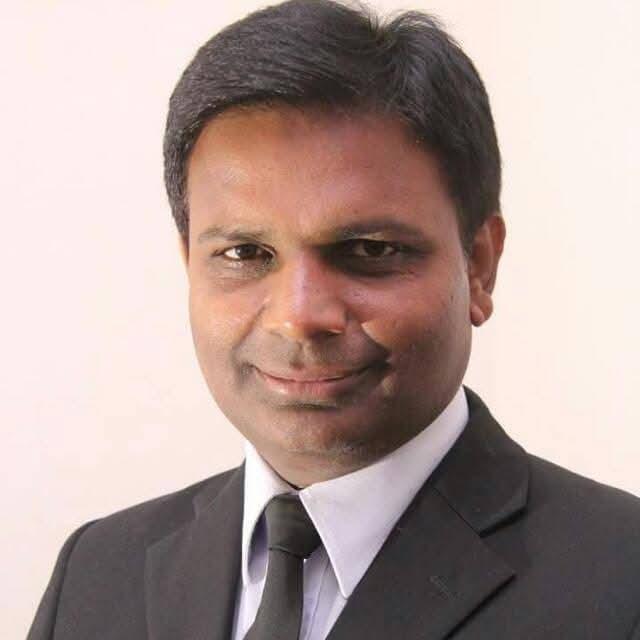
LAHORE — The Christian community and legal fraternity are mourning the passing of Liaqat John, Advocate High Court, a senior and respected me
In France, Pope Leo Will Find an Ancient Church Experiencing New Life
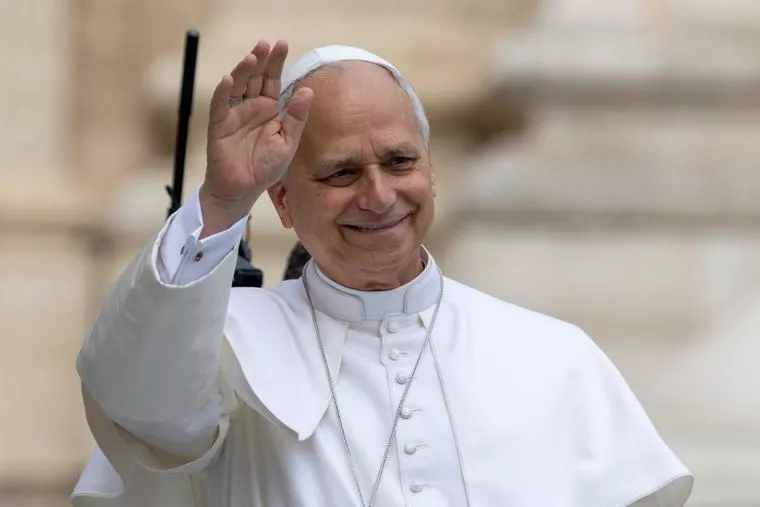
The itinerary for September's papal trip brings together the best of the faith and the best of France.
Vatican City: (National Catholic Register) While papal visits to the “eldest daughter of the Church” were once common — St. John Paul II, for instance, made no fewer than eight apostolic visits between 1980 and 2005 — Leo’s upcoming journey will be the first time a pope has come to France on an official state visit since Benedict XVI in 2008. Pope Francis visited French cities on three separate occasions. But, as he made clear, the purpose of these visits was to promote broader themes — European unity in Strasbourg, collaboration between Mediterranean nations in Marseilles, and the world of devotion in Ajaccio — and not to focus on France itself, consistent with his commitment to prioritizing countries on the peripheries.
Perhaps because of the long wait for a papal visit to France, Pope Leo’s journey will be an occasion not only to celebrate, but also to take stock of Catholicism’s current status in France — a reality that Leo’s presence will help to illuminate.
France is a strange country. It is undoubtedly one of the most deeply Catholic countries in the world due to its roots and history, but it is also one of the most secularized, governed by a particularly uncompromising system of strict secularism.
The Pope will arrive in a country where euthanasia and assisted suicide have just been legalized, according to President Emmanuel Macron’s very determined will, and where educational freedom — so emblematic of peace between the Church and the State — is regularly under attack.
At the same time, cooperation with public authorities is fairly straightforward when it comes to the technical organization of the trip. President Macron, like many other public figures who are far removed from the Christian vision of the person and the world, is particularly proud of welcoming the Pope and being able to be seen alongside him.
In this context, it is important to fully seize the opportunity offered by this apostolic visit to highlight the relevance of the Gospel for France today, while taking care to avoid the exploitation of faith, especially in the months leading up to a particularly important and tense presidential election.
The itinerary for the trip should, in fact, bring together the best of the faith and the best of France.
The Pope in Paris
After his official welcome, Pope Leo will visit the headquarters of UNESCO in Paris, the same site where St. John Paul II gave a landmark speech on the very nature of culture during his 1980 visit to France. There, the Augustinian Pope will speak before a large gathering of diplomats as well as representatives from the French educational and cultural communities, likely continuing the reflection on contemporary educational challenges he began in the encyclical Magnifica Humanitas.
At Notre-Dame de Paris, the world-renowned cathedral that was destroyed by fire and resurrected through a determined reconstruction effort, Leo XIV will meet — as did John Paul II in 1980 and Benedict XVI in 2008 — with priests, deacons, seminarians, and consecrated persons. While vocations in France have been experiencing a modest but real uptick in recent months, the Pope will offer particularly valuable encouragement to those who have heeded the call to leave everything behind for the service of the Gospel, as well as to those engaged in vocational discernment.
The first evening of Leo XIV’s visit to France will conclude at the Stade de France with young people. The stadium’s 80,000 seats were reserved in just a few minutes when they became available at the end of August, which speaks to the enthusiasm of young Christians — who, while certainly fewer in number than before, are particularly motivated.
The Stade de France, whose construction was decided by the late Prime Minister Édouard Balladur (1929–2026) in preparation for the 1998 World Cup, is located in the city of Saint-Denis, where the most pressing contemporary issues of cultural and religious diversity are concentrated. Saint-Denis, which originally sprang up around the tomb of the 3rd century martyr for whom the city is named, is today home to a large population with immigrant origins, particularly from North Africa and other Muslim-majority countries. Here, Leo XIV will truly speak to the heart of today’s and tomorrow’s France.
The Pope’s second day in France will begin with a meeting with refugees at the Maison Sainte-Josephine Bakhita in the Diocese of Paris. Leo XIV will then visit the Catholic University of Paris. It is located in the former Carmelite convent of Brother Laurent of the Resurrection (1614-1691), whom the Pope has described as one of his spiritual mentors because of his teachings on “the practice of the presence of God.”
There, the Successor of Peter will meet with teachers and students, but also — and above all — with members of the ecclesial assembly of the ecclesiastical province of Paris, which is embarking on a synodal-style initiative focused on the welcome, accompaniment, and integration of catechumens and neophytes.
The recent increase in the number of adult catechumens and the decrease in their average age is a particularly encouraging phenomenon, a true gift of grace. Yet parishes and dioceses must rise to the challenge of this reality and allow themselves to be profoundly transformed by this magnificent gift from God.
During the Youth Jubilee in Rome in the summer of 2025, the Pope had already granted a special audience to young French catechumens. It is said that he is particularly attentive to this growth, which is also present elsewhere—in the United States, for example, and in certain dioceses in Australia.
The Paris leg of the Leo XIV pilgrimage will conclude with a solemn Mass expected to bring together several hundred thousand faithful to the Champs-Élysées, sometimes called “the most famous avenue in the world.” This venue, where Bastille Day and major sporting victories are celebrated amid huge crowds, will, for once, be the setting for the greatest of all celebrations: the Eucharist.
France’s ‘Spiritual Capital’ and Metz
After Paris, Pope Leo will make his way to Lourdes, France’s “spiritual capital.” It is there that all the bishops of France take their dioceses on pilgrimage each year, and it is also there that they meet twice a year for their plenary assemblies. In Lourdes, Pope Leo XIV, will come as a true pilgrim.
In addition to meeting with the Bishops’ Conference, he will spend time with the sick before celebrating a solemn Mass, pray at the Grotto of Massabielle, and visit the Carmelite convent where women religioushave kept vigil across from the Grotto for exactly 150 years.
It is undoubtedly in this place — where the sick, the disabled, and the vulnerable take precedence — that the Pope will address the theme of care of every human life until its natural end. In Lourdes, Leo will also meet with victims of sexual abuse within the Church.
After the traditional torchlight procession and overnight stay, the Pope will fly to Metz for the final leg of his first apostolic journey to France. The day will begin with an interfaith meeting, followed by a gathering of European political and church leaders at the Robert Schuman Convention Center. There had been talk of Pope Leo XIV visiting the nearby grave of Venerable Robert Schuman (1886–1963), considered a founding father of Europe. Although this will not be possible, he will surely speak of this great figure — a true Christian actively engaged in politics — whose cause for beatification is well advanced.
It is significant that Leo XIV’s first major address on the status of Europe is not taking place in Brussels or Strasbourg, within an administrative and institutional context, but rather at a site symbolic of Europe’s spiritual and cultural roots, with a view toward “unarmed and disarming peace.”
Pope Leo’s final Mass in France will be celebrated in the Cathedral of St. Chrodegang (742–766). St. Chrodegang contributed significantly to the renewal of the Church during the time of Charlemagne and to its liturgical unification through the introduction of Gregorian chant, makinghis cathedral a fitting place to stop for a Pope who has made Church unity a priority of his young pontificate.
This trip is generating a great deal of enthusiasm and high expectations. As the author of these lines has witnessed, political figures from across the spectrum are eager for the opportunity to meet the Pope and take part in the significant moments of his visit.
“We do not know what a pope might be,” wrote our “national poet” Victor Hugo (1802-1885); “a pope who moves with the times could shake the world.” Today’s secularized France is preparing to rediscover thispossibility with joy.
Bishop Matthieu Rougé
Bishop Matthieu Rougé Bishop Matthieu Rougé has served as the bishop of the Diocese of Nanterre, France, since 2018. A theologian and former professor at the Collèges des Bernardins, he has also directed the Catholic chaplaincy for French parliamentarians. He writes frequently on evangelization, political life, and the Church’s engagement with contemporary culture.
You May Also Like
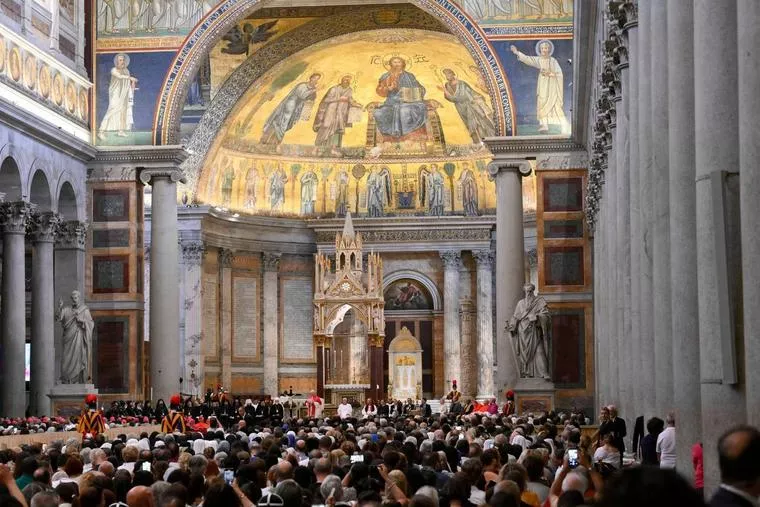
Vatican City: (National Catholic Register) The Catholic Church has documented 304 martyrs in Latin America so far this century. These are men and w

KASUR, PUNJAB, PAKISTAN — In the quiet, impoverished communities surrounding Pakistan’s brick kilns, hardship is often measured not onl


PCP need your support that we may provide you better services: click on donate


"Trial of Pakistani Christian Nation" By Nazir S Bhatti
On demand of our readers, I have decided to release E-Book version of "Trial of Pakistani Christian Nation" on website of PCP which can also be viewed on website of Pakistan Christian Congress www.pakistanchristiancongress.org . You can read chapter wise by clicking tab on left handside of PDF format of E-Book.