

After a prolonged period of refraining from attacking Israel, Hezbollah, although unprovoked by Israel, fired hundreds of missiles and drones at bo
Would gender-based violence end with us? By BOBBY RAMAKANT
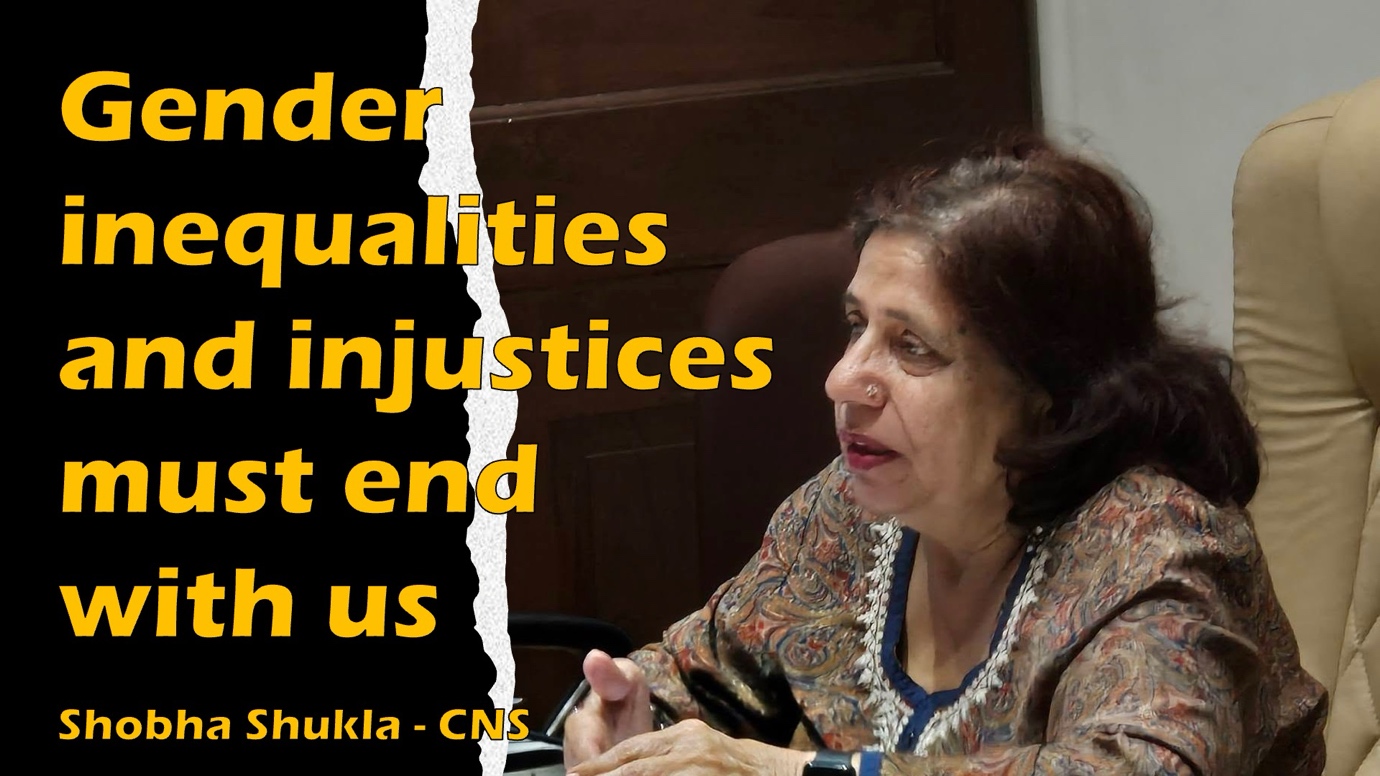
"Let us pledge that gender-based violence will end with us. For how many generations and centuries will we bear the brunt of gender-based violence? We are not asking for mercy from men or boys – we are asking for our right to live with equality and justice – just like them. Enough is enough. Full Stop." These were the words of keynote speaker Shobha Shukla at Africa's Speak Up and Heal Summit organised by African Girls Empowerment Network to mark International Human Rights Day.
She said she has survived violence and would like to know who among the audience has not faced any kind of gender-based violence, be it emotional violence, emotional trauma, physical or sexual violence, or a guilty flush of shame when gaslighted? No hand went up - it was such a chilling moment to realise how highly prevalent gender-based violence could be.
"The Question is, why is violence against women and girls so normalised? Why do we have to live with it?" she said. Shobha Shukla is a noted feminist and development justice advocate, and hosts SHE & Rights (Sexual Health with Equity & Rights) initiative as well as leads Asia Pacific Media Alliance for Health, Gender and Development Justice (APCAT Media) and CNS.
Sadly there is hardly any change in violence against women since 2000. "As girls and women – we cannot accept a pathetic annual drop of 0.2%" said Shobha. In the last 25 years, annual decline in intimate partner and sexual violence is abysmally low at 0.2%. "In other words, 99.8% - of total number of women and girls who faced violence, remained same - year after year. This is so pathetic and unacceptable."
Almost half of the countries globally have no comprehensive legislative policies and laws to address domestic violence
"While 165 out of 193 countries have domestic violence laws but only 104 countries have comprehensive legislative policies and laws in place. Or in other words, nearly half (48%) of the countries LACK comprehensive legislative policies and laws in place to address the various forms of domestic violence. Even in those countries where laws exist, funding to address domestic violence is not adequate – rather it has declined since 2022," said Shobha Shukla.
"So, when we read that 1 in 3 women worldwide has experienced physical or sexual violence at least once in her lifetime, this is a gross understatement. Actual violence rates must be very high – which is so very alarming and painful," she added.
If we are to walk the talk on ending sexual and all other forms of gender-based violence, including digital violence, we must translate words into stronger actions – dismantle patriarchy, and rethink, and rebuild feminist health and development systems.
Agrees Dr Pam Rajput, a noted feminist and gender justice leader who currently serves as Emeritus Professor in Panjab University. She is also the former Chairperson of Government of India's High-Level Committee on the Status of Women.
Dr Pam said that: "The preamble of the United Nations adopted by all governments begin with the 3 words: “We the people…” and not 'We the men.' Gender equality is enshrined in the UN Charter since 1945. But have we walked the talk?
"Gender equality is also enshrined in Universal Declaration of Human Rights and legally binding UN treaty CEDAW (Convention on the Elimination of all forms of Discrimination Against Women) of 1979. Governments also committed to address violence against women in CEDAW. In 1993, world leaders at the United Nations General Assembly passed a resolution to eliminate gender-based violence. In 1995, UN Conference on Women in Beijing and its landmark Beijing Declaration and Platform for Action committed governments to address violence against women too," she added.
16 Days of Activism against gender-based violence began in 1991 because of feminist civil society leaders. Later in 2008, then UN Secretary General Ban Ki-moon announced UNITE to end violence against women campaign which has gained strong momentum since then, said Dr Pam Rajput. "Despite so many agreements and declarations to end violence against women and girls, the question remains why the rates have not declined?"
Violence against women and girls is a violation of human rights, rooted in gender inequality and an impediment to sustainable development.
The age-old 'disease' called patriarchy
"Boys and men for centuries of the disease of patriarchy – have grown up with the wrong notion that they have rights, entitlements and privileges which females do not have. I often wonder that "Why is it that men work from sun to sun, and women’s work is never done?" asked Shobha Shukla, who was the Lead Discussant for SDG-3 at the intergovernmental United Nations High Level Political Forum (UN HLPF 2025) in New York. "From waking up early in the morning to prepare breakfast for everyone – to making kids ready to go to school – or feed men to go to work – and may be go to her own work too – she also takes care of all or most of household chores – and then puts her kids to sleep and her husband to sleep – before it is another day! Her work is never done. Also, perhaps when it is holiday for everyone – weekends or festivals or family functions – she has even more work to do! Can she get a break - without any guilt? And can men and boys share household chores?"
No gene makes a male more special than a female
"There is no genetic disposition that makes a male more special than a female. There is no genetic disposition that makes women carers and household workers and bars men from doing so – but patriarchy makes us wrongly think like this. It is wrongly instilled in girls since their infancy that it is their duty to care for others in the role of a sister, wife or mother, and disregard their own self," said Shobha Shukla.
"And if we expect boys and men will give up their rights, entitlements and privileges on their own calling or give them up easily we are in delusion – because it is the patriarchal rights, privileges and entitlements which let boys and men enjoy life full of opportunities, hopes and aspirations, and make us females highly vulnerable to violence and dependent on them," she added. "These patriarchal privileges, rights, and entitlements are not only limited to gender-based inequities we suffer, but also rob us of economic rights, work force participation rights, education rights, social justice and cultural rights."
Until we dismantle patriarchy we cannot breathe free
"Gender-based violence takes several forms, including emotional violence and trauma – one of the most heinous crimes that most often goes unreported and unseen – also there is hardly any legal mechanism to seek justice. Whether we call it gaslighting or other terms, all our hearts are ripped by emotional violence and trauma and scars," said firebrand feminist leader Shobha.
Digital violence
"One of the latest forms of gender-based violence is digital violence – all of us face it on a daily basis. Fear or apprehensions of accepting phone calls from unknown numbers, or abuses or sexually explicit messages on social media – or gaslighting and threats on social media when we dare to speak up and heal – and reclaim our rights, entitlements and privileges – all of us face it and struggle against it too," she said.
"But the root cause remains the same which gives a wrong notion to the male perpetrator that it is ‘okay to do so’ and also gives a wrong feeling to us – the females – that we have to live with it or keep our mouths shut - and deny ourselves the benefits of digitalisation and online world. But it is not our destiny to face this. We have to course correct this – and fight for it. And speak up, heal and reclaim our due rights, privileges and entitlements," added Shobha Shukla.
"We have to look inwards and undo patriarchal ‘programming’ that is wrongly seeping inside us like a virus in a computer. Do we realise that we - women and girls - are also infected with patriarchy? Are we not 'conditioned' since our childhood to accept so many harmful gender and social norms, narratives and stereotypes? And think that they are 'normal'? When they are actually abnormal and grossly wrong?" she asked.
Female genital mutilation or cutting - another form of violence and control
"Think of female genital mutilation or cutting – is it normal? But over 230 million girls and women globally live with it and they come from certain patriarchal societies that wrongly 'normalise' it," said Shobha.
Agrees Dr Huda Syyed, Founder of Sahara Sisters' Collective and part of Asian Network to end female genital mutilation/ cutting (FGM/C), Australia: "Governments committed to deliver on SDGs by 2030 – one of the SDG-5 targets is to end female genital mutilation or cutting. But UNICEF report 2024 shows that over 230 million girls and women worldwide had undergone female genital mutilation or cutting (FGM/C) - over 80 million girls and women in Asia underwent female genital mutilation or cutting in 2024. Instead of a decline, there was 15% increase in female genital mutilation or cutting in 2024 compared to 8 years ago."
"We cannot meet SDGs when half the population is harmed, silenced or excluded. Development justice demands that policies centre women's safety, agency, and bodily integrity," added Dr Huda who was speaking at SHE & Rights session together hosted by Global Center for Health Diplomacy and Inclusion (CeHDI), Women Deliver Conference 2026, International Planned Parenthood Federation (IPPF), Asian-Pacific Resource and Research Centre for Women (ARROW), Women’s Global Network for Reproductive Rights (WGNRR), Asia Pacific Media Alliance for Health, Gender and Development Justice (APCAT Media) and CNS.
According to United Nations Population Fund (UNFPA), female genital mutilation or cutting (FGM/C) can never be ‘safe,’ and there is no medical justification for the practice. Under any circumstances, FGM/C violates the right to health, the right to be free from violence, the right to life and physical integrity, the right to non-discrimination, and the right to be free from cruel, inhuman or degrading treatment. When performed in a clinical setting, FGM/C violates medical ethics.
"Ending female genital mutilation or cutting in Asia and globally is not a marginal issue rather it is a central issue to gender and development justice as well as central to bodily autonomy, public health, right to equality, human rights, children's rights and girl child rights. Patriarchal notions of women's bodies which are shaped into shame and secrecy need to be challenged and dismantled," said Dr Huda.
Firewall sustainable development goals from patriarchy at all levels
"Boys and men wrongly think they are born to enjoy more rights, entitlements and privileges – and perpetrate violence of all forms at all ages – and we girls and women and gender diverse persons wrongly feel that we are destined to 'accept' and remain 'silent.' Why is it always the woman or the girl who has to adjust, conform, or be silent or be silenced?" asked Shobha. "We are born free – be it a male or female child or of any other gender. So you and I also have a right to breathe free from fear of any form of gender-based violence – and enjoy full rights, entitlements and privileges like men."
"In addition to rethinking, rebuilding and rising ourselves, we all have to unite together to denormalise and counter harmful social norms, narratives and stereotypes that reek of gender prejudices. We have to call upon our governments to deliver a life of equality for all without any discrimination or prejudice," she added. "We were born equal so we deserve and need an equal life of opportunities, daring, hope, and aspirations."
End gender-based violence along with striving for economic and social justice
"While we fight together to end all forms of gender-based violence, my sisters, resisters and persisters – I appeal to you to also fight for your social rights and economic rights. There is no gene that makes a man more intelligent than women. But there is a 'disease' called patriarchy which makes him think like that. Is the same 'disease' making us think like that? Do we feel 'men can do better' in education and economic activities?" asked Shobha Shukla.
"All girls must receive the same education and equitable and just opportunities in life to follow their dreams – work-wise, economic justice-wise as well as income-wise – with parity, justice and dignity - and with zero guilt. We have to earn and have full control on our finances. We have to make investment decisions about our money too – we will err because to err is human – men also err so what is the big deal about it? We will learn and become better with finances," asserted Shobha Shukla who leads CNS.
"We have a right to relax, have a weekend off, or go out for a movie – is this not normal for boys and men? Then why not for us? But when we do this, it is the 'disease' patriarchy that makes us all feel guilty. Uproot the disease out of us first," said Shobha.
Gender equality and human right to health are fundamental human rights, reminds Shobha - as it is enshrined in numerous global commitments, agreements and declarations. But we need to bridge the gap between 'words' and 'deeds.'
Bobby Ramakant – CNS (Citizen News Service)
She said she has survived violence and would like to know who among the audience has not faced any kind of gender-based violence, be it emotional violence, emotional trauma, physical or sexual violence, or a guilty flush of shame when gaslighted? No hand went up - it was such a chilling moment to realise how highly prevalent gender-based violence could be.
"The Question is, why is violence against women and girls so normalised? Why do we have to live with it?" she said. Shobha Shukla is a noted feminist and development justice advocate, and hosts SHE & Rights (Sexual Health with Equity & Rights) initiative as well as leads Asia Pacific Media Alliance for Health, Gender and Development Justice (APCAT Media) and CNS.
Sadly there is hardly any change in violence against women since 2000. "As girls and women – we cannot accept a pathetic annual drop of 0.2%" said Shobha. In the last 25 years, annual decline in intimate partner and sexual violence is abysmally low at 0.2%. "In other words, 99.8% - of total number of women and girls who faced violence, remained same - year after year. This is so pathetic and unacceptable."
Almost half of the countries globally have no comprehensive legislative policies and laws to address domestic violence
"While 165 out of 193 countries have domestic violence laws but only 104 countries have comprehensive legislative policies and laws in place. Or in other words, nearly half (48%) of the countries LACK comprehensive legislative policies and laws in place to address the various forms of domestic violence. Even in those countries where laws exist, funding to address domestic violence is not adequate – rather it has declined since 2022," said Shobha Shukla.
"So, when we read that 1 in 3 women worldwide has experienced physical or sexual violence at least once in her lifetime, this is a gross understatement. Actual violence rates must be very high – which is so very alarming and painful," she added.
If we are to walk the talk on ending sexual and all other forms of gender-based violence, including digital violence, we must translate words into stronger actions – dismantle patriarchy, and rethink, and rebuild feminist health and development systems.
Agrees Dr Pam Rajput, a noted feminist and gender justice leader who currently serves as Emeritus Professor in Panjab University. She is also the former Chairperson of Government of India's High-Level Committee on the Status of Women.
Dr Pam said that: "The preamble of the United Nations adopted by all governments begin with the 3 words: “We the people…” and not 'We the men.' Gender equality is enshrined in the UN Charter since 1945. But have we walked the talk?
"Gender equality is also enshrined in Universal Declaration of Human Rights and legally binding UN treaty CEDAW (Convention on the Elimination of all forms of Discrimination Against Women) of 1979. Governments also committed to address violence against women in CEDAW. In 1993, world leaders at the United Nations General Assembly passed a resolution to eliminate gender-based violence. In 1995, UN Conference on Women in Beijing and its landmark Beijing Declaration and Platform for Action committed governments to address violence against women too," she added.
16 Days of Activism against gender-based violence began in 1991 because of feminist civil society leaders. Later in 2008, then UN Secretary General Ban Ki-moon announced UNITE to end violence against women campaign which has gained strong momentum since then, said Dr Pam Rajput. "Despite so many agreements and declarations to end violence against women and girls, the question remains why the rates have not declined?"
Violence against women and girls is a violation of human rights, rooted in gender inequality and an impediment to sustainable development.
The age-old 'disease' called patriarchy
"Boys and men for centuries of the disease of patriarchy – have grown up with the wrong notion that they have rights, entitlements and privileges which females do not have. I often wonder that "Why is it that men work from sun to sun, and women’s work is never done?" asked Shobha Shukla, who was the Lead Discussant for SDG-3 at the intergovernmental United Nations High Level Political Forum (UN HLPF 2025) in New York. "From waking up early in the morning to prepare breakfast for everyone – to making kids ready to go to school – or feed men to go to work – and may be go to her own work too – she also takes care of all or most of household chores – and then puts her kids to sleep and her husband to sleep – before it is another day! Her work is never done. Also, perhaps when it is holiday for everyone – weekends or festivals or family functions – she has even more work to do! Can she get a break - without any guilt? And can men and boys share household chores?"
No gene makes a male more special than a female
"There is no genetic disposition that makes a male more special than a female. There is no genetic disposition that makes women carers and household workers and bars men from doing so – but patriarchy makes us wrongly think like this. It is wrongly instilled in girls since their infancy that it is their duty to care for others in the role of a sister, wife or mother, and disregard their own self," said Shobha Shukla.
"And if we expect boys and men will give up their rights, entitlements and privileges on their own calling or give them up easily we are in delusion – because it is the patriarchal rights, privileges and entitlements which let boys and men enjoy life full of opportunities, hopes and aspirations, and make us females highly vulnerable to violence and dependent on them," she added. "These patriarchal privileges, rights, and entitlements are not only limited to gender-based inequities we suffer, but also rob us of economic rights, work force participation rights, education rights, social justice and cultural rights."
Until we dismantle patriarchy we cannot breathe free
"Gender-based violence takes several forms, including emotional violence and trauma – one of the most heinous crimes that most often goes unreported and unseen – also there is hardly any legal mechanism to seek justice. Whether we call it gaslighting or other terms, all our hearts are ripped by emotional violence and trauma and scars," said firebrand feminist leader Shobha.
Digital violence
"One of the latest forms of gender-based violence is digital violence – all of us face it on a daily basis. Fear or apprehensions of accepting phone calls from unknown numbers, or abuses or sexually explicit messages on social media – or gaslighting and threats on social media when we dare to speak up and heal – and reclaim our rights, entitlements and privileges – all of us face it and struggle against it too," she said.
"But the root cause remains the same which gives a wrong notion to the male perpetrator that it is ‘okay to do so’ and also gives a wrong feeling to us – the females – that we have to live with it or keep our mouths shut - and deny ourselves the benefits of digitalisation and online world. But it is not our destiny to face this. We have to course correct this – and fight for it. And speak up, heal and reclaim our due rights, privileges and entitlements," added Shobha Shukla.
"We have to look inwards and undo patriarchal ‘programming’ that is wrongly seeping inside us like a virus in a computer. Do we realise that we - women and girls - are also infected with patriarchy? Are we not 'conditioned' since our childhood to accept so many harmful gender and social norms, narratives and stereotypes? And think that they are 'normal'? When they are actually abnormal and grossly wrong?" she asked.
Female genital mutilation or cutting - another form of violence and control
"Think of female genital mutilation or cutting – is it normal? But over 230 million girls and women globally live with it and they come from certain patriarchal societies that wrongly 'normalise' it," said Shobha.
Agrees Dr Huda Syyed, Founder of Sahara Sisters' Collective and part of Asian Network to end female genital mutilation/ cutting (FGM/C), Australia: "Governments committed to deliver on SDGs by 2030 – one of the SDG-5 targets is to end female genital mutilation or cutting. But UNICEF report 2024 shows that over 230 million girls and women worldwide had undergone female genital mutilation or cutting (FGM/C) - over 80 million girls and women in Asia underwent female genital mutilation or cutting in 2024. Instead of a decline, there was 15% increase in female genital mutilation or cutting in 2024 compared to 8 years ago."
"We cannot meet SDGs when half the population is harmed, silenced or excluded. Development justice demands that policies centre women's safety, agency, and bodily integrity," added Dr Huda who was speaking at SHE & Rights session together hosted by Global Center for Health Diplomacy and Inclusion (CeHDI), Women Deliver Conference 2026, International Planned Parenthood Federation (IPPF), Asian-Pacific Resource and Research Centre for Women (ARROW), Women’s Global Network for Reproductive Rights (WGNRR), Asia Pacific Media Alliance for Health, Gender and Development Justice (APCAT Media) and CNS.
According to United Nations Population Fund (UNFPA), female genital mutilation or cutting (FGM/C) can never be ‘safe,’ and there is no medical justification for the practice. Under any circumstances, FGM/C violates the right to health, the right to be free from violence, the right to life and physical integrity, the right to non-discrimination, and the right to be free from cruel, inhuman or degrading treatment. When performed in a clinical setting, FGM/C violates medical ethics.
"Ending female genital mutilation or cutting in Asia and globally is not a marginal issue rather it is a central issue to gender and development justice as well as central to bodily autonomy, public health, right to equality, human rights, children's rights and girl child rights. Patriarchal notions of women's bodies which are shaped into shame and secrecy need to be challenged and dismantled," said Dr Huda.
Firewall sustainable development goals from patriarchy at all levels
"Boys and men wrongly think they are born to enjoy more rights, entitlements and privileges – and perpetrate violence of all forms at all ages – and we girls and women and gender diverse persons wrongly feel that we are destined to 'accept' and remain 'silent.' Why is it always the woman or the girl who has to adjust, conform, or be silent or be silenced?" asked Shobha. "We are born free – be it a male or female child or of any other gender. So you and I also have a right to breathe free from fear of any form of gender-based violence – and enjoy full rights, entitlements and privileges like men."
"In addition to rethinking, rebuilding and rising ourselves, we all have to unite together to denormalise and counter harmful social norms, narratives and stereotypes that reek of gender prejudices. We have to call upon our governments to deliver a life of equality for all without any discrimination or prejudice," she added. "We were born equal so we deserve and need an equal life of opportunities, daring, hope, and aspirations."
End gender-based violence along with striving for economic and social justice
"While we fight together to end all forms of gender-based violence, my sisters, resisters and persisters – I appeal to you to also fight for your social rights and economic rights. There is no gene that makes a man more intelligent than women. But there is a 'disease' called patriarchy which makes him think like that. Is the same 'disease' making us think like that? Do we feel 'men can do better' in education and economic activities?" asked Shobha Shukla.
"All girls must receive the same education and equitable and just opportunities in life to follow their dreams – work-wise, economic justice-wise as well as income-wise – with parity, justice and dignity - and with zero guilt. We have to earn and have full control on our finances. We have to make investment decisions about our money too – we will err because to err is human – men also err so what is the big deal about it? We will learn and become better with finances," asserted Shobha Shukla who leads CNS.
"We have a right to relax, have a weekend off, or go out for a movie – is this not normal for boys and men? Then why not for us? But when we do this, it is the 'disease' patriarchy that makes us all feel guilty. Uproot the disease out of us first," said Shobha.
Gender equality and human right to health are fundamental human rights, reminds Shobha - as it is enshrined in numerous global commitments, agreements and declarations. But we need to bridge the gap between 'words' and 'deeds.'
Bobby Ramakant – CNS (Citizen News Service)
You May Also Like
October 2026 may mark a pivotal moment in the global fight for equality and human rights for older persons. On 1st October the world observes the I

Jammu and Kashmir has witnessed one of the longest and most painful chapters of terrorism and violence in the modern history of the region. The sit


PCP need your support that we may provide you better services: click on donate


"Trial of Pakistani Christian Nation" By Nazir S Bhatti
On demand of our readers, I have decided to release E-Book version of "Trial of Pakistani Christian Nation" on website of PCP which can also be viewed on website of Pakistan Christian Congress www.pakistanchristiancongress.org . You can read chapter wise by clicking tab on left handside of PDF format of E-Book.