

Nigeria is preparing to take centre-stage in the global fight against drug resistance or antimicrobial resistance (AMR), with the Federal Governmen
The Battlefield of Plassey: Proximity to Distance and Strategies of Power. By Dr. Arun Kumar Goswami*
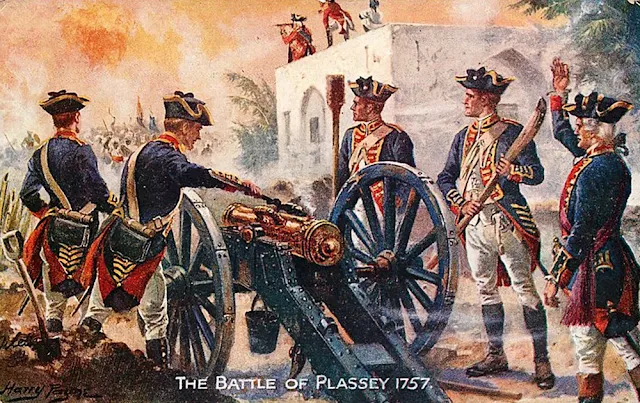
Nawab Siraj-ud-Daulah's mangled corpse was being paraded on the back of an elephant through the alleys and markets of Murshidabad! The purpose was to inform the residents of Murshidabad that Siraj had been killed! Proximity to, distance from, and strategies of power sealed the fate of Bengal vis-à-vis Indo-Pak-Bangla subcontinent and, specifically, that of Nawab Siraj-ud-Daulah on June 23 and July 3, 1757. The date on which Siraj's dismembered body was paraded through the streets of the capital, Murshidabad, was July 3, 1757. However, he had suffered defeat while still Nawab just a few days prior to this tragic event. Despite commanding 50,000 troops, Nawab Siraj-ud-Daulah was defeated on the battlefield of Plassey on June 23, 1757, by a force of only 3,000 East India Company soldiers led by Robert Clive, and subsequently fled to the capital, Murshidabad. While attempting to flee Murshidabad, Siraj was captured at Rajmahal and brought back to the city on July 2. Then, during the night between July 2 and 3, Nawab Siraj-ud-Daulah was hacked to death, and his dismembered body was placed on an elephant to be paraded through the city. Amidst that gruesome funeral procession, the mahout deliberately halted the elephant carrying the corpse in front of the residence of Hussain Quli Khan—whom Siraj had killed two years earlier. There, a few drops of blood from the Nawab’s body trickled onto the very spot where Hussain Quli Khan had been slain. This account is found in Siyar-ul-Mutakherin (1770/74A.D.), written by Syed Ghulam Hussain Tabatabai(1727/28-1797/98A.D.).
The assassination of Husain Quli Khan took place during the reign of Alivardi Khan, prior to Siraj-ud-Daulah’s own ascension as the Nawab of Bengal, Bihar, and Odisha. At that time, Siraj-ud-Daulah stood in close proximity to the seat of power in Murshidabad; yet, it was precisely those who had once benefited from him who ultimately sent the ill-fated Nawab Siraj-ud-Daulah to his final rest. As his mortal remains were paraded through the capital city of Murshidabad, the measure of Nawab Siraj-ud-Daulah’s ‘proximity’ to—or ‘distance’ from—‘power’ defied all quantification. Yet, the question remains: who was Husain Quli Khan, whose residence became the destination where Siraj’s body was brought atop an elephant after his assassination? What was his relationship with Nawab Siraj-ud-Daulah? Why did Siraj have Hussain Quli Khan killed? And who was it that handed over the fleeing Nawab Siraj-ud-Daulah to the men of the newly installed Nawab, Mir Jafar?
The Battle of Plassey began at 8:00 AM on June 23, 1757. Later, around midday, a storm with heavy rain soaked the ammunition belonging to the Nawab's forces. Subsequently, Mir Madan was killed after being struck by a cannonball fired by the British side. Following Mir Madan's death, Mohan Lal fought valiantly against the British forces. At this stage of the battle, the commander-in-chief, Mir Jafar, stood idle with his troops, thereby playing into the hands of the British. Acting on the advice of the passive Mir Jafar, Nawab Siraj-ud-Daulah announced his decision to retreat. Immediately thereafter, the Nawab's troops broke ranks and began to flee. Amidst this situation, the Nawab issued orders for the withdrawal of his forces and set out from the battlefield for the royal palace. He arrived at the palace on the morning of the following day, June 24; at that time, no one came to meet him there. Regarding this, Syed Ghulam Husain Khan Tabatabai wrote:
‘...Nawab Siraj-ud-Daulah fled his palace around three o'clock in the morning; this was the seventh day of the month of Shawwal.’ (Mutakherin, Volume 2, p. 235)
Fleeing in disguise at 3 a.m., he first traveled from Murshidabad to Bhagwangola. A couple of days later, he was making his escape along the river. While on their journey, Nawab Siraj-ud-Daulah and his companions were overcome by hunger and thirst. According to the Siyar-ul-Mutakherin, Siraj-ud-Daulah—then in the clutches of destiny—was taken to the bank opposite Rajmahal, where he disembarked for about an hour. The purpose was to prepare some khichuri (It is a dish in South Asian cuisine made of rice and lentils with numerous variations.) for himself and his fellow travelers. From the moment they set out from the palace in Murshidabad, none of them had been able to taste any food for three days and nights. As it happened, a fakir lived in that neighborhood. Siraj-ud-Daulah struck this man named Fakir Dana Shah when he was on the verge of attaining power by virtue of being the grandson of Nawab Alivardi Khan. Many say that Siraj-ud-Daulah had even had his ear cut off! He had harbored a grudge against Siraj all this time, and he rejoiced at this golden opportunity for revenge when Siraj-ud-Daulah appeared at his hermitage. He (Fakir Shah Dana) expressed delight at Siraj’s arrival; yet, under the pretext of preparing food for him, he sent word of Siraj's presence to the men of Mir Jafar—Siraj's enemy. Following the Battle of Plassey, Mir Jafar’s men had been scouring heaven and earth in search of Siraj-ud-Daulah. Upon receiving the news from Fakir Shah Dana, Mir Qasim and Mir Dad swiftly arrived at the fakir's hermitage. Mir Jafar's men were delighted to gain possession of the unfortunate Siraj's family and their jewels. (p. 239) Two chapters titled "The Plot to Assassinate" in Karam Ali Khan’s book Muzaffarnama describe how desperate Alivardi had become to have Husain Quli Khan killed. Karam Ali Khan also highlighted that Siraj-ud-Daulah had—with Alivardi Khan’s knowledge—hired assassins to kill Husain Quli Khan in open court. The matter did not end there; when that plot was exposed, Alivardi himself became involved in the conspiracy to assassinate Husain Quli Khan. There was only one reason behind this: Alivardi Khan believed that Husain Quli Khan was the only person capable of dethroning Siraj in the future. Consequently, he deemed it inevitable that Husain Quli Khan be eliminated. Ultimately, that is precisely what was done. Also relevant in this context is the information regarding the close relationship between Husain Quli Khan and Alivardi Khan’s daughter, Ghaseti Begum, who opposed Siraj’s accession to the position of Nawab. In his Siyar-ul-Mutakherin, Syed Ghulam Hussain Khan Tabatabai has characterized the death of Husain Quli Khan as an act of "innocent bloodshed." He states that this killing set in motion a chain of events that proved fatal to the power and dominion Alivardi Khan had built through immense physical exertion and nurtured with tireless effort. It ignited a blind fire that began to spew smoke immediately after these two murders—a fire that ultimately destroyed countless families in its path and spread its devastation far and wide, consuming everything in that once-prosperous region of Bengal. It demonstrated the truth of the profound saying: "As you sow, so shall you reap." (Mutakhkherin Vol. 2, p. 126)
Siraj-ud-Daulah was captured by his own servants and brought back to Murshidabad eight days after fleeing the royal palace; the date was the 15th of Shawwal, 1170 Hijri. At that time, Siraj was in such a pitiable state that those who saw him in this wretched condition—recalling the luxury, glory, care, and splendor amidst which he had been raised since childhood—could not help but reflect on the intensity of his temperament. Some of those present could not bear the extremity of Nawab Siraj-ud-Daulah's plight, yet they did not wish to immediately rescue the fallen Nawab from captivity. (Mutakherin Vol. 2, pp. 240–241)
By this time, the new Nawab, Mir Jafar, had taken possession of the palace vacated by Nawab Siraj and ascended the throne. When Siraj was brought near the palace, Mir Jafar was taking a midday nap. At that moment, Mir Jafar's son ordered that Siraj be detained near his own quarters and instructed a large group of his friends—who were present at the time—to go and directly abuse, humiliate, and assault the unfortunate Siraj. However, they all flatly rejected the proposal. They did not wish to tarnish their reputations by mistreating Nawab Siraj-ud-Daulah; indeed, some even opposed the proposal. After many had angrily rejected the task, a man named Mohammadi Beg finally agreed to carry it out. Mohammadi Beg had previously been able to transform his fortunes—both personally and for his family—with the help of Nawab Siraj-ud-Daulah's father. It was that very man who had agreed to carry out the heinous act against Siraj-ud-Daulah. Two or three hours after Siraj-ud-Daulah had been brought in, Muhammadi Beg appeared before him. Looking at that miscreant, Siraj-ud-Daulah asked, "Has he not come to kill me?" Someone answered "Yes" to this question. Siraj humbled himself before the Creator of all mercy and sought forgiveness for his past conduct, saying, "They are not—(his voice breaking with emotion)—they are not even prepared to grant me the opportunity to retire elsewhere and spend my final days living on a pension; (here he paused for a moment, and, as if recalling something, added)—no—they are not—and I must die—to atone for the murder of Husain Quli Khan." He had no time to say anything more; following these words, the executioner struck him repeatedly with his sword—blows that fell upon that beautiful face, renowned throughout Bengal for its charm. According to the account of Ghulam Husain Khan Tabatabai, "It is enough—this is enough—my task is done—and the death of Husain Quli Khan has been avenged..." As he uttered these words, Siraj collapsed; his soul returned to his Creator, and through his own blood, he departed from this valley of sorrow. His body was hacked to pieces by countless blows and flung onto the back of an elephant to be paraded through the city's most densely populated areas. This procession of Siraj's corpse served to convey the message of the new Nawab's seizure of power to the entire city. Although revenge or vindictiveness was satisfied through the assassination of the defeated Nawab—who had fallen helpless victim to the ‘stratagems’ of Robert Clive and the traitor Mir Jafar during the Battle of Plassey—Siraj-ud-Daulah’s political commitment to independence continues to resonate universally within the consciousness of the freedom-loving people of the subcontinent.
*Professor Dr. Arun Kumar Goswami (Retired), Researcher and Writer, Dhaka
The assassination of Husain Quli Khan took place during the reign of Alivardi Khan, prior to Siraj-ud-Daulah’s own ascension as the Nawab of Bengal, Bihar, and Odisha. At that time, Siraj-ud-Daulah stood in close proximity to the seat of power in Murshidabad; yet, it was precisely those who had once benefited from him who ultimately sent the ill-fated Nawab Siraj-ud-Daulah to his final rest. As his mortal remains were paraded through the capital city of Murshidabad, the measure of Nawab Siraj-ud-Daulah’s ‘proximity’ to—or ‘distance’ from—‘power’ defied all quantification. Yet, the question remains: who was Husain Quli Khan, whose residence became the destination where Siraj’s body was brought atop an elephant after his assassination? What was his relationship with Nawab Siraj-ud-Daulah? Why did Siraj have Hussain Quli Khan killed? And who was it that handed over the fleeing Nawab Siraj-ud-Daulah to the men of the newly installed Nawab, Mir Jafar?
The Battle of Plassey began at 8:00 AM on June 23, 1757. Later, around midday, a storm with heavy rain soaked the ammunition belonging to the Nawab's forces. Subsequently, Mir Madan was killed after being struck by a cannonball fired by the British side. Following Mir Madan's death, Mohan Lal fought valiantly against the British forces. At this stage of the battle, the commander-in-chief, Mir Jafar, stood idle with his troops, thereby playing into the hands of the British. Acting on the advice of the passive Mir Jafar, Nawab Siraj-ud-Daulah announced his decision to retreat. Immediately thereafter, the Nawab's troops broke ranks and began to flee. Amidst this situation, the Nawab issued orders for the withdrawal of his forces and set out from the battlefield for the royal palace. He arrived at the palace on the morning of the following day, June 24; at that time, no one came to meet him there. Regarding this, Syed Ghulam Husain Khan Tabatabai wrote:
‘...Nawab Siraj-ud-Daulah fled his palace around three o'clock in the morning; this was the seventh day of the month of Shawwal.’ (Mutakherin, Volume 2, p. 235)
Fleeing in disguise at 3 a.m., he first traveled from Murshidabad to Bhagwangola. A couple of days later, he was making his escape along the river. While on their journey, Nawab Siraj-ud-Daulah and his companions were overcome by hunger and thirst. According to the Siyar-ul-Mutakherin, Siraj-ud-Daulah—then in the clutches of destiny—was taken to the bank opposite Rajmahal, where he disembarked for about an hour. The purpose was to prepare some khichuri (It is a dish in South Asian cuisine made of rice and lentils with numerous variations.) for himself and his fellow travelers. From the moment they set out from the palace in Murshidabad, none of them had been able to taste any food for three days and nights. As it happened, a fakir lived in that neighborhood. Siraj-ud-Daulah struck this man named Fakir Dana Shah when he was on the verge of attaining power by virtue of being the grandson of Nawab Alivardi Khan. Many say that Siraj-ud-Daulah had even had his ear cut off! He had harbored a grudge against Siraj all this time, and he rejoiced at this golden opportunity for revenge when Siraj-ud-Daulah appeared at his hermitage. He (Fakir Shah Dana) expressed delight at Siraj’s arrival; yet, under the pretext of preparing food for him, he sent word of Siraj's presence to the men of Mir Jafar—Siraj's enemy. Following the Battle of Plassey, Mir Jafar’s men had been scouring heaven and earth in search of Siraj-ud-Daulah. Upon receiving the news from Fakir Shah Dana, Mir Qasim and Mir Dad swiftly arrived at the fakir's hermitage. Mir Jafar's men were delighted to gain possession of the unfortunate Siraj's family and their jewels. (p. 239) Two chapters titled "The Plot to Assassinate" in Karam Ali Khan’s book Muzaffarnama describe how desperate Alivardi had become to have Husain Quli Khan killed. Karam Ali Khan also highlighted that Siraj-ud-Daulah had—with Alivardi Khan’s knowledge—hired assassins to kill Husain Quli Khan in open court. The matter did not end there; when that plot was exposed, Alivardi himself became involved in the conspiracy to assassinate Husain Quli Khan. There was only one reason behind this: Alivardi Khan believed that Husain Quli Khan was the only person capable of dethroning Siraj in the future. Consequently, he deemed it inevitable that Husain Quli Khan be eliminated. Ultimately, that is precisely what was done. Also relevant in this context is the information regarding the close relationship between Husain Quli Khan and Alivardi Khan’s daughter, Ghaseti Begum, who opposed Siraj’s accession to the position of Nawab. In his Siyar-ul-Mutakherin, Syed Ghulam Hussain Khan Tabatabai has characterized the death of Husain Quli Khan as an act of "innocent bloodshed." He states that this killing set in motion a chain of events that proved fatal to the power and dominion Alivardi Khan had built through immense physical exertion and nurtured with tireless effort. It ignited a blind fire that began to spew smoke immediately after these two murders—a fire that ultimately destroyed countless families in its path and spread its devastation far and wide, consuming everything in that once-prosperous region of Bengal. It demonstrated the truth of the profound saying: "As you sow, so shall you reap." (Mutakhkherin Vol. 2, p. 126)
Siraj-ud-Daulah was captured by his own servants and brought back to Murshidabad eight days after fleeing the royal palace; the date was the 15th of Shawwal, 1170 Hijri. At that time, Siraj was in such a pitiable state that those who saw him in this wretched condition—recalling the luxury, glory, care, and splendor amidst which he had been raised since childhood—could not help but reflect on the intensity of his temperament. Some of those present could not bear the extremity of Nawab Siraj-ud-Daulah's plight, yet they did not wish to immediately rescue the fallen Nawab from captivity. (Mutakherin Vol. 2, pp. 240–241)
By this time, the new Nawab, Mir Jafar, had taken possession of the palace vacated by Nawab Siraj and ascended the throne. When Siraj was brought near the palace, Mir Jafar was taking a midday nap. At that moment, Mir Jafar's son ordered that Siraj be detained near his own quarters and instructed a large group of his friends—who were present at the time—to go and directly abuse, humiliate, and assault the unfortunate Siraj. However, they all flatly rejected the proposal. They did not wish to tarnish their reputations by mistreating Nawab Siraj-ud-Daulah; indeed, some even opposed the proposal. After many had angrily rejected the task, a man named Mohammadi Beg finally agreed to carry it out. Mohammadi Beg had previously been able to transform his fortunes—both personally and for his family—with the help of Nawab Siraj-ud-Daulah's father. It was that very man who had agreed to carry out the heinous act against Siraj-ud-Daulah. Two or three hours after Siraj-ud-Daulah had been brought in, Muhammadi Beg appeared before him. Looking at that miscreant, Siraj-ud-Daulah asked, "Has he not come to kill me?" Someone answered "Yes" to this question. Siraj humbled himself before the Creator of all mercy and sought forgiveness for his past conduct, saying, "They are not—(his voice breaking with emotion)—they are not even prepared to grant me the opportunity to retire elsewhere and spend my final days living on a pension; (here he paused for a moment, and, as if recalling something, added)—no—they are not—and I must die—to atone for the murder of Husain Quli Khan." He had no time to say anything more; following these words, the executioner struck him repeatedly with his sword—blows that fell upon that beautiful face, renowned throughout Bengal for its charm. According to the account of Ghulam Husain Khan Tabatabai, "It is enough—this is enough—my task is done—and the death of Husain Quli Khan has been avenged..." As he uttered these words, Siraj collapsed; his soul returned to his Creator, and through his own blood, he departed from this valley of sorrow. His body was hacked to pieces by countless blows and flung onto the back of an elephant to be paraded through the city's most densely populated areas. This procession of Siraj's corpse served to convey the message of the new Nawab's seizure of power to the entire city. Although revenge or vindictiveness was satisfied through the assassination of the defeated Nawab—who had fallen helpless victim to the ‘stratagems’ of Robert Clive and the traitor Mir Jafar during the Battle of Plassey—Siraj-ud-Daulah’s political commitment to independence continues to resonate universally within the consciousness of the freedom-loving people of the subcontinent.
*Professor Dr. Arun Kumar Goswami (Retired), Researcher and Writer, Dhaka
You May Also Like

History is a stern teacher, but nations that refuse to learn from its lessons are condemned to repeat its tragedies. The Muslim world, blessed with

The USA should not be apologetic about controlling & leading the world militarily in the interest of establishing and running a ‘new huma


PCP need your support that we may provide you better services: click on donate


"Trial of Pakistani Christian Nation" By Nazir S Bhatti
On demand of our readers, I have decided to release E-Book version of "Trial of Pakistani Christian Nation" on website of PCP which can also be viewed on website of Pakistan Christian Congress www.pakistanchristiancongress.org . You can read chapter wise by clicking tab on left handside of PDF format of E-Book.