
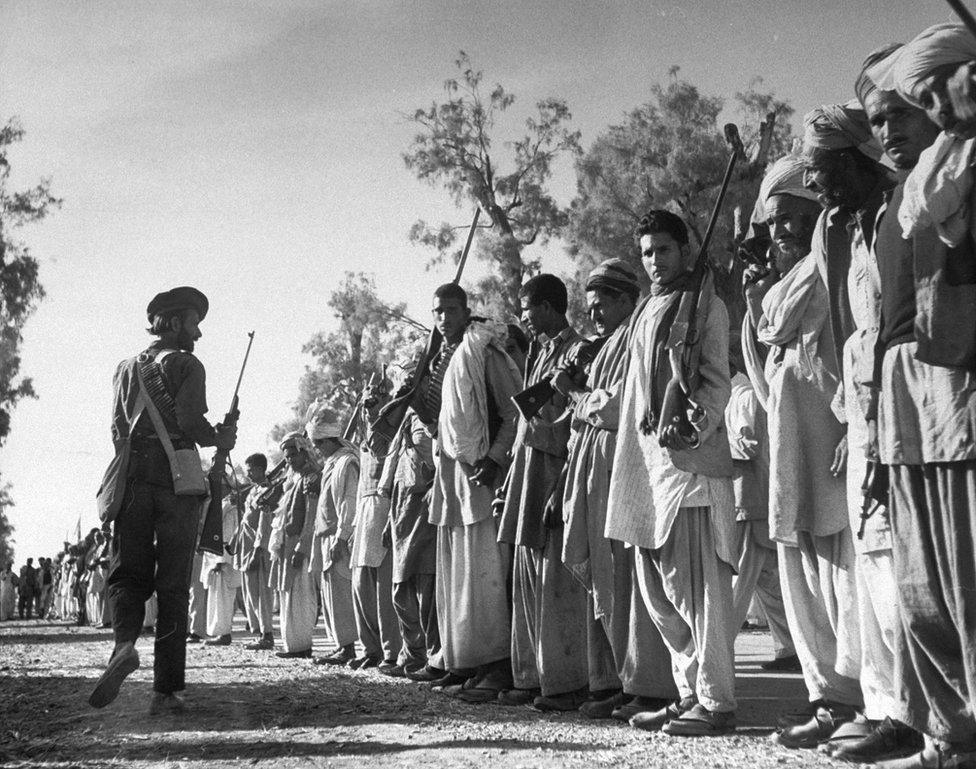
October 22, 1947, remains one of the darkest dates in the history of Jammu and Kashmir. On this day, armed tribal raiders backed by Pakistan launch
From sea barriers to TB elimination: Lakshadweep’s #endTB blueprint for India. By SHOBHA SHUKLA
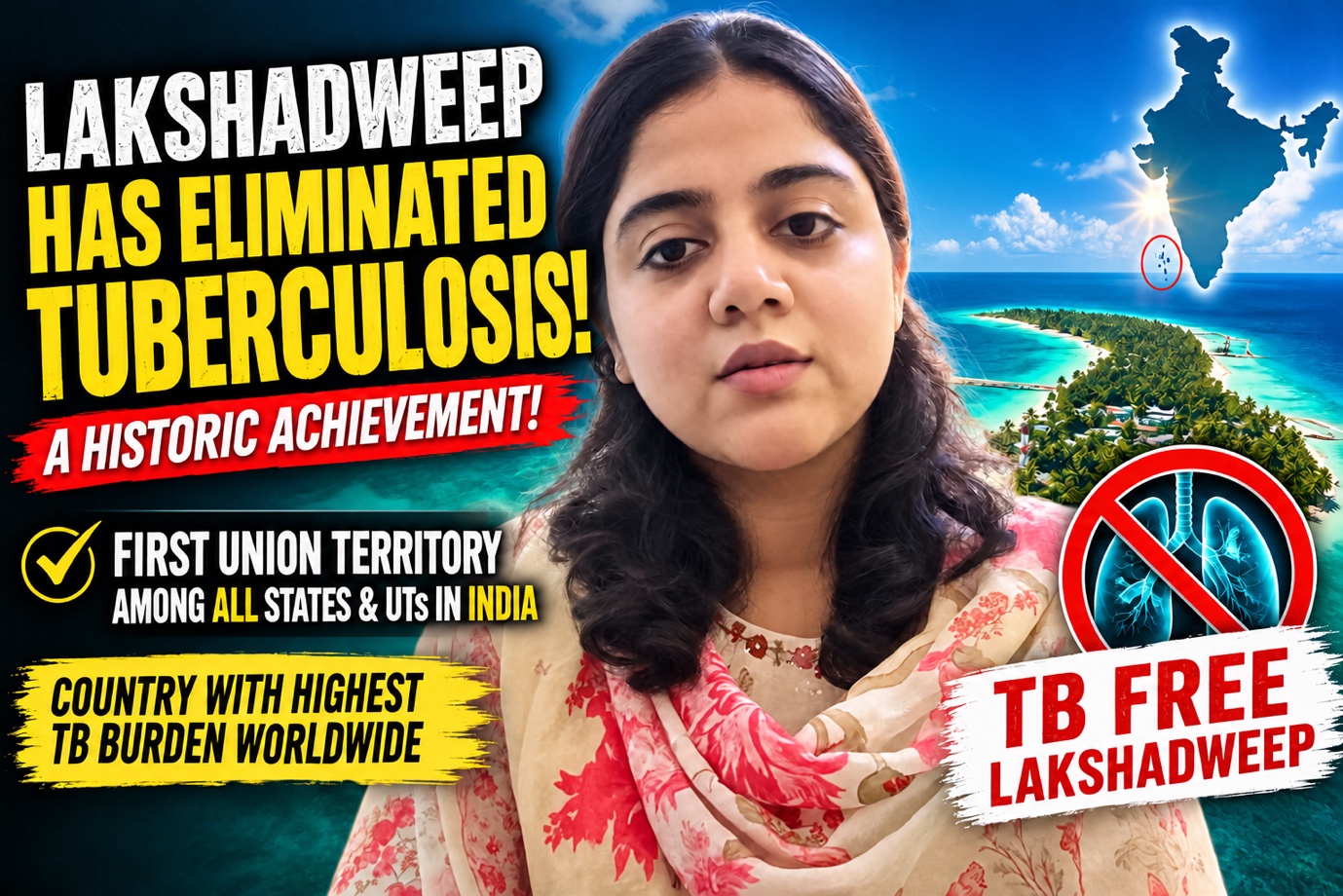
In a landmark public health achievement, Lakshadweep became the first among Indian states and union territories to reach TB elimination levels. Lakshadweep is a sterling example that if we prevent-find-treat ALL TB in a person-centred and rights-based manner where "no one is left behind," we can end TB - even in a part of a country like India (which has the highest TB burden globally).
Ahead of Union World Conference on Lung Health 2026, the End TB Dialogues session featured Dr MP Nezeeda, the State TB Officer of Lakshadweep, who shared insights from the territory's journey to TB elimination.
She highlighted how sustained community engagement, active and intensified door-to-door screening, regular followup of those on TB treatment to ensure treatment adherence, and strong administrative support turned geographic isolation into a strength.
The remote archipelago of Lakshadweep islands in Arabian Sea on the south-west coast of India, separated from the land by hours of sea travel, has notified remarkably low numbers of TB cases. Since December 2024, only 35 TB cases have been reported. From January of the current year, 14 people with TB disease were notified, including those who were transferred from nearby Kerala. Six of those patients have completed treatment, with eight still undergoing care. All current cases are drug-sensitive, with no multi-drug-resistant TB recorded, and three are extra-pulmonary, said Dr Nezeeda.
Island geography turns isolation into opportunity for close-knit surveillance
Lakshadweep has a unique setting of spread-out small and larger islands, that are around four-five hours of journey apart by sea from each other. The closest island Andrott is 13-15 hours away by ship from Kerala's coast and Lakshadweep's capital Kavaratti is 18-20 hours away from the coast by ship or 1.5 hours by flight from Kochi to Agatti (Lakshadweep's only airport) and then another 3-5 hours by boat to Kavaratti.
Rough sea and inclement weather ups the challenge manifold. "Because of the geographic dispersion and heavy dependence on maritime transport, the inter-island connectivity always remains uncertain. In a typical year, for almost 5 months, the monsoon- and weather-related disruptions make it difficult even for the supplies to reach these islands," said Dr Rakesh PS, TB elimination expert who spoke in a CNS session at 26th International AIDS Conference (AIDS 2026).
The State TB Cell of Indian government's National TB Elimination Programme operates from Kavaratti, while each of the ten human-inhabited islands has its dedicated team. This includes TB survivors and/or local community leaders, medical officers, panchayat executive officers, and health staff who form the island-level TB committees.
Dr Nezeeda emphasised that the small population allows personal knowledge of residents. Lakshadweep is the smallest among all Indian states and Union Territories.
"We almost know each and everyone personally," she said. This familiarity enables direct requests for support from political leaders, religious figures, teachers, and community members, fostering a true people’s movement rather than a top-down programme.
ASHA frontline workers lead science-based door-to-door active case finding
Ground-level frontline workers, particularly ASHAs (Accredited Social Health Activists), form the backbone of TB detection. Regular quarterly campaigns send them house-to-house to screen vulnerable populations for TB symptoms based on latest science and evidence. They refer TB symptomatic individuals to the nearest hospitals or collect sputum samples themselves when patients cannot travel.
Teachers conduct school awareness sessions so that students carry messages home. Right and timely knowledge helps to dispel darkness of TB stigma and discrimination. Religious leaders dedicate five to ten minutes during Friday prayers ('Juma' in the mosque) to discuss TB symptoms, screening camps, and the Nikshay Poshan Yojana - government's nutritional support scheme. Over 96% of the population in Lakshadweep are muslims. Panchayat members mobilise residents for TB and healths screening camps. "Basically, this is a people's movement," Dr Nezeeda noted. "Everyone is actively involved."
Patients show little hesitation about testing or treatment. In such a close community, emotional, psychosocial, and practical support surrounds those diagnosed. Contacts of those diagnosed with TB disease are offered TB preventive therapy, if eligible, so that in case they have a TB latent infection, there is negligible risk of it progressing to active TB disease, shared Dr Nezeeda.
Diagnostic tools reach the people in every island despite hurdles
Lakshadweep TB Elimination Mission was launched in 2018 by the Government of India.
Years back, TB molecular testing CB-NAAT was only available in Kavaratti (capital island of Lakshadweep). This posed significant diagnostic delays because sputum samples needed to cross the vast Arabian Sea, said Dr Rakesh PS.
Dr Nezeeda said that now, each of the ten human-inhabited islands is equipped with WHO recommended Truenat machines for rapid molecular testing. Some of these machines were originally procured for COVID-19 testing through disaster management funds and later repurposed for TB molecular testing (because Truenat machines can offer multi-disease molecular testing for over 40 diseases). Also, Truenat detects rifampicin drug resistance upfront within an hour.
"Decentralisation of molecular testing brought the diagnosis closer to the people," said Dr Rakesh PS.
Thanks to Indian Council of Medical Research (ICMR), there are indigenously developed artificial intelligence enabled digital X-Rays, including fixed units, on all islands, as well as a handheld X-Ray in Kavaratti, to support TB screening campaigns. Samples requiring "culture" or further drug-sensitivity testing are transported to the nearest reference laboratory in Thiruvananthapuram, Kerala.
Challenges remain. Geographic isolation limits rapid repairs. When a Truenat machine needs any maintenance, it must be shipped to the mainland, temporarily reducing testing capacity until a ship schedule allows return, says Dr Nezeeda. Yet teams adapt, relying on available resources, and getting the test done on Truenat at the nearest island. Administration provides full backing, allowing campaigns to expand to government offices and other sites.
Comprehensive support to those on TB treatment ensures high adherence
Treatment adherence is strong. Medical officers visit patients monthly. Every TB patient undergoes differentiated TB care assessment, regardless of risk level. State TB Cell staff - including Senior Treatment Supervisors (STS) and senior TB Laboratory Supervisors (STLS) call patients regularly individually to monitor progress and well-being. ASHA workers go in-person daily to each of the TB patients (at a time convenient to the person on treatment) to ensure treatment adherence.
Nutritional support goes beyond the patient: a 10 kg food basket is provided to each patient as well as to his/her caretaker. Government incentives reach recipients on time. This multi-layered care builds trust. “They know we are there to support them in every aspect,” Dr Nezeeda explained. Patients complete treatment and can contact the team directly when needed. She insisted upon providing customised support to resolve problems individuals may be facing while on the therapy, so that they can tide through the treatment and get cured.
ASHA workers and other field staff also record non-communicable disease patients during visits, integrating efforts where possible. Non-communicable diseases like diabetes increase the risk of TB (or latent TB or progressing from latent to active TB disease) manifold.
Local actions inspire actions to achieve global goals
Dr Nezeeda credited previous State TB Officers, team and other supporters for laying the foundation that progressively enabled actions to end TB. The current success rests on continuous active campaigns spanning years, universal community participation, and eventual absence of drug-resistant cases.
The approach aligns with the broader call to prevent, find, and treat all TB in a person-centred, rights-based manner while moving toward integrated healthcare. In Lakshadweep, the combination of personal connections, empowered frontline workers, and adaptive use of technology has driven case numbers to elimination thresholds, said Dr Nezeeda.
In 2021, the Government of India, World Health Organization (WHO) India, and Indian Council of Medical Research (ICMR), certified Lakshadweep as the first TB-free geography in India. "The sun of a TB-free India arose in the west," said Dr Rakesh PS.
As India intensifies its national TB elimination efforts, the Lakshadweep experience demonstrates that even in the most geographically challenging settings, sustained community ownership and comprehensive patient support can achieve remarkable results. The territory’s low notification figures, high treatment completion, and zero drug-resistant TB cases stand as concrete evidence of what coordinated, people-centred action can achieve.
(Shobha Shukla is a feminist, health and development justice advocate, and an award-winning founding Managing Editor and Executive Director of CNS (Citizen News Service). She serves as Chairperson of Global AMR Media Alliance (GAMA), Host and Coordinator of SHE & Rights (Sexual Health with Equity & Rights), President of Asia Pacific Media Alliance for Health, Gender and Development Justice (APCAT Media), and founder leader of DJOP (Development Justice for Older Persons) initiative. She is the author of 2026 book "Justice Unbound: Feminist Voices on Gender Equality, Health Rights, and Inclusive Futures" and was also the Lead Discussant for SDG-3 at United Nations inter-governmental High Level Political Forum 2025. GAMA, led by her, received the AMR One Health Emerging Leaders and Outstanding Talents Award at UN High Level Ministerial Conference on AMR 2024. Follow her on X @shobha1shukla or read her writings here www.bit.ly/ShobhaShukla)
Ahead of Union World Conference on Lung Health 2026, the End TB Dialogues session featured Dr MP Nezeeda, the State TB Officer of Lakshadweep, who shared insights from the territory's journey to TB elimination.
She highlighted how sustained community engagement, active and intensified door-to-door screening, regular followup of those on TB treatment to ensure treatment adherence, and strong administrative support turned geographic isolation into a strength.
The remote archipelago of Lakshadweep islands in Arabian Sea on the south-west coast of India, separated from the land by hours of sea travel, has notified remarkably low numbers of TB cases. Since December 2024, only 35 TB cases have been reported. From January of the current year, 14 people with TB disease were notified, including those who were transferred from nearby Kerala. Six of those patients have completed treatment, with eight still undergoing care. All current cases are drug-sensitive, with no multi-drug-resistant TB recorded, and three are extra-pulmonary, said Dr Nezeeda.
Island geography turns isolation into opportunity for close-knit surveillance
Lakshadweep has a unique setting of spread-out small and larger islands, that are around four-five hours of journey apart by sea from each other. The closest island Andrott is 13-15 hours away by ship from Kerala's coast and Lakshadweep's capital Kavaratti is 18-20 hours away from the coast by ship or 1.5 hours by flight from Kochi to Agatti (Lakshadweep's only airport) and then another 3-5 hours by boat to Kavaratti.
Rough sea and inclement weather ups the challenge manifold. "Because of the geographic dispersion and heavy dependence on maritime transport, the inter-island connectivity always remains uncertain. In a typical year, for almost 5 months, the monsoon- and weather-related disruptions make it difficult even for the supplies to reach these islands," said Dr Rakesh PS, TB elimination expert who spoke in a CNS session at 26th International AIDS Conference (AIDS 2026).
The State TB Cell of Indian government's National TB Elimination Programme operates from Kavaratti, while each of the ten human-inhabited islands has its dedicated team. This includes TB survivors and/or local community leaders, medical officers, panchayat executive officers, and health staff who form the island-level TB committees.
Dr Nezeeda emphasised that the small population allows personal knowledge of residents. Lakshadweep is the smallest among all Indian states and Union Territories.
"We almost know each and everyone personally," she said. This familiarity enables direct requests for support from political leaders, religious figures, teachers, and community members, fostering a true people’s movement rather than a top-down programme.
ASHA frontline workers lead science-based door-to-door active case finding
Ground-level frontline workers, particularly ASHAs (Accredited Social Health Activists), form the backbone of TB detection. Regular quarterly campaigns send them house-to-house to screen vulnerable populations for TB symptoms based on latest science and evidence. They refer TB symptomatic individuals to the nearest hospitals or collect sputum samples themselves when patients cannot travel.
Teachers conduct school awareness sessions so that students carry messages home. Right and timely knowledge helps to dispel darkness of TB stigma and discrimination. Religious leaders dedicate five to ten minutes during Friday prayers ('Juma' in the mosque) to discuss TB symptoms, screening camps, and the Nikshay Poshan Yojana - government's nutritional support scheme. Over 96% of the population in Lakshadweep are muslims. Panchayat members mobilise residents for TB and healths screening camps. "Basically, this is a people's movement," Dr Nezeeda noted. "Everyone is actively involved."
Patients show little hesitation about testing or treatment. In such a close community, emotional, psychosocial, and practical support surrounds those diagnosed. Contacts of those diagnosed with TB disease are offered TB preventive therapy, if eligible, so that in case they have a TB latent infection, there is negligible risk of it progressing to active TB disease, shared Dr Nezeeda.
Diagnostic tools reach the people in every island despite hurdles
Lakshadweep TB Elimination Mission was launched in 2018 by the Government of India.
Years back, TB molecular testing CB-NAAT was only available in Kavaratti (capital island of Lakshadweep). This posed significant diagnostic delays because sputum samples needed to cross the vast Arabian Sea, said Dr Rakesh PS.
Dr Nezeeda said that now, each of the ten human-inhabited islands is equipped with WHO recommended Truenat machines for rapid molecular testing. Some of these machines were originally procured for COVID-19 testing through disaster management funds and later repurposed for TB molecular testing (because Truenat machines can offer multi-disease molecular testing for over 40 diseases). Also, Truenat detects rifampicin drug resistance upfront within an hour.
"Decentralisation of molecular testing brought the diagnosis closer to the people," said Dr Rakesh PS.
Thanks to Indian Council of Medical Research (ICMR), there are indigenously developed artificial intelligence enabled digital X-Rays, including fixed units, on all islands, as well as a handheld X-Ray in Kavaratti, to support TB screening campaigns. Samples requiring "culture" or further drug-sensitivity testing are transported to the nearest reference laboratory in Thiruvananthapuram, Kerala.
Challenges remain. Geographic isolation limits rapid repairs. When a Truenat machine needs any maintenance, it must be shipped to the mainland, temporarily reducing testing capacity until a ship schedule allows return, says Dr Nezeeda. Yet teams adapt, relying on available resources, and getting the test done on Truenat at the nearest island. Administration provides full backing, allowing campaigns to expand to government offices and other sites.
Comprehensive support to those on TB treatment ensures high adherence
Treatment adherence is strong. Medical officers visit patients monthly. Every TB patient undergoes differentiated TB care assessment, regardless of risk level. State TB Cell staff - including Senior Treatment Supervisors (STS) and senior TB Laboratory Supervisors (STLS) call patients regularly individually to monitor progress and well-being. ASHA workers go in-person daily to each of the TB patients (at a time convenient to the person on treatment) to ensure treatment adherence.
Nutritional support goes beyond the patient: a 10 kg food basket is provided to each patient as well as to his/her caretaker. Government incentives reach recipients on time. This multi-layered care builds trust. “They know we are there to support them in every aspect,” Dr Nezeeda explained. Patients complete treatment and can contact the team directly when needed. She insisted upon providing customised support to resolve problems individuals may be facing while on the therapy, so that they can tide through the treatment and get cured.
ASHA workers and other field staff also record non-communicable disease patients during visits, integrating efforts where possible. Non-communicable diseases like diabetes increase the risk of TB (or latent TB or progressing from latent to active TB disease) manifold.
Local actions inspire actions to achieve global goals
Dr Nezeeda credited previous State TB Officers, team and other supporters for laying the foundation that progressively enabled actions to end TB. The current success rests on continuous active campaigns spanning years, universal community participation, and eventual absence of drug-resistant cases.
The approach aligns with the broader call to prevent, find, and treat all TB in a person-centred, rights-based manner while moving toward integrated healthcare. In Lakshadweep, the combination of personal connections, empowered frontline workers, and adaptive use of technology has driven case numbers to elimination thresholds, said Dr Nezeeda.
In 2021, the Government of India, World Health Organization (WHO) India, and Indian Council of Medical Research (ICMR), certified Lakshadweep as the first TB-free geography in India. "The sun of a TB-free India arose in the west," said Dr Rakesh PS.
As India intensifies its national TB elimination efforts, the Lakshadweep experience demonstrates that even in the most geographically challenging settings, sustained community ownership and comprehensive patient support can achieve remarkable results. The territory’s low notification figures, high treatment completion, and zero drug-resistant TB cases stand as concrete evidence of what coordinated, people-centred action can achieve.
(Shobha Shukla is a feminist, health and development justice advocate, and an award-winning founding Managing Editor and Executive Director of CNS (Citizen News Service). She serves as Chairperson of Global AMR Media Alliance (GAMA), Host and Coordinator of SHE & Rights (Sexual Health with Equity & Rights), President of Asia Pacific Media Alliance for Health, Gender and Development Justice (APCAT Media), and founder leader of DJOP (Development Justice for Older Persons) initiative. She is the author of 2026 book "Justice Unbound: Feminist Voices on Gender Equality, Health Rights, and Inclusive Futures" and was also the Lead Discussant for SDG-3 at United Nations inter-governmental High Level Political Forum 2025. GAMA, led by her, received the AMR One Health Emerging Leaders and Outstanding Talents Award at UN High Level Ministerial Conference on AMR 2024. Follow her on X @shobha1shukla or read her writings here www.bit.ly/ShobhaShukla)
You May Also Like

In the developed nations of the world—such as those in Europe, the United States, and the United Kingdom—a democratic form of governmen

Evidence is “the raw data, material, testimony, or information presented to support or disprove a claim.” Proof is “the final con


PCP need your support that we may provide you better services: click on donate


"Trial of Pakistani Christian Nation" By Nazir S Bhatti
On demand of our readers, I have decided to release E-Book version of "Trial of Pakistani Christian Nation" on website of PCP which can also be viewed on website of Pakistan Christian Congress www.pakistanchristiancongress.org . You can read chapter wise by clicking tab on left handside of PDF format of E-Book.