

The latest remarks by Turkish President Recep Tayyip Erdoğan at the 81st United Nations General Assembly, where he again referred to Kashmir and ca
How EAEU and SCO are building African-Eurasian-ASEAN-Chinese-Indian economic corridor through 2027-2030 Action Plan: Views from the ‘Russia’s Pivot To Asia’, By Stephen Rozario
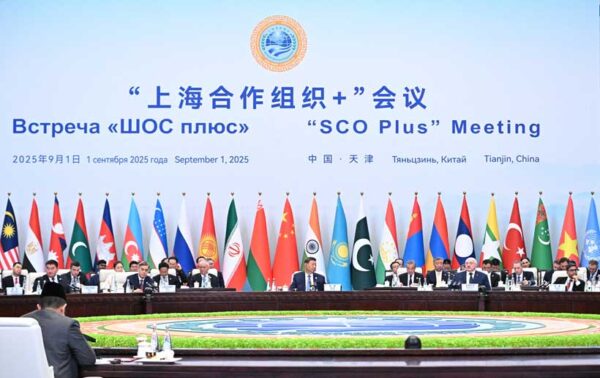
A research-report by the Russia’s Pivot To Asia said that on 17 September 2026, Bakytzhan Sagintayev, Chairman of the Board of the Eurasian Economic Commission (EEC), and Nurlan Yermekbayev, Secretary General of the Shanghai Cooperation Organisation (SCO), signed a Joint Plan of Activities for 2027–2030 at the SCO headquarters in Beijing. The agreement develops the institutional foundation created by the 2021 EEC–SCO Memorandum of Understanding and moves cooperation toward a more structured four-year programme. Rather than being a financing treaty for a particular railway, corridor, industrial park or investment fund, the Action Plan establishes mechanisms for institutional coordination, information exchange, analytical work, joint events and interaction between business organisations. Its areas of cooperation include digitalisation and information and communication technologies, customs regulation, agro-industry, food security, sanitary, veterinary and phytosanitary measures, consumer protection, the green economy and broader economic information exchange. Russia’s Pivot To Asia argued that Its central purpose is therefore to improve the mechanisms through which existing trade can expand and become more efficient.
The economic significance of the framework is based on the already substantial relationship between the two organisations. EAEU trade with SCO countries reached approximately US$371 billion in 2025, nearly four times the level of a decade earlier, while trade during January–June 2026 reached about US$197 billion, an increase of more than 17% year on year. SCO countries accounted for almost 48% of the EAEU’s total foreign trade. The EAEU consists of Armenia, Belarus, Kazakhstan, Kyrgyzstan and Russia and operates as a formal economic integration bloc with internal free movement arrangements and external trade agreements, including FTAs with Iran, Serbia and Vietnam, a temporary trade agreement with Mongolia and a non-preferential trade and economic cooperation agreement with China. An Indonesian FTA is undergoing ratification and negotiations with India are advancing. The SCO, by contrast, is a broader organisation combining security, political and economic cooperation and includes 10 members—Belarus, India, Iran, Kazakhstan, China, Kyrgyzstan, Pakistan, Russia, Tajikistan and Uzbekistan—alongside a wider group of partner states. Four countries, Belarus, Kazakhstan, Kyrgyzstan and Russia, belong to both organisations, creating an institutional bridge between them.
The Action Plan concentrates on the practical infrastructure required to turn large trade flows into more efficient economic integration. Transport and logistics, industrial and technological cooperation, agriculture and food security, and artificial intelligence and digital transformation were highlighted as major areas of potential synergy during the Beijing discussions. The underlying concept is to connect east–west and north–south Eurasian transport systems rather than treating individual corridors separately. Digital infrastructure is increasingly regarded as part of physical transport infrastructure because electronic documentation, freight-data exchange, customs information and shared digital platforms can reduce administrative delays and improve cargo visibility. Common approaches to electronic trade documentation, interoperable systems and more coordinated border procedures could lower transaction costs, reduce documentary errors and make delivery schedules more predictable.
Agriculture is another major pillar. EAEU agricultural production has reportedly increased by 30.8% during the Union’s existence, while agrifood exports have nearly doubled and food self-sufficiency has reached 93.5%. SCO countries account for more than 30% of EAEU foreign trade in agricultural goods, while mutual agricultural and food trade between the two groupings exceeded US$22 billion in 2025. This makes customs procedures, food certification, sanitary and phytosanitary standards, storage, logistics and agricultural digitalisation particularly important. The objective is not merely to increase agricultural production but to improve the systems that allow food products to move safely and efficiently across borders, Russia’s Pivot To Asia said.
Industrial cooperation represents another potential transition from simple merchandise trade toward production integration. The combined EAEU–SCO commercial relationship already encompasses machinery, metallurgy, chemicals, energy equipment, transport equipment, agricultural machinery, electronics, pharmaceuticals, construction materials and food processing. Within the EAEU, Russia and Belarus have developed extensive production cooperation in sectors including automotive manufacturing, agricultural machinery, microelectronics, machine tools, optics, aircraft and shipbuilding; 26 integration projects had reportedly been implemented by the end of 2025, with bilateral trade reaching approximately ₽4.3 trillion, or around US$52 billion. Kazakhstan provides another important bridge, with its 2025 trade with SCO members reaching US$72.6 billion, including US$34.2 billion with China, US$27.4 billion with Russia, US$4.8 billion with Uzbekistan and US$2.2 billion with Kyrgyzstan. Russia–Uzbekistan trade reached US$13 billion in 2025, while more than 3,200 Russian-capital enterprises operated in Uzbekistan and a project portfolio approached US$44 billion. Russia–China trade exceeded US$227 billion in 2025, with a project portfolio above US$240 billion. These existing relationships demonstrate that the Action Plan could connect established production and investment networks rather than create cooperation from zero.
Russia occupies a particularly important connecting position because it is simultaneously an EAEU and SCO member, a major industrial and energy supplier, a large transit country and a participant in expanding national-currency settlement mechanisms. Russia’s trade with SCO economies exceeded US$400 billion in 2025, with approximately 98% reportedly settled in national currencies. National currencies also account for about 93% of intra-EAEU settlements, while Russian business transactions with other EAEU members exceed 98% in national currencies. Russian investment and production links with Kazakhstan, Kyrgyzstan, Uzbekistan, China and India further connect EAEU and SCO economic systems. India–Russia trade reached US$68.7 billion in fiscal year 2024–25, while Russia and India have targeted US$100 billion in bilateral trade by 2030. Russia–Pakistan trade, however, remained comparatively limited at US$443.8 million in 2025 after reaching a peak of US$1.12 billion in 2023, indicating that some SCO economic relationships remain considerably less developed.
Business participation is a central feature of the new framework. The EAEU and SCO Business Councils are expected to support direct business contacts, joint forums, exhibitions, investment-project presentations and sectoral cooperation. The 17 September Beijing programme itself involved representatives connected with around 30 countries and combined diplomatic, governmental, expert and business participation. The next major implementation platform is expected to be the Eurasian Economic Forum in Bishkek in May 2027. Beyond the immediate EAEU–SCO relationship, the framework also fits into wider cooperation among the EAEU, SCO, ASEAN and African Union, reflecting a broader vision of interconnected Eurasian and Eurasian-African economic partnerships, Russia’s Pivot To Asia said.
Overall, the 2027–2030 Action Plan should be understood as an implementation architecture rather than a standalone investment agreement or new integration bloc. Its importance comes from applying coordinated mechanisms to an already large US$371 billion trade relationship. The key test through 2030 will be whether institutional cooperation produces measurable improvements: faster customs clearance, interoperable electronic documents, better freight-data exchange, more compatible agricultural certification, stronger industrial partnerships, expanded investment, greater business participation and more integrated transport networks. The plan therefore represents a shift from general EAEU–SCO dialogue toward practical coordination of transport, customs, digital trade, agriculture, standards, industrial production and business networks, with the ultimate economic objective of reducing transaction costs and converting existing trade flows into deeper commercial, investment and production relationships.
Stephen Rozario is a global media watcher, reaercher, and writer
The economic significance of the framework is based on the already substantial relationship between the two organisations. EAEU trade with SCO countries reached approximately US$371 billion in 2025, nearly four times the level of a decade earlier, while trade during January–June 2026 reached about US$197 billion, an increase of more than 17% year on year. SCO countries accounted for almost 48% of the EAEU’s total foreign trade. The EAEU consists of Armenia, Belarus, Kazakhstan, Kyrgyzstan and Russia and operates as a formal economic integration bloc with internal free movement arrangements and external trade agreements, including FTAs with Iran, Serbia and Vietnam, a temporary trade agreement with Mongolia and a non-preferential trade and economic cooperation agreement with China. An Indonesian FTA is undergoing ratification and negotiations with India are advancing. The SCO, by contrast, is a broader organisation combining security, political and economic cooperation and includes 10 members—Belarus, India, Iran, Kazakhstan, China, Kyrgyzstan, Pakistan, Russia, Tajikistan and Uzbekistan—alongside a wider group of partner states. Four countries, Belarus, Kazakhstan, Kyrgyzstan and Russia, belong to both organisations, creating an institutional bridge between them.
The Action Plan concentrates on the practical infrastructure required to turn large trade flows into more efficient economic integration. Transport and logistics, industrial and technological cooperation, agriculture and food security, and artificial intelligence and digital transformation were highlighted as major areas of potential synergy during the Beijing discussions. The underlying concept is to connect east–west and north–south Eurasian transport systems rather than treating individual corridors separately. Digital infrastructure is increasingly regarded as part of physical transport infrastructure because electronic documentation, freight-data exchange, customs information and shared digital platforms can reduce administrative delays and improve cargo visibility. Common approaches to electronic trade documentation, interoperable systems and more coordinated border procedures could lower transaction costs, reduce documentary errors and make delivery schedules more predictable.
Agriculture is another major pillar. EAEU agricultural production has reportedly increased by 30.8% during the Union’s existence, while agrifood exports have nearly doubled and food self-sufficiency has reached 93.5%. SCO countries account for more than 30% of EAEU foreign trade in agricultural goods, while mutual agricultural and food trade between the two groupings exceeded US$22 billion in 2025. This makes customs procedures, food certification, sanitary and phytosanitary standards, storage, logistics and agricultural digitalisation particularly important. The objective is not merely to increase agricultural production but to improve the systems that allow food products to move safely and efficiently across borders, Russia’s Pivot To Asia said.
Industrial cooperation represents another potential transition from simple merchandise trade toward production integration. The combined EAEU–SCO commercial relationship already encompasses machinery, metallurgy, chemicals, energy equipment, transport equipment, agricultural machinery, electronics, pharmaceuticals, construction materials and food processing. Within the EAEU, Russia and Belarus have developed extensive production cooperation in sectors including automotive manufacturing, agricultural machinery, microelectronics, machine tools, optics, aircraft and shipbuilding; 26 integration projects had reportedly been implemented by the end of 2025, with bilateral trade reaching approximately ₽4.3 trillion, or around US$52 billion. Kazakhstan provides another important bridge, with its 2025 trade with SCO members reaching US$72.6 billion, including US$34.2 billion with China, US$27.4 billion with Russia, US$4.8 billion with Uzbekistan and US$2.2 billion with Kyrgyzstan. Russia–Uzbekistan trade reached US$13 billion in 2025, while more than 3,200 Russian-capital enterprises operated in Uzbekistan and a project portfolio approached US$44 billion. Russia–China trade exceeded US$227 billion in 2025, with a project portfolio above US$240 billion. These existing relationships demonstrate that the Action Plan could connect established production and investment networks rather than create cooperation from zero.
Russia occupies a particularly important connecting position because it is simultaneously an EAEU and SCO member, a major industrial and energy supplier, a large transit country and a participant in expanding national-currency settlement mechanisms. Russia’s trade with SCO economies exceeded US$400 billion in 2025, with approximately 98% reportedly settled in national currencies. National currencies also account for about 93% of intra-EAEU settlements, while Russian business transactions with other EAEU members exceed 98% in national currencies. Russian investment and production links with Kazakhstan, Kyrgyzstan, Uzbekistan, China and India further connect EAEU and SCO economic systems. India–Russia trade reached US$68.7 billion in fiscal year 2024–25, while Russia and India have targeted US$100 billion in bilateral trade by 2030. Russia–Pakistan trade, however, remained comparatively limited at US$443.8 million in 2025 after reaching a peak of US$1.12 billion in 2023, indicating that some SCO economic relationships remain considerably less developed.
Business participation is a central feature of the new framework. The EAEU and SCO Business Councils are expected to support direct business contacts, joint forums, exhibitions, investment-project presentations and sectoral cooperation. The 17 September Beijing programme itself involved representatives connected with around 30 countries and combined diplomatic, governmental, expert and business participation. The next major implementation platform is expected to be the Eurasian Economic Forum in Bishkek in May 2027. Beyond the immediate EAEU–SCO relationship, the framework also fits into wider cooperation among the EAEU, SCO, ASEAN and African Union, reflecting a broader vision of interconnected Eurasian and Eurasian-African economic partnerships, Russia’s Pivot To Asia said.
Overall, the 2027–2030 Action Plan should be understood as an implementation architecture rather than a standalone investment agreement or new integration bloc. Its importance comes from applying coordinated mechanisms to an already large US$371 billion trade relationship. The key test through 2030 will be whether institutional cooperation produces measurable improvements: faster customs clearance, interoperable electronic documents, better freight-data exchange, more compatible agricultural certification, stronger industrial partnerships, expanded investment, greater business participation and more integrated transport networks. The plan therefore represents a shift from general EAEU–SCO dialogue toward practical coordination of transport, customs, digital trade, agriculture, standards, industrial production and business networks, with the ultimate economic objective of reducing transaction costs and converting existing trade flows into deeper commercial, investment and production relationships.
Stephen Rozario is a global media watcher, reaercher, and writer
You May Also Like

The situation in the Gulf has grown steadily clearer of late, and with it the realisation that neither Israel nor its principal patron, the United
Pakistan’s recent acknowledgement of India’s participation in the 46th meeting of the Shanghai Cooperation Organisation’s Regiona


PCP need your support that we may provide you better services: click on donate


"Trial of Pakistani Christian Nation" By Nazir S Bhatti
On demand of our readers, I have decided to release E-Book version of "Trial of Pakistani Christian Nation" on website of PCP which can also be viewed on website of Pakistan Christian Congress www.pakistanchristiancongress.org . You can read chapter wise by clicking tab on left handside of PDF format of E-Book.