
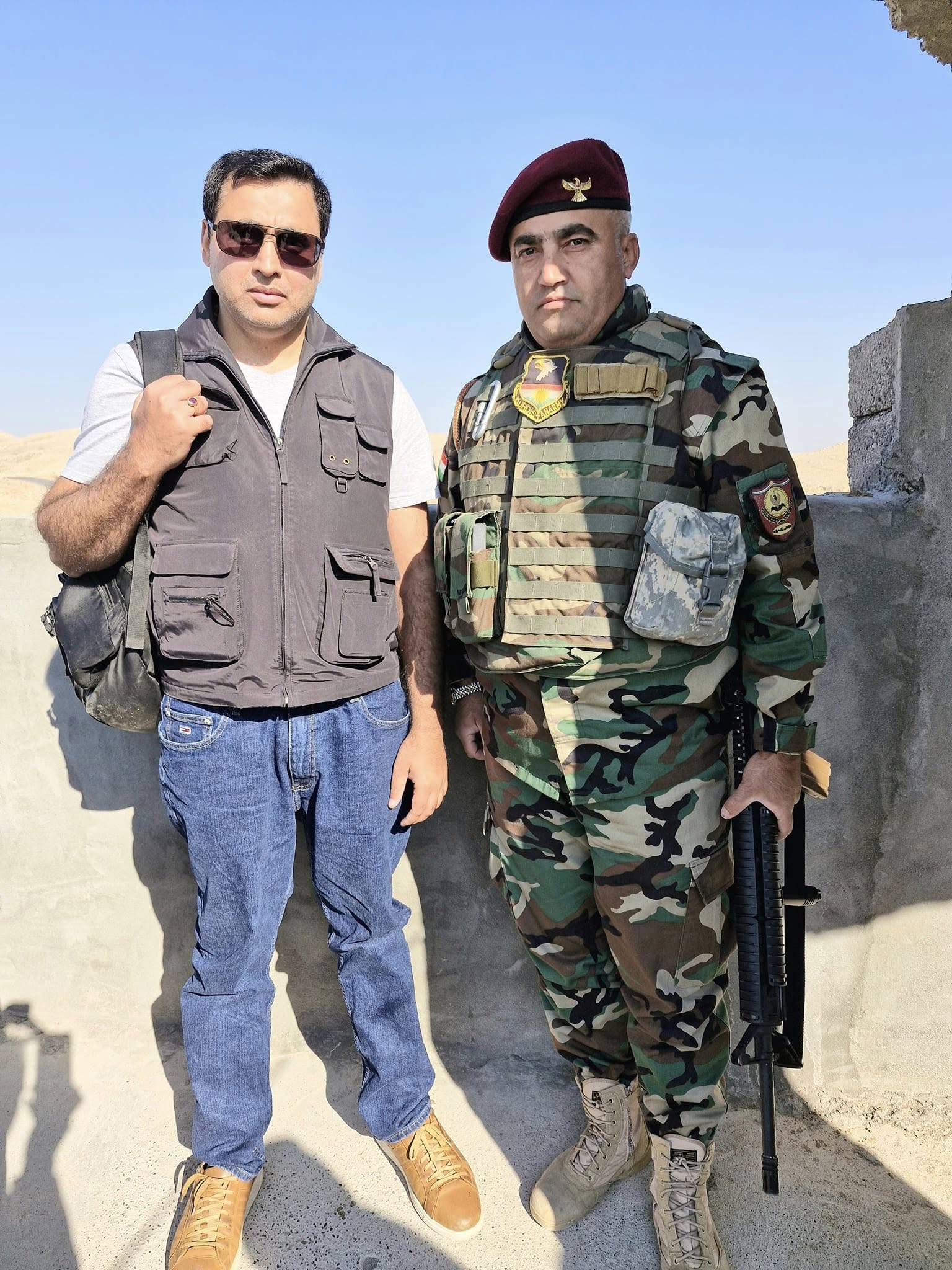
The Kurdistan Regional Government (KRG) of Iraqi-Kurdistan announced that its Peshmerga forces had completed unification. The goal of this unificat
The Gulf’s Conflicts and Their Cost to Pakistan. By Muhammad Mohsin Iqbal
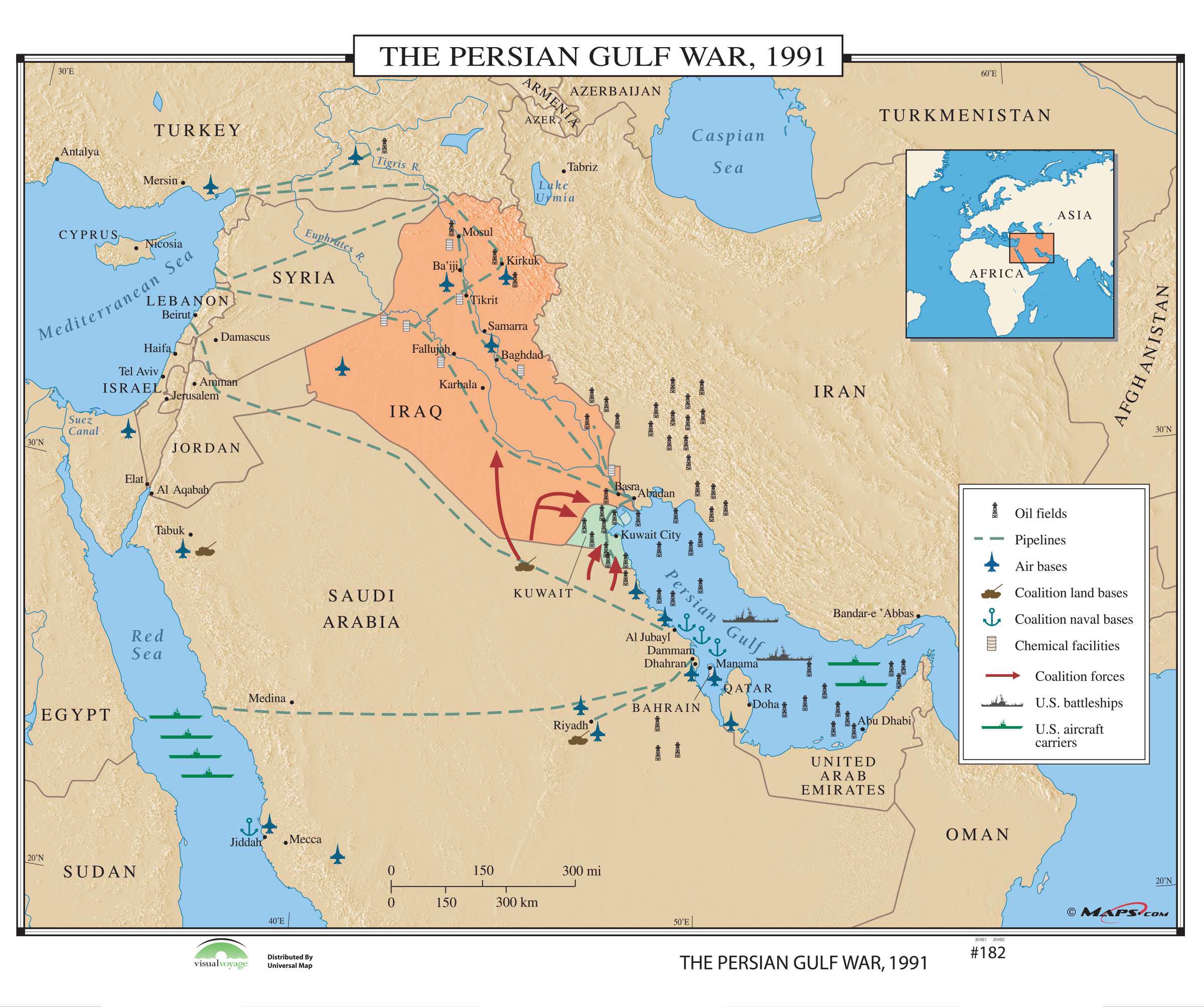
Throughout the long and often turbulent history of the Gulf, the states of that vital region have repeatedly been plunged into the furnace of war, with consequences that have reverberated far beyond their shores and touched the lives of distant peoples dependent upon the free passage of oil. The Iran-Iraq conflict that erupted in nineteen-eighty, Iraq’s brazen invasion of Kuwait a decade later, the subsequent American-led campaign to liberate that small sheikhdom, the invasion of Iraq itself in two thousand and three, and the recurrent tensions between Iran on the one hand and Israel and the United States on the other, have each in their turn disrupted the free flow of petroleum upon which the modern world so heavily depends. Prices have soared, supplies have been interrupted at critical chokepoints such as the Strait of Hormuz, and the economic fabric of nations far removed from the battlefield has been strained almost to breaking point. Pakistan, though geographically distant from these contests, has never been wholly insulated from their effects, for her economy rests in no small measure upon the uninterrupted importation of crude oil and refined products, and upon the steady stream of remittances sent home by her sons labouring in the oil-rich states of the Gulf.
When the guns first sounded between Iran and Iraq in September of nineteen-eighty, the two combatants, once among the foremost exporters of the region, saw their production and export facilities grievously damaged. Iraqi output fell precipitously from more than three million barrels a day to a mere fraction thereof, whilst Iranian exports likewise dwindled. Oil prices, already elevated after the Iranian Revolution, climbed further towards thirty-five or even forty dollars a barrel amid panic buying and fears for the security of Gulf shipping. Under the martial regime of General Muhammad Zia-ul-Haq, Pakistan navigated these troubled waters with a careful and pragmatic diplomacy that sought to preserve workable relations with both belligerents whilst drawing ever closer to the conservative Arab monarchies, particularly Saudi Arabia. The rise in the cost of imported crude pressed hard upon the national purse at a time when domestic refining capacity remained limited and the greater part of petroleum needs had to be met from abroad. Yet the concurrent boom in workers’ remittances from the Gulf proved a powerful counterweight. These inflows, which rose dramatically through the early nineteen-eighties to approach three billion dollars annually and at their peak amounted to nearly ten per cent of gross national product, financed a substantial portion of the trade deficit and stimulated domestic demand. Zia’s government stationed troops in Saudi Arabia, secured strategic assistance, and opened facilities that allowed Iranian trade to continue through Karachi, thereby extracting advantage even from the chaos. Shortages were managed through administrative allocation and modest price adjustments, preserving a degree of economic growth that averaged more than six per cent a year, though the underlying dependence upon imported energy remained unaddressed.
A decade later, when Saddam Hussein’s forces overran Kuwait in August of nineteen-ninety, the shock was more immediate and severe. Oil prices leapt from some sixteen dollars a barrel to nearly forty within weeks, as some four and a half million barrels a day of Iraqi and Kuwaiti exports vanished from the market. Pakistan, then under the successive civilian administrations of Benazir Bhutto and Nawaz Sharif, found herself doubly afflicted. Kuwait had been a principal supplier of refined products, accounting for the greater part of her product imports, and the sudden interruption forced frantic searches for alternative cargoes from Saudi Arabia, Iran, Malaysia and elsewhere. The oil import bill swelled by more than five hundred million dollars, foreign exchange reserves dwindled from over three hundred million dollars to a perilous sixty-seven million in a matter of weeks, and remittances from Kuwaiti-based Pakistanis were abruptly curtailed, though compensatory flows from other Gulf states eventually offset much of the loss. The authorities, mindful of an approaching election, delayed the full transmission of higher international prices to the domestic consumer until late November, a decision that cost the treasury some fifty million dollars a month before product prices were finally raised by as much as fifty per cent. Emergency arrangements were made to secure refining space abroad, appeals were directed to friendly Arab states for deferred payments and concessional terms, and the government resorted to short-term borrowing. The crisis eased with the swift conclusion of the war and the subsequent glut that drove prices down once more, yet it left an enduring lesson in the vulnerability of an economy so dependent upon a single maritime artery.
The invasion of Iraq in two thousand and three produced a briefer and less dramatic disturbance under the military government of General Pervez Musharraf. Iraqi exports, already constrained by United Nations sanctions, averaged only about one and a half million barrels a day before hostilities; their interruption caused prices to spike briefly above thirty or even forty dollars a barrel before subsiding as other producers increased output. Pakistan’s oil sector felt the pressure through elevated import costs and heightened uncertainty, yet the regime’s close alignment with the United States after the events of September the eleventh, together with substantially rebuilt foreign exchange reserves, mitigated the worst effects. Domestic prices were adjusted with greater promptness than in earlier years through a private-sector advisory mechanism, and the International Monetary Fund counselled fiscal prudence to weather any prolonged rise. Musharraf’s government maintained a careful public distance from the conflict itself, abstaining from open endorsement in the Security Council whilst preserving the strategic partnership that secured financial and diplomatic support. The economy, though strained by higher energy costs, avoided the acute reserve crisis of the early nineties.
Today the shadow of renewed conflict hangs once more over the Gulf. The possibility of a direct confrontation between the United States and Iran, or of heightened friction involving Saudi Arabia, threatens again to choke the Strait of Hormuz, through which some eighty to eighty-five per cent of Pakistan’s crude oil and a substantial portion of her liquefied natural gas still pass. Recent escalations have already driven weekly petroleum import bills from three hundred million dollars to as much as eight hundred million, forced abrupt rises of twenty per cent or more in domestic fuel prices, and strained an economy already labouring under fiscal constraints, circular debt in the power sector, and limited strategic stocks that cover scarcely a fortnight’s demand. Agriculture, which employs more than a third of the workforce, industry, and the daily lives of ordinary citizens feel the pinch of dearer diesel and petrol, whilst power generation suffers from interrupted gas supplies and the consequent blackouts. The burden is made heavier still by the weight of domestic taxes and margins that widen the gulf between true cost and the price paid at the pump. According to the Media report, official records reveal that one litre of petrol, whose actual cost stands at two hundred and fifty-four rupees and ninety-six paisa, is sold to the citizen at three hundred and ninety-one rupees and thirty paisa—a difference of one hundred and thirty-six rupees and thirty-four paisa. Upon that same litre are levied eighty rupees as petroleum levy, five rupees as climate support levy, twenty-three rupees and sixty-eight paisa as customs duty, together with further margins and an exchange adjustment of one rupee and ninety paisa, bringing the total impost to one hundred and thirty-four rupees and forty-four paisa. High-speed diesel likewise bears an additional one hundred and twenty-two rupees and sixty-eight paisa in levies, taxes and margins above its true cost. Thus the ordinary consumer is compelled to pay a heavy premium even before the full force of any fresh international shock is felt.
Pakistan’s response in the past has combined diplomatic balancing, emergency procurement, appeals for Gulf assistance, and gradual domestic price rationalisation. These measures, though often improvised under successive regimes, have preserved a measure of continuity. In the present hour the same spirit of prudent management is required, yet with greater foresight and structural resolve. Diversification of supply sources beyond the traditional Gulf partners, the enlargement of strategic petroleum reserves towards the international benchmark of ninety days, the expansion and modernisation of domestic refining capacity, the acceleration of alternative energy development including solar and hydroelectric resources, and the negotiation of longer-term concessional arrangements with friendly producers must form the pillars of policy. Diplomatic engagement with all parties in the region, without entanglement in their quarrels, remains essential, as does the careful stewardship of foreign exchange and a thoughtful review of the heavy fiscal burdens that presently amplify every rise in global prices. Only by such steady and unspectacular means can Pakistan hope to weather the storms that history teaches us will continue to arise in the Gulf, and thereby safeguard the economic well-being of her people against the recurrent tempests of that oil-rich yet perpetually unsettled quarter of the world.
When the guns first sounded between Iran and Iraq in September of nineteen-eighty, the two combatants, once among the foremost exporters of the region, saw their production and export facilities grievously damaged. Iraqi output fell precipitously from more than three million barrels a day to a mere fraction thereof, whilst Iranian exports likewise dwindled. Oil prices, already elevated after the Iranian Revolution, climbed further towards thirty-five or even forty dollars a barrel amid panic buying and fears for the security of Gulf shipping. Under the martial regime of General Muhammad Zia-ul-Haq, Pakistan navigated these troubled waters with a careful and pragmatic diplomacy that sought to preserve workable relations with both belligerents whilst drawing ever closer to the conservative Arab monarchies, particularly Saudi Arabia. The rise in the cost of imported crude pressed hard upon the national purse at a time when domestic refining capacity remained limited and the greater part of petroleum needs had to be met from abroad. Yet the concurrent boom in workers’ remittances from the Gulf proved a powerful counterweight. These inflows, which rose dramatically through the early nineteen-eighties to approach three billion dollars annually and at their peak amounted to nearly ten per cent of gross national product, financed a substantial portion of the trade deficit and stimulated domestic demand. Zia’s government stationed troops in Saudi Arabia, secured strategic assistance, and opened facilities that allowed Iranian trade to continue through Karachi, thereby extracting advantage even from the chaos. Shortages were managed through administrative allocation and modest price adjustments, preserving a degree of economic growth that averaged more than six per cent a year, though the underlying dependence upon imported energy remained unaddressed.
A decade later, when Saddam Hussein’s forces overran Kuwait in August of nineteen-ninety, the shock was more immediate and severe. Oil prices leapt from some sixteen dollars a barrel to nearly forty within weeks, as some four and a half million barrels a day of Iraqi and Kuwaiti exports vanished from the market. Pakistan, then under the successive civilian administrations of Benazir Bhutto and Nawaz Sharif, found herself doubly afflicted. Kuwait had been a principal supplier of refined products, accounting for the greater part of her product imports, and the sudden interruption forced frantic searches for alternative cargoes from Saudi Arabia, Iran, Malaysia and elsewhere. The oil import bill swelled by more than five hundred million dollars, foreign exchange reserves dwindled from over three hundred million dollars to a perilous sixty-seven million in a matter of weeks, and remittances from Kuwaiti-based Pakistanis were abruptly curtailed, though compensatory flows from other Gulf states eventually offset much of the loss. The authorities, mindful of an approaching election, delayed the full transmission of higher international prices to the domestic consumer until late November, a decision that cost the treasury some fifty million dollars a month before product prices were finally raised by as much as fifty per cent. Emergency arrangements were made to secure refining space abroad, appeals were directed to friendly Arab states for deferred payments and concessional terms, and the government resorted to short-term borrowing. The crisis eased with the swift conclusion of the war and the subsequent glut that drove prices down once more, yet it left an enduring lesson in the vulnerability of an economy so dependent upon a single maritime artery.
The invasion of Iraq in two thousand and three produced a briefer and less dramatic disturbance under the military government of General Pervez Musharraf. Iraqi exports, already constrained by United Nations sanctions, averaged only about one and a half million barrels a day before hostilities; their interruption caused prices to spike briefly above thirty or even forty dollars a barrel before subsiding as other producers increased output. Pakistan’s oil sector felt the pressure through elevated import costs and heightened uncertainty, yet the regime’s close alignment with the United States after the events of September the eleventh, together with substantially rebuilt foreign exchange reserves, mitigated the worst effects. Domestic prices were adjusted with greater promptness than in earlier years through a private-sector advisory mechanism, and the International Monetary Fund counselled fiscal prudence to weather any prolonged rise. Musharraf’s government maintained a careful public distance from the conflict itself, abstaining from open endorsement in the Security Council whilst preserving the strategic partnership that secured financial and diplomatic support. The economy, though strained by higher energy costs, avoided the acute reserve crisis of the early nineties.
Today the shadow of renewed conflict hangs once more over the Gulf. The possibility of a direct confrontation between the United States and Iran, or of heightened friction involving Saudi Arabia, threatens again to choke the Strait of Hormuz, through which some eighty to eighty-five per cent of Pakistan’s crude oil and a substantial portion of her liquefied natural gas still pass. Recent escalations have already driven weekly petroleum import bills from three hundred million dollars to as much as eight hundred million, forced abrupt rises of twenty per cent or more in domestic fuel prices, and strained an economy already labouring under fiscal constraints, circular debt in the power sector, and limited strategic stocks that cover scarcely a fortnight’s demand. Agriculture, which employs more than a third of the workforce, industry, and the daily lives of ordinary citizens feel the pinch of dearer diesel and petrol, whilst power generation suffers from interrupted gas supplies and the consequent blackouts. The burden is made heavier still by the weight of domestic taxes and margins that widen the gulf between true cost and the price paid at the pump. According to the Media report, official records reveal that one litre of petrol, whose actual cost stands at two hundred and fifty-four rupees and ninety-six paisa, is sold to the citizen at three hundred and ninety-one rupees and thirty paisa—a difference of one hundred and thirty-six rupees and thirty-four paisa. Upon that same litre are levied eighty rupees as petroleum levy, five rupees as climate support levy, twenty-three rupees and sixty-eight paisa as customs duty, together with further margins and an exchange adjustment of one rupee and ninety paisa, bringing the total impost to one hundred and thirty-four rupees and forty-four paisa. High-speed diesel likewise bears an additional one hundred and twenty-two rupees and sixty-eight paisa in levies, taxes and margins above its true cost. Thus the ordinary consumer is compelled to pay a heavy premium even before the full force of any fresh international shock is felt.
Pakistan’s response in the past has combined diplomatic balancing, emergency procurement, appeals for Gulf assistance, and gradual domestic price rationalisation. These measures, though often improvised under successive regimes, have preserved a measure of continuity. In the present hour the same spirit of prudent management is required, yet with greater foresight and structural resolve. Diversification of supply sources beyond the traditional Gulf partners, the enlargement of strategic petroleum reserves towards the international benchmark of ninety days, the expansion and modernisation of domestic refining capacity, the acceleration of alternative energy development including solar and hydroelectric resources, and the negotiation of longer-term concessional arrangements with friendly producers must form the pillars of policy. Diplomatic engagement with all parties in the region, without entanglement in their quarrels, remains essential, as does the careful stewardship of foreign exchange and a thoughtful review of the heavy fiscal burdens that presently amplify every rise in global prices. Only by such steady and unspectacular means can Pakistan hope to weather the storms that history teaches us will continue to arise in the Gulf, and thereby safeguard the economic well-being of her people against the recurrent tempests of that oil-rich yet perpetually unsettled quarter of the world.
You May Also Like

Bodily autonomy and sexual health are often framed as matters of individual health, personal choice and human rights. But the latest evidence from
Today, 27 September, the world observes World Rivers Day—a day devoted to reminding humanity of something so familiar that we often forget it


PCP need your support that we may provide you better services: click on donate


"Trial of Pakistani Christian Nation" By Nazir S Bhatti
On demand of our readers, I have decided to release E-Book version of "Trial of Pakistani Christian Nation" on website of PCP which can also be viewed on website of Pakistan Christian Congress www.pakistanchristiancongress.org . You can read chapter wise by clicking tab on left handside of PDF format of E-Book.