

The issue of forced marriage and religious conversion of girls from minority communities—particularly Christians—in Pakistan is a long-
for Evidence...or Proof. By Albert Porter
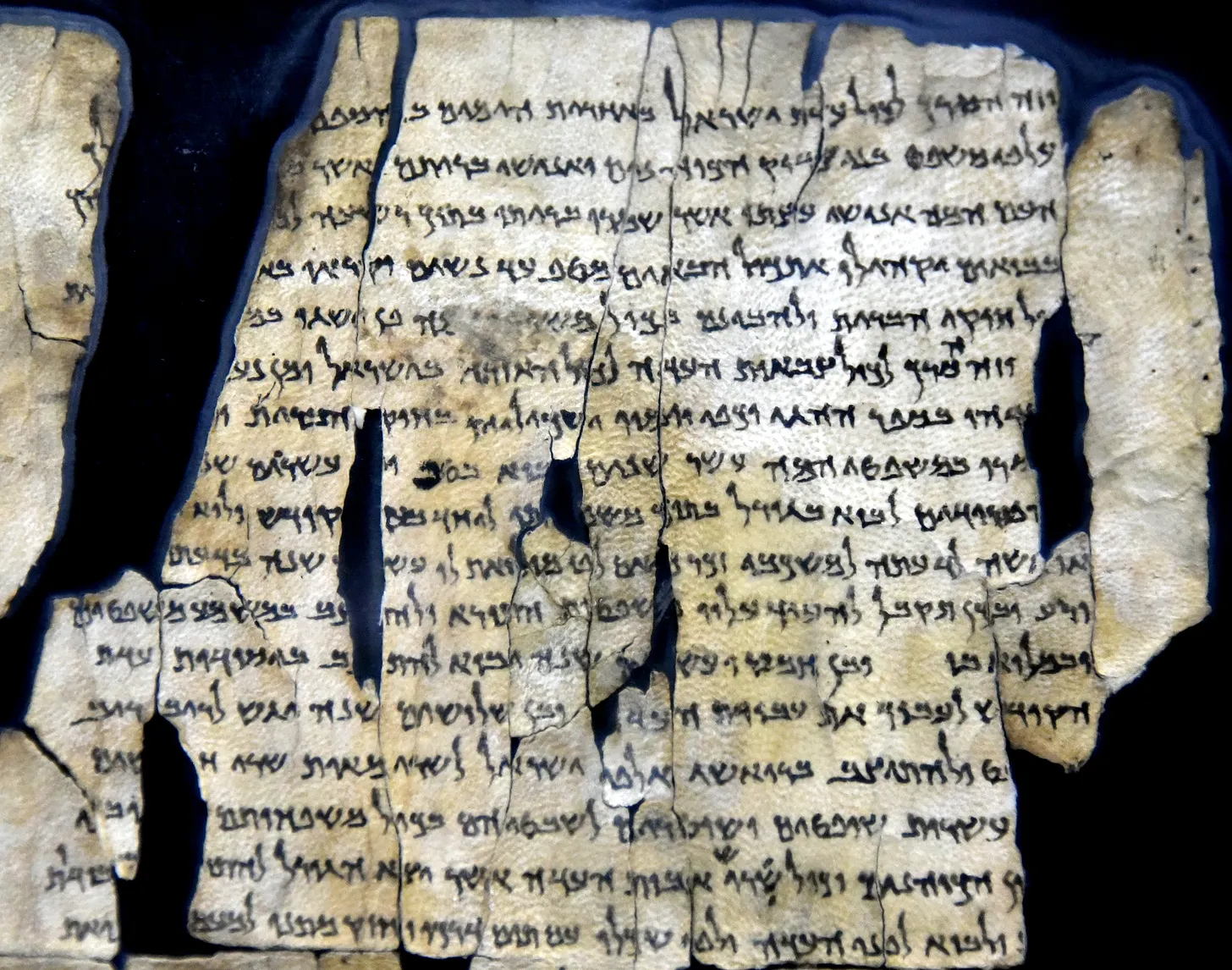
The Bible has served as both a spiritual guide and a historical record for centuries now. Many people claimed the findings were legendary or unprovable. In recent decades, however, archaeology has emerged as a powerful tool in bridging the gap between faith and history.
Unearthed artifacts and inscriptions that match up remarkably with biblical accounts have been discovered in excavations across the Middle East. These discoveries offer tangible evidence for stories once known only through scripture.
Dead Sea Scrolls
Take a look at these discoveries and ask yourself: is this tangible evidence, or can we call it “proof,” as discussed in my last article about the difference between evidence and proof?
An inscription at a Roman theater in Caesarea Maritima reads “Pontius Pilate, Prefect of Judea.”
An inscription called “The Tel Dan Stele” found in northern Israel offers a groundbreaking reference to the “House of David” and was carved in the 9th century. This stone inscription is the first extra-biblical evidence confirming King David’s lineage as historical reality. Its discovery helps validate the biblical narrative of David’s dynasty and influence in ancient Israel. mentions King David’s dynasty. The inscription is the oldest reference to any Biblical figure outside of the Bible.
An ossuary, a stone box used for retaining bones of the deceased, was discovered inscribed with the name of Caiaphas, the high priest who presided over the trial of Jesus shortly before His crucifixion.
Israeli archeologists uncovered a 1st - century cave in a suburb south of Jerusalem that served as a tomb for a family of disciples of Jesus. The tomb contained several coffins with names engraved on their sides, and the inscriptions identified it as the burial vault of the Barsabas family, which is mentioned in the Book of Acts. Joseph Barsabas was called “Joseph the Just” or Justus. He was one of the early 70 followers of Jesus and was nominated to replace Judas. Another family member, Judas Barsabas, was called a “prophet” and accompanied Silas to meet with Paul and Barnabas on an important missionary journey to Syria.
The Pool of Siloam was unearthed in 2004 and sits at the heart of Jerusalem and is directly referenced in the Gospel of John. This was the site where Jesus performed the miracle of healing a man born blind, according to the New Testament. This discovery affirms the historical layout of ancient Jerusalem and also demonstrates the accuracy of biblical descriptions of the city’s water system.
Beneath the city of Jerusalem is a water channel that was constructed to safeguard Jerusalem’s water supply during the Assyrian siege. It is called Hezekiah’s Tunnel and is an impressive engineering feat dating to around 701 BCE. Mentioned in 2 Kings, it provides compelling evidence for the biblical account of King Hezekiah’s strategic preparations.
Evidence of Sodom and Gomorrah has revealed that all five of the cities mentioned in the Bible were in fact 14 centers of commerce and were situated exactly where scriptures described.
Many of the ancient locations (in 32 countries, 54 cities, and 9 islands) mentioned by Luke in the Book of Acts have been identified through archaeology, without a single error.
The most amazing discovery was two copies of the Book of Isaiah, discovered in Qumran Cave 1 near the Dead Sea in 1947, which were dated a thousand years earlier than the oldest dated manuscript known (AD 980). They were word-for-word identical with our standard Hebrew Bible in more than 99.5% of the text. Slips of the pen and various misspellings made up the other .5%. This discovery ranks among the significant archaeological finds of the twentieth century. Their remarkable consistency with later biblical texts demonstrates the careful preservation and transmission of scripture across generations. The scrolls also give us a view of Jewish beliefs and practices during the Second Temple period.
Doesn’t this empirical evidence feel like proof? It’s certainly a great faith builder.
If archaeological evidence can strengthen our faith in biblical history, what about the evidence for our eternal future?
We’ve seen how artifacts like the Tel Dan Stele and the Dead Sea Scrolls validate the historical reliability of Scripture. But what about the ultimate promise of our faith? In my book, What’s Heaven All About: Discover The Evidence That Heaven Is Real And An Unbelievable Place To Live For Eternity, I break down the scriptural and historical evidence for the afterlife. If you want to move from wondering to knowing, this concise guide is for you.
You May Also Like

The American midterm elections have delivered a message that extends far beyond the boundaries of domestic politics. They have demonstrated that wh

If the members and office bearers of the Republican Party the GoP think — “[that Prez Trump and VP Vance (through their public statemen


PCP need your support that we may provide you better services: click on donate


"Trial of Pakistani Christian Nation" By Nazir S Bhatti
On demand of our readers, I have decided to release E-Book version of "Trial of Pakistani Christian Nation" on website of PCP which can also be viewed on website of Pakistan Christian Congress www.pakistanchristiancongress.org . You can read chapter wise by clicking tab on left handside of PDF format of E-Book.