

Lahore: Fanson Shahid has received legal representation from the British Asian Christian Association as he continues to challen
BACA Continues Dialogue at APPG Roundtable on Freedom of Religion or Belief in Pakistan. Report by Juliet Chowdhry and Hannah Chowdhry

London: The following day (17th June 2026), Hannah Chowdhry attended a smaller (less than 10 people) roundtable discussion in Parliament as a representative of the British Asian Christian Association (BACA), while Wilson Chowdhry attended separately in his capacity as Chairman of United by Faith.
The meeting, organised by the All-Party Parliamentary Group (APPG) for Pakistani Minorities, focused on Freedom of Religion or Belief (FoRB) in Pakistan and brought together parliamentarians, Foreign, Commonwealth and Development Office (FCDO) officials, charities and representatives from persecuted minority communities.
Among those present were Morris Johns, Secretary of the APPG, Julie Jones from the Foreign, Commonwealth and Development Office, and Fiona Fearon of Open Doors, the international charity that advocates for persecuted Christians worldwide.
Ending the Cycle of Modern Slavery
Mr Johns opened the discussion by outlining the severe persecution faced by Christians in Pakistan and described how the FCDO has supported programmes to secure the release of Christians trapped in bonded labour.
Wilson Chowdhry welcomed these efforts but explained that, based on decades of supporting persecuted Christians in Pakistan, liberation alone rarely ends the cycle of exploitation.
He noted that many freed labourers eventually return to brick kilns or the often-overlooked carpet weaving industry because they lack education, vocational skills and access to better-paid employment. When families later face unavoidable expenses—such as childbirth, medical treatment or other emergencies—they frequently have little option but to accept another bonded loan, placing themselves back into slavery.
Mr Chowdhry therefore asked what long-term measures were being taken to prevent freed families from returning to bonded labour.
Mr Johns explained that the FCDO has been supporting micro-business initiatives and vocational training designed to help families establish sustainable livelihoods and permanently escape poverty.
Concerns Over Brick Kiln Modernisation
The discussion then turned to proposals aimed at modernising Pakistan’s brick kiln industry.
Mr Johns described a project under consideration that would introduce modern machinery capable of replacing much of the manual labour currently performed by bonded workers.
While welcoming technological investment, Mr Chowdhry warned that robust safeguards would be essential.
He cautioned that some unscrupulous kiln owners might accept publicly funded machinery while simply transferring bonded workers to other sites, enabling them to increase profits rather than ending exploitation.
He therefore urged that any programme include strict auditing, independent inspections and clear accountability mechanisms.
Mr Johns explained that one proposal would require kiln owners receiving machinery to release a number of bonded labourers equivalent to the workforce replaced by the new equipment.
Mr Chowdhry argued that such an arrangement would be inadequate.
“The machinery being provided could be worth thirty or forty times the value of releasing only a limited number of workers,” he observed.
Instead, he proposed that the FCDO work directly with the Pakistani Government to implement a nationwide transition programme linked to the proper enforcement of Pakistan’s Bonded Labour System (Abolition) Act 1992. Under such an agreement, kiln owners receiving free machinery should be required to release all bonded workers, allowing the industry to modernise without destroying livelihoods. A phased, province-by-province rollout could ensure that brick production continues uninterrupted while eliminating bonded labour.
Supporting Survivors Beyond Liberation
Mr Johns also described the horrific sexual abuse suffered by many women trapped in bonded labour and explained that FCDO-funded programmes include trauma counselling alongside rehabilitation and vocational training.
Wilson Chowdhry welcomed this holistic approach and asked whether local charities working directly with survivors could receive access to similar trauma-informed training through future FCDO funding.
BACA’s purpose-built safe house, currently under construction, incorporates enhanced security features including biometric access control, CCTV surveillance, restricted entry systems and reinforced double-brick walls to help safeguard vulnerable blasphemy law victims, women and girls.
BACA’s New Safe House
During the discussion, Hannah Chowdhry outlined the British Asian Christian Association’s new safe house project, which is nearing completion and will provide secure accommodation and support for vulnerable women and girls fleeing persecution.
Julie Jones expressed interest in visiting the facility alongside FCDO colleagues.
For security reasons, however, Hannah explained that the location could not be disclosed publicly or during the meeting. She confirmed that full details would only be provided to authorised officials on a strict need-to-know basis in order to protect both the safe house and its beneficiaries.
Persecution of the Ahmadi Community
A representative of Pakistan’s Ahmadiyya Muslim community also addressed the meeting, describing the severe discrimination and legal persecution suffered by Ahmadis.
He called for confiscated Ahmadi schools to be returned to the community and urged Pakistan to repeal laws that criminalise the peaceful practice of the Ahmadi faith.
Reforming Pakistan’s Laws
Wilson Chowdhry returned to the issue of legal reform, arguing that Pakistan’s recently introduced forced marriage legislation does not adequately reflect the true nature of these crimes.
He explained that victims are commonly subjected to kidnapping, rape, coercive control, forced religious conversion and psychological grooming before being forced into marriage. The law should therefore recognise these interconnected offences rather than treating forced marriage as an isolated act.
He also reiterated his earlier concerns regarding Pakistan’s Qisas and Diyat laws, arguing that these provisions continue to undermine justice by allowing perpetrators of serious crimes to escape meaningful punishment through negotiated settlements.
Furthermore, he noted that the transcript of Pakistan’s recently enacted forced marriage legislation explicitly recognises the supremacy of Muhammadan (Sharia) law. Unless these legal inconsistencies are resolved, he warned, many of the protections Parliament intended to introduce may prove impossible to enforce effectively.
Mr Chowdhry again called for the introduction of specific legislation criminalising grooming, alongside stronger enforcement of child marriage laws and greater legal protections for victims of rape, abduction and forced religious conversion.
Ring-Fencing UK Aid for Persecuted Minorities
Finally, Wilson Chowdhry asked whether a proportion of future UK development assistance to Pakistan could be specifically ring-fenced to support persecuted religious minorities.
He noted that Pakistan remains one of the largest recipients of UK overseas development assistance and explained that charities such as the British Asian Christian Association have spent more than a decade urging successive governments to allocate dedicated funding for minority education, safe houses, legal aid and victim support.
Mr Chowdhry asked whether the Foreign Office believed such an approach might now become a realistic possibility, given the increasing parliamentary attention being paid to the persecution of Pakistan’s religious minorities.
You May Also Like

Pakistan: BACA has provided a new refrigerator for the orphaned children of Shama and Shahzad Masih after their old appliance became unsafe an
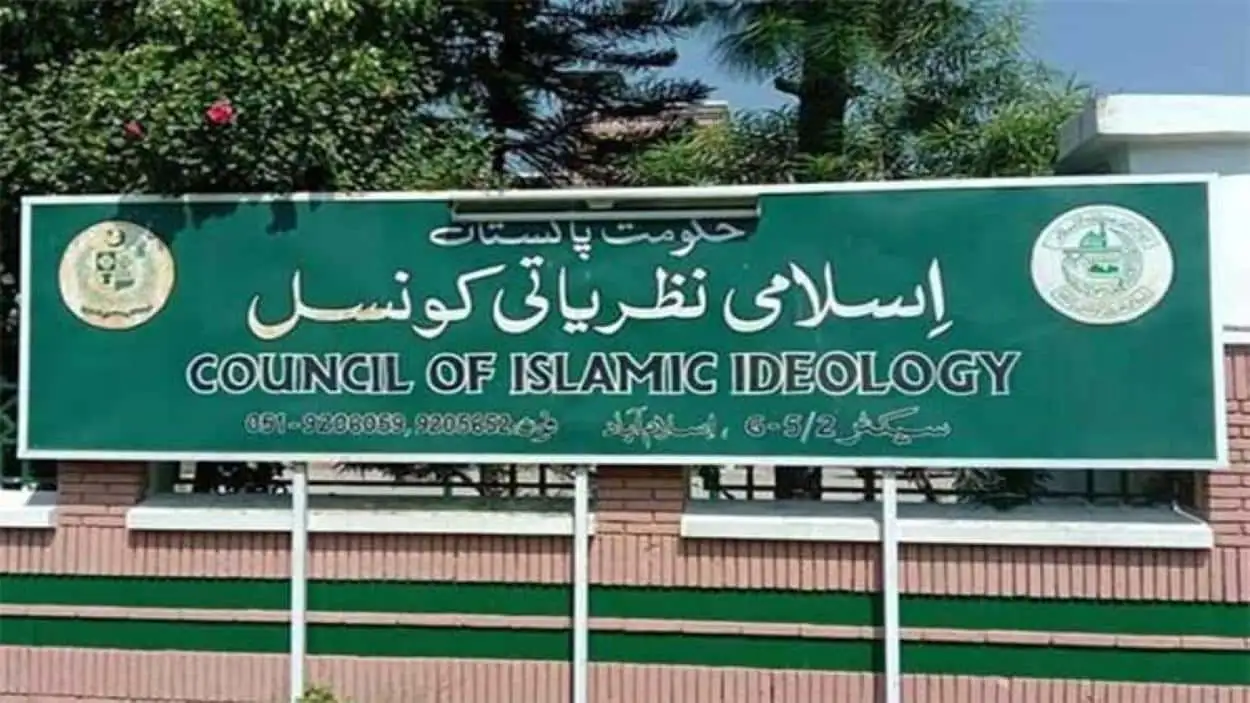
Islamabad: (PPF) The Council of Islamic Ideology (CII) has issued a resolution calling for enhanced editorial oversight across all media


PCP need your support that we may provide you better services: click on donate


"Trial of Pakistani Christian Nation" By Nazir S Bhatti
On demand of our readers, I have decided to release E-Book version of "Trial of Pakistani Christian Nation" on website of PCP which can also be viewed on website of Pakistan Christian Congress www.pakistanchristiancongress.org . You can read chapter wise by clicking tab on left handside of PDF format of E-Book.