
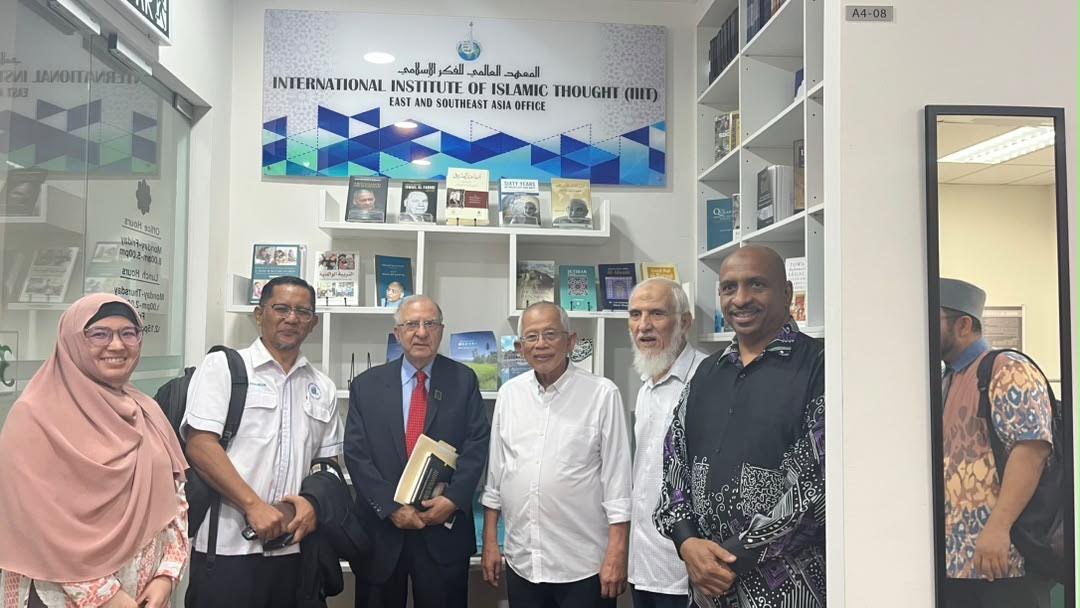
Kuala Lumpur, Malaysia: Dr. Ghulam Nabi Fai, Chairman of the World Forum for Peace & Justice, Washington, DC, addressed an academic gathering a
Dr. Fai Addresses IIIT Malaysia on the Changing Global Political Landscape and South Asia
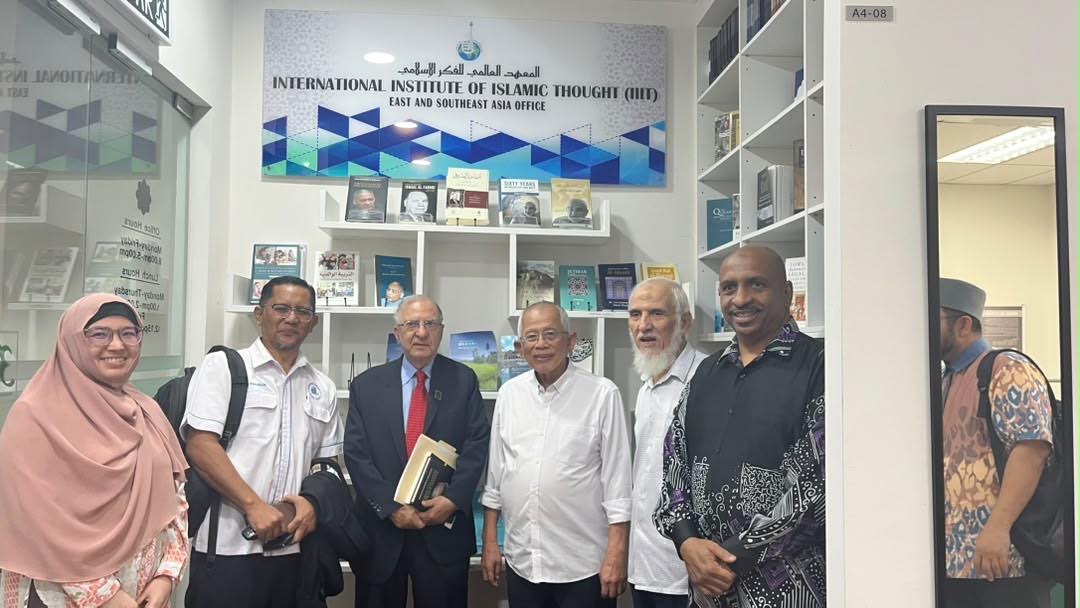
Kuala Lumpur, Malaysia: Dr. Ghulam Nabi Fai, Chairman of the World Forum for Peace & Justice, Washington, DC, addressed an academic gathering at the International Institute of Islamic Thought (IIIT), East and South East Asia Office (ESEA), Level 4, KICT V+ Building, International Islamic University Malaysia (IIUM), Kuala Lumpur, on September 29, 2026, on the theme, “The Changing Global Political Landscape: A South Asian Perspective.” The program was hosted by Dr. Shahran Kasim, an intellectual and scholarly personality and Deputy Director, IIIT Malaysia Office.
As per official record of The International Institute of Islamic Thought (IIIT), it is a premier international organization that provides a platform for the distinctive perspectives of Muslim thinkers, scholars and practitioners in the humanities and social sciences. For more than four decades, IIIT has sought to promote moderation, diversity and modernity in Islamic thought, with particular emphasis on coexistence, intellectual engagement, and building the capacity of communities to address common global and local challenges. Its work places strong emphasis on scholarship, knowledge and learning in Muslim societies across the world, while also contributing to the Muslim intellectual tradition in the West.
Established in 1981 as a U.S. non-profit, non-denominational organization, IIIT is headquartered in Herndon, Virginia, in the Washington, D.C., metropolitan area. Its vision is of thriving societies in which individuals have the opportunity to pursue and realize their fullest potential through transformative learning, social development and personal growth. Its mission is to conduct and disseminate educational research and to empower Muslim societies through data-driven recommendations for transformative education policy and practice. IIIT has also developed an international presence through branches and offices in the United Kingdom, Azerbaijan, Bosnia, Jordan, Belgium, Morocco and Egypt.
Dr. Fai noted that he has had the honor of knowing several of the founding figures of IIIT, whom he described as giants of Islamic scholarship. Among them were Professor Ismail Raji al-Faruqi, Dr. Jamal Barzinji, Dr. Taha Jabir Al-Alwani and Dr. AbdulHamid AbuSulayman, all of whom have since returned to their Creator. He also expressed his appreciation for those among the founding generation and subsequent leadership who have continued to carry their intellectual legacy forward, including Dr. Ahmed Totonji, Dr. Hisham Al-Talib, Dr. Anas Al-Sheikh Ali, Dr. Iqbal Unus and Dr. Ahmed Alwani.
Against this distinguished institutional and intellectual background, Dr. Fai said he was honored to have been invited by the Malaysian branch of IIIT to deliver a lecture on the theme, “The Changing Global Political Landscape: A South Asian Perspective.”
During his address, Dr. Fai said the world is experiencing a period of profound international transformation, characterized by changing centres of economic and military power, intensified strategic competition, growing armed conflicts and increasing pressure on international institutions.
He emphasized that the most important question facing the international community is not simply who is becoming more powerful, but what kind of international order will emerge from these transformations. “Will it be an order governed primarily by the interests of powerful states,” he asked, “or will it remain an order in which international law, human rights, sovereignty, peaceful settlement of disputes and the dignity of individuals continue to provide common standards for all?”
Dr. Fai observed that these questions have particular significance for South Asia, a region of enormous population, economic potential, strategic importance and civilizational diversity. He noted that India and Pakistan possess significant military capabilities, including nuclear capabilities, making the management of their differences a matter of importance not only for the region but for the wider international community.
He stressed that security cannot be understood solely in military terms. “A country may possess sophisticated weapons and still remain politically insecure.” “True security requires dialogue, confidence-building, respect for international law and, ultimately, addressing the grievances and unresolved political questions that continue to generate instability.”
Dr. Fai devoted significant attention to Jammu and Kashmir, describing it as a question involving security, human rights, international law, political aspirations and regional stability. He argued that Kashmir provides important lessons for understanding the changing global political landscape. Among them, he identified the persistence of unresolved political disputes, the limitations of military approaches to political problems, the connection between human rights and international security, the importance of consistency in applying international principles, and the need to recognize the dignity and participation of people directly affected by conflict.
Referring to the human dimension of the Kashmir issue, Dr. Fai emphasized that behind diplomatic language and political arguments are ordinary people—mothers, fathers, students, farmers, teachers, journalists and families whose lives can be shaped for generations by political uncertainty and conflict.
He referred to the reports of the United Nations Office of the High Commissioner for Human Rights concerning both Indian-administered and Pakistan-administered Kashmir, noting that the reports addressed allegations and concerns relating to human rights and fundamental freedoms there. “A serious discussion of human rights should not be selective,” he said. “Human rights belong to everyone.”
Dr. Fai further emphasized that the credibility of the international system depends in significant measure on the consistent application of international law. “If international law is universal, it must apply to the powerful as well as the less powerful,” he said. “If human rights are universal, they cannot depend upon geography.”
Turning to the United Nations, Dr. Fai acknowledged the continuing importance of the organization while recognizing the challenges confronting international institutions. He called for efforts to make international institutions more representative and effective, strengthen diplomacy before crises become wars, improve protection for civilians, and ensure that the voices of people affected by conflicts are heard more meaningfully.
He also emphasized that the future of international relations cannot remain exclusively state-centric. Civil society, universities, human rights organizations, journalists, diaspora communities and young people increasingly have important roles to play in international dialogue. In this context, he called for greater emphasis on people-to-people diplomacy, academic dialogue, cultural exchange and responsible digital communication.
During the address, he said the youth are entering international affairs at a moment fundamentally different from previous generations, with artificial intelligence, cyber capabilities, social media, technological competition and climate-related challenges increasingly shaping international relations. He urged students to study history without becoming prisoners of it, to understand national interests while appreciating universal principles, and to listen to perspectives different from their own. “Perhaps most importantly,” he said, “you need to learn to disagree without dehumanizing the person with whom you disagree. That is one of the great requirements of modern diplomacy.”
Dr. Fai also spoke of the enormous potential of South Asia, pointing to its young population, human capital, intellectual traditions and economic possibilities. He envisioned greater regional cooperation in areas such as education, climate change, water management, public health, technology and artificial intelligence. He stressed that peace is not merely the absence of war, but the creation of conditions in which conflict becomes less necessary and less likely.
Concluding his address, Dr. Fai said Kashmir should not be viewed solely through the prism of territory or India-Pakistan rivalry. “Kashmir is also a test of whether the international community has the patience and imagination to address prolonged conflicts.” “It is a test of whether human rights can remain relevant amid geopolitical competition, whether international law can retain credibility, and whether diplomacy can ultimately succeed where generations of confrontation have failed.”
He acknowledged that India, Pakistan and the people of Jammu and Kashmir have different historical experiences, political perspectives and aspirations, and said that an intellectually honest discussion must recognize these differences. At the same time, he stressed that recognizing competing perspectives does not require abandoning universal principles.
“The objective should not be to silence one narrative in favor of another. The objective should be to create conditions in which competing narratives can be addressed peacefully, honestly and through dialogue.”
Dr. Fai concluded by urging the younger generation to help build a South Asia in which security is measured not only by military strength but also by human security, diplomacy is pursued before conflict, and international law is applied consistently.
He said the changing global political landscape should not be viewed solely as a source of uncertainty, but also as an opportunity to build a more peaceful South Asia and, ultimately, a more peaceful world. He ended with a call for adherence to three enduring principles: human dignity, peaceful efforts to resolve conflicts, and the consistent and non-discriminatory application of international law.
(Dr. Ghulam Nabi Fai can be reached at: WhatsApp: 1-202-607-6435 gnfai2003@yahoo.com)
You May Also Like
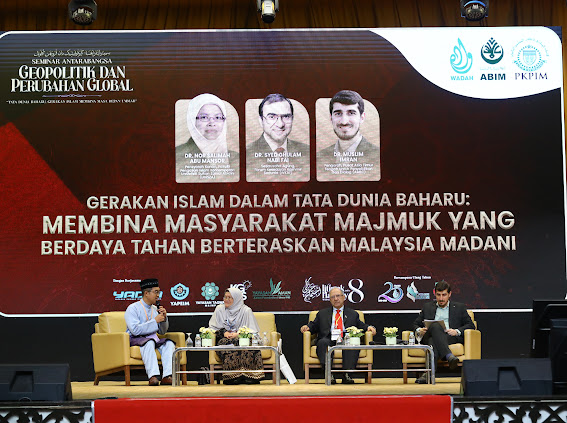
Kuala Lumpur, Malaysia: An international conference on “Islamic Movements in the New World Order: Building a Resilient Pluralistic Society Ba
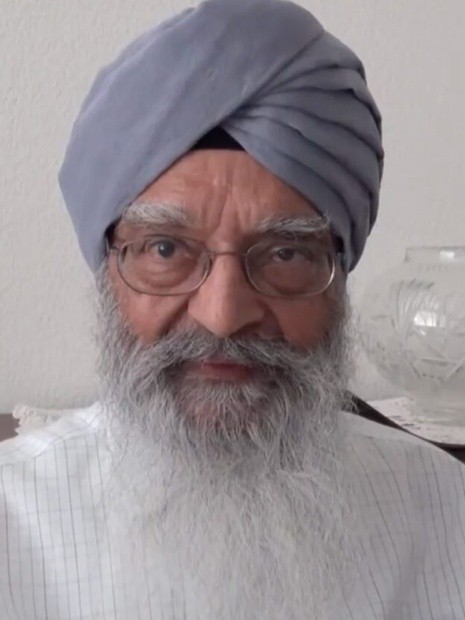
Columbus, OH: Dr. Ranbir Singh Sandhu was Professor Emeritus at The Ohio State University (OSU), Columbus, OH. A native of Lyallpur, Pakistan, he e


PCP need your support that we may provide you better services: click on donate


"Trial of Pakistani Christian Nation" By Nazir S Bhatti
On demand of our readers, I have decided to release E-Book version of "Trial of Pakistani Christian Nation" on website of PCP which can also be viewed on website of Pakistan Christian Congress www.pakistanchristiancongress.org . You can read chapter wise by clicking tab on left handside of PDF format of E-Book.