

Prez Trump ought to appreciate that the only hope for the peaceful existence of the entire mankind is ‘rule based global order’ led &am
Salman Taseer: A Political Biography of Courage, Controversy, and the Crisis of Pakistani Liberalism. By Daim Qayyum

Salman Taseer (1944–2011) remains one of the most consequential and polarizing figures in Pakistan’s political history. A scion of the sub-continent’s progressive literary elite, a tycoon who pioneered the country's telecommunications sector, and a combative Governor of the Punjab province, Taseer’s life was a microcosm of the struggle between Pakistan’s liberal aspirations and its deepening religious conservatism. His assassination in January 2011 by his own bodyguard, a man sworn to protect him, marked a definitive turning point in the state’s relationship with religious extremism, signaling the retreat of the secular ruling class in the face of violent populism.
This comprehensive article examines Taseer’s life through the lens of Pakistan’s turbulent socio-political evolution. It traces his origins in the pre-partition intellectual aristocracy, his formative years in London, and his rise as a capitalist and media mogul with the WorldCall group and Daily Times. It details his staunch loyalty to the Bhutto dynasty, which saw him endure torture and imprisonment under the Zia-ul-Haq dictatorship, earning him thereputation of a political survivor "not made of wood that burns easily". The article provides an in-depth analysis of his tenure as Governor of Punjab (2008–2011), characterized by a fierce
power struggle with the Sharif family and an unwavering, solitary stance against the abuse of blasphemy laws in the case of Aasia Bibi.
Furthermore, this article explores the harrowing aftermath of his murder: the glorification of his assassin Mumtaz Qadri, the five-year abduction and torture of his son Shahbaz Taseer, and the transnational exile of his son Aatish Taseer. Through rigorous cross-verification of primary sources, court documents, and contemporary analysis, this biography offers a definitive account of a man whose death shattered the illusion of a pluralistic Pakistan, leaving a legacy that continues to define the country’s ideological fault lines in 2024.
Early Life and Family Background
To understand Salman Taseer’s ideological bedrock, one must look to the intellectual ferment of pre-partition India. Born on May 31, 1944, in Simla (now Shimla), the summer capital of the British Raj, Taseer was the son of Dr. Muhammad Din (M.D.) Taseer and Christabel George.
His father was a figure of immense cultural significance, the first Indian to obtain a PhD in English Literature from the University of Cambridge and a founding architect of the Progressive Writers’ Movement (PWM). The PWM was not merely a literary circle; it was a
Marxist-Leninist cultural front that sought to use art as a weapon against imperialism and social orthodoxy, laying the groundwork for the leftist politics that Salman would later champion.
Dr. M.D. Taseer’s influence on the subcontinent’s literary landscape was profound. He was a close associate of Allama Iqbal, the philosophical father of Pakistan, and mentored ageneration of poets and thinkers. However, his death in 1950, when Salman was only six years old, left a void that defined the family’s trajectory. The loss of the patriarch plunged the family into "relative poverty," detaching them from the traditional feudal or bourgeois safety nets often available to families of such lineage.
The Maternal Influence: Bilqis Taseer and the British Connection Taseer’s mother, Christabel George, was a British national who met M.D. Taseer during his doctoral studies in Cambridge. Upon their marriage, she converted to Islam, adopting the name Bilqis Taseer. This union was emblematic of the cosmopolitanism that characterized the elite Muslim intelligentsia of the era. However, after M.D. Taseer’s death, Bilqis faced significant isolation. She did not maintain close contact with her late husband’s conservative extended family, choosing instead to raise Salman and his two sisters in an environment that was culturally hybrid, rooted in the local soil but deeply connected to Western liberal thought.
This upbringing in a household led by a strong, widowed mother instilled in Taseer a resilience and a progressive view on gender roles that would later manifest in his vocal support for women’s rights. The household was "straitened" financially but intellectually opulent, filled with books and political debate rather than material luxury.
The Faiz Ahmed Faiz Connection: A Surrogate Father Perhaps the most critical influence on the young Salman was his maternal aunt, Alys Faiz, and her husband, the legendary poet Faiz Ahmed Faiz. Alys, like her sister Bilqis, was a British woman who had integrated into the fabric of Pakistani resistance politics. Faiz Ahmed Faiz, a colossus of Urdu poetry and a dedicated communist, became a surrogate father figure to Salman.
Growing up in the shadow of Faiz meant growing up at the epicenter of political dissent. During the 1950s and 60s, as the Pakistani state began its drift towards authoritarianism and alliance with the United States, the Faiz household was a sanctuary for leftists,revolutionaries, and intellectuals. Taseer was not merely an observer of this world; he was molded by it. His childhood exposure to the Rawalpindi Conspiracy Case (in which Faiz was imprisoned) and the subsequent crackdowns on the left instilled in him a lifelong suspicion of the military establishment and a romantic attachment to the politics of the underdog.
This familial network extended to his cousins, Salima Hashmi and Muneeza Hashmi, who would go on to become prominent figures in Pakistan’s art and media sectors, solidifying the Taseer-Faiz clan as a dynasty of the liberal intelligentsia. St. Anthony’s High School: The Crucible of Elite Rebellion
Salman Taseer’s formal education began at St. Anthony’s High School in Lahore, a prestigious Catholic institution run by the Order of Friars Minor Capuchin. Established in 1892, St. Anthony’s was a training ground for the sons of the elite, offering a rigorous, English medium education that emphasized discipline and the Western canon. It was here that Taseer crossed paths with figures who would later dominate Pakistan’s political landscape, including Nawaz Sharif, who was his classmate, a relationship that would evolve from schoolyard proximity to bitter political rivalry.
Taseer’s time at St. Anthony’s was marked less by academic conformity and more by abudding rebellious streak. Along with his childhood friend Tariq Ali, who would later become a globally renowned historian and leftist commentator, Taseer engaged in early forms of political activism. A quintessential anecdote from this period illustrates his flair for political theatre: Taseer and Ali organized a protest march to the US Consulate General in Lahore to condemn the death sentence of Jimmy Wilson, an African-American man convicted of stealing a dollar. When they realized their protest numbers were pitifully low, Taseer pragmatically recruited a "crowd of street urchins" to swell the ranks, paying them or cajoling them to chant slogans they didn't understand. This incident, recalled fondly by Ali, showcased Taseer’s early understanding of the optics of power and his willingness to mobilize the streets for a cause.
He continued his education at Government College Lahore (now GCU), an institution steeped in the colonial tradition of producing civil servants and scholars. However, unlike his father, Taseer did not pursue a life of letters. Driven by the financial precarity of his childhood, he turned his eyes toward commerce.
The London Years and Chartered Accountancy
At the age of 17, Taseer left for London, a rite of passage for the Anglophile elite but a necessity for Taseer to secure his family’s future. He enrolled to study accountancy, eventually qualifying as a Chartered Accountant (CA) from the Institute of Chartered Accountants in England and Wales (ICAEW). His time in London during the swinging sixties was transformative. It was not merely a period
of professional training but of cultural immersion. He navigated the worlds of high finance and radical student politics with equal ease. He reportedly met Pablo Neruda during this time and engaged with the international left, all while cultivating the "flamboyant" and "gloriously profane" persona that would define his later public life. The dual exposure to the rigors of British financial regulation and the freedoms of Western society profoundly shaped his professional ethos: he became a capitalist who believed in wealth creation but retained the secular, liberal instincts of a Marxist poet’s son.
Professional Career: From Accountant to Tycoon
His professional domain was finance and corporate law through the lens of accountancy. Upon returning to Pakistan, he leveraged his UK qualification to establish two chartered accountancy firms: KPMG in the United Arab Emirates and Taseer Hadi Khalid & Co in Pakistan.
The Founding of First Capital and WorldCall
In 1994, Taseer moved from consultancy to capital markets, founding the First Capital Securities Corporation (FCSC). This was a pioneering move in Pakistan’s nascent financial services sector. He secured equity partnerships with global giants like Smith Barney and HG Asia, signaling his intent to integrate Pakistan into the global financial grid.
His magnum opus in business was the establishment of the WorldCall group in 1996. Identifying a critical gap in Pakistan’s infrastructure, Taseer started with payphones, a vital service in a country with low teledensity. WorldCall rapidly expanded into Wireless Local Loop (WLL), broadband, and cable television, becoming a telecommunications juggernaut. This venture made Taseer an immensely wealthy man. In 2008, he successfully negotiated the sale of a majority stake in WorldCall to Omantel (Oman Telecommunications Company), a deal that cemented his status as one of Pakistan’s most successful self-made tycoons.
The Media Mogul: Creating a Liberal Platform
In 2002, Taseer translated his wealth into ideological influence by founding the Media Times group. He launched the Daily Times, an English-language newspaper that explicitly positioned itself as a liberal, secular voice in a radicalizing society. He appointed Najam Sethi, a prominent progressive journalist, as the founding editor. The paper became a haven for views that challenged the military-religious complex. Under Taseer’s patronage, the group expanded to include Business Plus (a news channel) and Wikkid Plus (a children’s channel), attempting to shape the national narrative through diverse media formats.
The Bhutto Loyalist: Ideological Formation (1967–1977)
Salman Taseer’s political journey formally began in the late 1960s when he joined the Pakistan Peoples Party (PPP), led by the charismatic populist Zulfikar Ali Bhutto (ZAB). Bhutto’s slogan of Roti, Kapra, aur Makan (Bread, Clothing, and Shelter) resonated with Taseer’s leftist heritage, while Bhutto’s Westernized, secular demeanor appealed to Taseer’s personal sensibilities. Taseer became a staunch Bhutto loyalist, seeing in the PPP the only vehicle capable of breaking the stranglehold of the military and the feudal elite, ironic, given his later status as a wealthy businessman, but consistent with the "champagne socialist" moniker often applied to the PPP’s urban leadership.
The Zia Era: Imprisonment and Torture (1977–1988)
The true test of Taseer’s political mettle came after the 1977 military coup by General Zia-ulHaq, which deposed Bhutto. Taseer threw himself into the Movement for the Restoration of Democracy (MRD), a coalition of parties agitating against military rule.
The Zia regime, known for its brutal suppression of dissent and Islamization of state laws, targeted Taseer repeatedly. From 1983 onwards, he was incarcerated multiple times. His imprisonment was not merely confinement; it involved severe physical and psychological torture. He was kept in solitary confinement in the notorious Lahore Fort, a Mughal-era citadel used by the regime’s intelligence agencies for interrogation. During one stint, the military intelligence spread a rumor to his wife that he had died under torture. Taseer, managing to smuggle a note out of his cell, wrote the now-legendary line: "I’m not made from a wood that burns easily".
This period solidified his standing within the PPP. He was not just a fair-weather friend; he was a "Jiyala", a diehard loyalist who had bled for the party. He channeled this experience into literature, writing Bhutto: A Political Biography (1980), a laudatory account of his mentor’s life that served as a manifesto of his own political beliefs.
Electoral Struggles and the Wilderness Years (1988–2008)
With the death of Zia and the return of democracy in 1988, Taseer entered electoral politics. He won a seat in the Punjab Provincial Assembly from Lahore in the 1988 general elections, becoming the Deputy Opposition Leader. This was a significant victory in the heart of Lahore, a city increasingly dominated by the rising star of the right-wing, Nawaz Sharif.
However, Taseer’s ambition to move to the national stage met with repeated failure. He contested the National Assembly seat (NA-94) in 1990, 1993, and 1997, losing each time to candidates from the PML-N. These defeats were emblematic of the PPP’s declining fortunes in urban Punjab, as the province swung decisively toward the center-right conservatism of the Sharif family. Following the 1997 defeat, Taseer largely withdrew from electoral contests, focusing on his business empire, though he remained a close confidant of Benazir Bhutto.
The Interim Cabinet (2007–2008)
Taseer returned to active public office in November 2007, when he was appointed Federal Minister for Industries, Production, and Special Initiatives in the caretaker cabinet of Prime Minister Muhammad Mian Soomro under President Pervez Musharraf. This decision was controversial among some democrats, as it involved working under a military ruler, but Taseer viewed it as a pragmatic step to facilitate the transition to democracy. The Governorship of Punjab: The Lion’s Den (2008–2011) Following the PPP’s victory in the 2008 general elections, the party formed a fragile coalition government. In a strategic masterstroke (or provocation, depending on the viewpoint), President Asif Ali Zardari appointed Salman Taseer as the 34th Governor of Punjab on May 15, 2008.
This appointment placed Taseer, a combative secularist and fierce critic of the Sharifs, in the Governor’s House in Lahore, while the province was ruled by Chief Minister Shahbaz Sharif of the PML-N. The dynamic was explosive. Taseer refused to be a ceremonial governor. He transformed the Governor’s House into a parallel power center, opening its gates to the public and using it as a bully pulpit to criticize the PML-N provincial government.
The conflict peaked in February 2009 when the Supreme Court declared the Sharif brothers ineligible for office. President Zardari imposed Governor’s Rule in Punjab, effectively making Taseer the chief executive of the province for two months. During this period, Taseer exercised direct administrative control, purging the bureaucracy of Sharif loyalists and attempting to expand the PPP’s footprint aggressively. Although the Sharifs were eventually restored, Taseer continued his role as the federal government’s "attack helicopter," famously vowing to turn Lahore into "Larkana" (the spiritual home of the PPP).
The Blasphemy Law Controversy: A Collision Course with History While Taseer’s battles with the Sharifs were political, his confrontation with the religious right was existential. The catalyst was the case of Aasia Bibi, a Christian woman from Ittan Wali, Sheikhupura. In June 2009, Aasia was accused of blasphemy (insulting the Prophet Muhammad) following an argument with Muslim coworkers over a shared cup of water. In November 2010, a district court sentenced her to death under Section 295-C of the Pakistan Penal Code.
While most politicians avoided the issue, knowing the lethal sensitivities involved, Taseer stepped forward. On November 20, 2010, he visited Aasia Bibi in Sheikhupura Jail. In a press conference that was broadcast live, Taseer, flanked by his wife Aamna and daughter Shehrbano, held Aasia’s hand and declared the sentence "inhumane." He promised to personally carry a mercy petition to President Zardari.
The "Black Law" (Kala Qanoon)
It was during this advocacy that Taseer crossed a red line. He did not just defend Aasia; he attacked the law itself. He famously referred to the blasphemy statute as a "Kala Qanoon" (Black Law), arguing that it was a man-made instrument of persecution introduced by the dictator Zia-ul-Haq, not a divine injunction. He highlighted that the law was disproportionately used to settle personal vendettas against minorities and vulnerable Muslims.
The Religious Mobilization
The backlash was immediate, organized, and ferocious. The religious right, led by the Tehreek-e-Namoos-e-Risalat (Movement for the Honor of the Prophet), mobilized nationwide protests. What made this mobilization unique was the participation of the Barelvi sect.
Traditionally seen as Sufi-oriented and moderate (in contrast to the Deobandis and Wahhabis), the Barelvis hold the honor of the Prophet (Namoos-e-Risalat) as the central pillar of their faith. Taseer’s criticism of the law was interpreted by Barelvi clerics not as a legal opinion, but as blasphemy itself.
Clerics issued fatwas (religious decrees) declaring Taseer Wajib-ul-Qatl (liable to be killed). Effigies of the Governor were burned outside his residence. A cleric in Peshawar publicly placed a bounty on Aasia Bibi’s head and threatened those who supported her.
Political Isolation
As the temperature rose, Taseer found himself abandoned by his own party. The PPP government, led by Prime Minister Yousaf Raza Gilani, fearful of losing its coalition partners and provoking street violence, distanced itself from the Governor. The Law Minister, Babar Awan, publicly stated that the government had "no intention" of amending the blasphemy law, effectively hanging Taseer out to dry. Despite the isolation and the mounting death threats, Taseer refused to retract his statements. His final days were marked by a defiant
fatalism. On December 31, 2010, just days before his death, he tweeted:
"I was under huge pressure 2 cow down b4 rightest pressure on blasphemy. Refused. Even if I’m the last man standing".
The Event: January 4, 2011
On the crisp winter afternoon of January 4, 2011, Salman Taseer lunched with a friend at Kohsar Market, an upscale shopping precinct in Islamabad’s F-6 sector, frequented by diplomats and the elite. As he walked back to his car around 4:15 PM, one of the police commandos assigned to his security detail, Malik Mumtaz Hussain Qadri, stepped forward. Qadri, armed with an AK-47, fired 27 to 29 rounds into the Governor’s back and chest at point-blank range. Taseer fell instantly. The other guards in the squad did not intervene. Qadri threw down his weapon and surrendered, raising his hands and smiling. He reportedly told the arresting officers that he had "killed a blasphemer".
The Sociology of the Assassin
Mumtaz Qadri was 26 years old, a member of the elite Punjab Police force. His background was critical to understanding the shift in Pakistani society. He was not an uneducated militant from the tribal borderlands; he was a state employee from Rawalpindi. He belonged to the Barelvi sect and claimed to have been inspired by the sermons of clerics who had declared Taseer an apostate for criticizing the blasphemy law. This signaled that radicalization had permeated the very state apparatus designed to fight it.
The Funeral and the Rose Petals
The immediate aftermath of the assassination revealed the depth of the societal fissure.
● Clerical Boycott: When Taseer’s body was brought to Lahore for burial, leading clerics refused to lead his funeral prayers. The Imam of the historic Badshahi Mosque, who had initially agreed, backed out, citing threats and religious conviction. The Chief Cleric of the Governor’s House also refused. Eventually, Allama Afzal Chishti, a brave cleric from the PPP’s Ulema wing, led the prayers. Chishti was subsequently declared an apostate, received death threats, and was forced to flee Pakistan.
● Glorification of the Killer: Conversely, when Mumtaz Qadri was brought to the district court in Islamabad, he was greeted by a crowd of hundreds of lawyers, officers of the court, who showered him with rose petals and chanted slogans in his favor. This image of the legal community celebrating a murderer was broadcast globally, symbolizing for many the collapse of the rule of law and the "death of liberal Pakistan".
The Kidnapping of Shahbaz Taseer (2011–2016)
The tragedy for the Taseer family was compounded seven months later. On August 26, 2011, Salman Taseer’s son, Shahbaz Taseer, was abducted by gunmen in the Gulberg area of Lahore while driving to his office.
For nearly five years, Shahbaz was held in captivity. He was initially taken by the Islamic Movement of Uzbekistan (IMU), a ruthless militant group operating in the tribal areas of Waziristan. He was later sold or transferred to the Afghan Taliban. Shahbaz’s account of his captivity, released after his recovery, details unimaginable brutality. He was flogged, his fingernails were pulled out, his mouth was sewn shut with wire, and he was buried alive for days at a time. His captors taunted him with the video of his father’s murder and demanded the release of Mumtaz Qadri as ransom.
Miraculously, Shahbaz was recovered on March 8, 2016, in Kuchlak, Balochistan. He was found alone at a roadside restaurant, having reportedly been released by a faction of the Taliban after the IMU was decimated in infighting. His return occurred just one week after the state executed his father’s killer, a timing that many viewed as symbolic closure.
The Trial and Execution of Mumtaz Qadri
The trial of Mumtaz Qadri became a battleground between the state’s writ and street power.
● The Verdict: In October 2011, Judge Pervez Ali Shah of the Anti-Terrorism Court (ATC) sentenced Qadri to death. Following the verdict, Judge Shah’s courtroom was ransacked by lawyers, and he was forced to flee to Saudi Arabia with his family due to credible assassination threats.
● The Supreme Court: The case moved to the Supreme Court, where the defense argued that Islamic injunctions justified the killing of a blasphemer. The court, led by Justice Asif Saeed Khosa, upheld the death sentence, ruling that vigilantism could not be tolerated in a modern state.
● The Execution: On February 29, 2016, the PML-N government, led by Nawaz Sharif (Taseer’s old rival), quietly carried out Qadri’s execution at Adiala Jail. The hanging triggered massive protests, with tens of thousands attending Qadri’s funeral. His grave in Bara Kahu has since been converted into a shrine, attracting devotees who view him as a "Ghazi" (holy warrior).
The "Chilling Effect" and the Blasphemy Deadlock Salman Taseer’s assassination is widely cited by political scientists and human rights organizations as the moment the debate on reforming Pakistan’s blasphemy laws effectively ended. Prior to 2011, there was a tentative parliamentary discussion on preventing the misuse of the law. After Taseer’s murder, and the subsequent assassination of Minorities Minister
Shahbaz Bhatti in March 2011, the subject became the "third rail" of Pakistani politics. As of 2024, no mainstream political party advocates for amending the law; instead, parties often compete to prove their credentials as defenders of the law to appease the religious vote bank.
The Rise of the TLP
The movement to free Mumtaz Qadri morphed into a formal political party, the Tehreek-eLabbaik Pakistan (TLP). The TLP has since emerged as a major spoiler in Pakistani politics, capable of paralyzing the capital with sit-ins and garnering millions of votes on a single-point agenda of protecting the Prophet’s honor. Analysts argue that Taseer’s murder was the "Patient Zero" event for this new wave of Barelvi militancy, which has shifted the center of gravity of Pakistani politics further to the right.
A Martyr for the Liberals
For Pakistan’s beleaguered liberal civil society, Taseer remains a potent symbol of courage. His death anniversary is marked annually by vigils (often held under heavy security), where his famous tweet, "Even if I'm the last man standing", is recited as a credo. However, his legacy is also a melancholic one: it serves as a reminder of the shrinking space for dissent. As The Guardian noted, Taseer’s death prompted "anguished talk about the death knell of Pakistani liberalism," a prognosis that many argue has been borne out by the subsequent decade of religious polarization. Many human rights activists were shocked and saddened upon receiving the news of Taseer’s assassination. Reflecting the sentiment of the community, Senior Human Rights Activist Napoleon Qayyum noted the profound void left by his death: "With his murder, humanity suffered a great loss, and Pakistan as a nation suffered a huge loss because he strove to present a progressive face of the country to the world. The PPP also faced a huge loss in Punjab, especially in Lahore, because he was a brave worker who stood up with the poor and minorities, raising their voice to the national and international level. This is why he is not only a martyr for liberals but also a martyr for minorities."
Qayyum further added:
"Today, even in this progressive age, few in Pakistan dare to speak for minorities, whereas Salman Taseer spoke extensively in their support. He dared to say what others were afraid to utter. Today, no one seems to listen to, let alone speak about, minorities; Salman Taseer not only listened but stood beside them."
The Assassination as a Legislative Freeze
The assassination of Salman Taseer fundamentally altered the trajectory of legal debate regarding Section 295-C of the Pakistan Penal Code. Prior to 2011, there was significant momentum, driven by civil society and international pressure, to introduce procedural safeguards to the law to prevent its misuse in personal disputes. Sherry Rehman, a PPP lawmaker, had tabled a bill in the National Assembly seeking such amendments.
However, Taseer’s murder sent a chilling message to the political class: touching the law was a death sentence. In the immediate aftermath, the PPP government, despite holding a majority, capitulated. Prime Minister Gilani famously declared on the floor of the National Assembly that there was "no proposal" to amend the law, effectively killing Sherry Rehman’s bill. Rehman herself was forced into seclusion due to death threats.
Institutionalization of Intolerance
The legal debate shifted from reform to enforcement. The glorification of Mumtaz Qadri by the legal fraternity (the "Rose Petal" incident) indicated that the guardians of the law, the bar associations, had been ideologically captured. This made it nearly impossible for lower court judges to acquit blasphemy accused, as they feared for their own lives (a fear realized by the flight of Judge Pervez Ali Shah). Consequently, the burden of acquittal shifted almost entirely to the Supreme Court, as seen in the eventual acquittal of Aasia Bibi in 2018, nearly a decade after her arrest.
The Rise of Vigilantism
Taseer’s murder legitimized the narrative that the state was failing to protect the Prophet’s honor, thereby justifying vigilantism. This narrative fueled the rise of the TLP, which successfully pressured the state into agreements that often bypassed judicial due process. The assassination proved that the "street veto" was more powerful than parliamentary procedure, creating a legal paralysis that persists to this day.
You May Also Like

With just 52 months left to deliver on the Sustainable Development Goals, the world is already falling dramatically short on goals related to gende
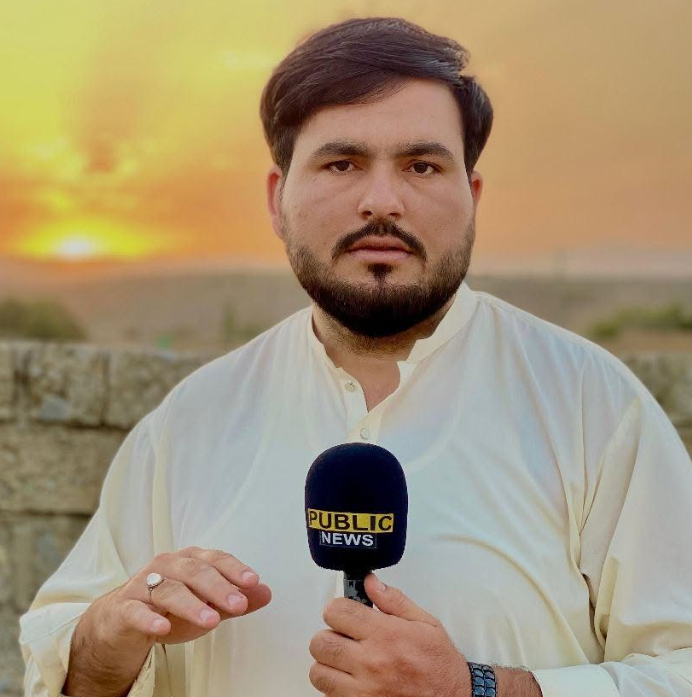
Quetta: On June 6, a local journalist, Lala Israfeel, was fatally shot in a drive-by incident in the Musakhail area of&nbs


PCP need your support that we may provide you better services: click on donate


"Trial of Pakistani Christian Nation" By Nazir S Bhatti
On demand of our readers, I have decided to release E-Book version of "Trial of Pakistani Christian Nation" on website of PCP which can also be viewed on website of Pakistan Christian Congress www.pakistanchristiancongress.org . You can read chapter wise by clicking tab on left handside of PDF format of E-Book.