
In 2023, the Punjab government issued a notification aimed at the character building of prisoners serving sentences in various jails across the pro
Pakistan and Buddhist history: Media whitewashing, museum manipulations and Hindus. By Lee Jay Walker
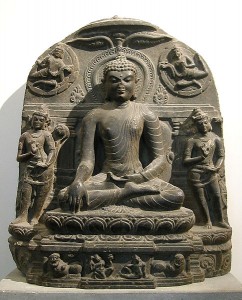
In many Western institutions, art museums, elitist circles, educational establishments and in many media outlets, it appears that you have “a reverse Talibanization” based on misinformation. This applies to “manipulating history” and modern realities within parts of the Islamic world where minorities are fighting for survival. In order to pander to the political correct and cultural relativists, it appears that any manipulation of reality is fair game. Of course, the Muslim world is very diverse therefore each nation, history, cultural background and other important factors will be different and generalization is very dangerous. Yet clearly the history of the Indian subcontinent and the reality of modern day Pakistan shouldn’t be brushed under the carpet. After all, while non-Muslim minorities have survived in the Levant and become part and parcel of modern day Lebanon and Syria; this can’t be stated about Buddhism and Hinduism which is the main theme of this article when related to Pakistan.
Last year an article was published about a museum exhibition called the“Museum exhibit highlights Pakistan’s Buddhist roots.” This article was written by Emanuella Grinberg and published on CNN and the headline appealed greatly. However, it soon became apparent that it was little more than a propaganda stunt and written by an individual who clearly understands little about the history of the Indian subcontinent.
Sadly, Melissa Chiu also followed the same theme because the Museum Director at New York’s Asia Society also made baseless comments. Given this reality, her comments appeared to be based on political correctness and whitewashing the ongoing persecution of minorities in Pakistan, which clearly should have been outside her remit. Therefore, sometimes it is best to say nothing rather than enter into the realm of fantasy.
It matters not if Melissa Chiu desired this or if it was based on cultural sensitivities – or if because of other factors. The end result is that her comments distort reality by using clever language which places Pakistan within ancient culture. Yet clearly this is false and goes beyond any logical conclusions because it is abundantly clear that the nation of Pakistan isn’t ancient.
Also, in modern day Pakistan radical Sunni Islamists and parts of mainstream society often victimize Christians, Hindus, Sikhs, and other minority Muslim groups, including the Shia and Ahmaddiya. Discrimination doesn’t just belong to aspects of society within Pakistan but more alarmingly many areas are state sanctioned. For example, in Pakistan, Muslims and non-Muslims can be charged with blasphemy which could lead to the death sentence. Equally alarming, many Christian and Hindu women have been kidnapped and forced to convert to Islam but the legal system and police do little to stop this tragic reality.
Therefore, what religious pluralism and what Pakistan history are Emanuella Grinberg and Melissa Chiu talking about? Pakistan is a relatively new nation and since the creation of this country the Hindu and Sikh populations went into sharp decline. Indeed, even today you have ongoing Sunni Islamization and countless massacres have been done against Shia Muslims. Including taking Shia Muslims of buses and killing them based on their Shia identity.
It is true that the land of modern day Pakistan was at the crossroads of cultural influences but this happened under “mother India.” Hindus in India welcomed religious minorities fleeing Islamic persecution in Persia (Iran) because Zoroastrians fled to “mother India” in large numbers. However, constant Islamic invasions of “mother India” meant that Islamization would take place in parts of a more advanced Hindu civilization which welcomed religious pluralism – note Syriac Christians, Zoroastrians, Jains, Buddhists and other faiths which thrived within Hindu civilization.
Yet since the creation of Pakistan it is clear that many aspects of Hindu civilization and the Hindu faith have been crushed. This applies to Hindus fleeing Pakistan, greater marginalization and the destruction and neglect of Hindu architecture and temples. Therefore, while the Muslim population in India remains constant, the Hindu population in Pakistan and Bangladesh in such a short period of time is in crisis and even today persecution and discrimination is part and parcel of the fabric of life.
In truth, the Hindus of Pakistan are sharing the same fate which befell the Buddhists of Afghanistan. Given this reality, then one day virtually nothing will be left of Hindu civilization apart from minor images in museums in modern day Pakistan. Similarly, very small Hindu communities may survive but this will apply to the margins of society.
Melissa Chiu comments that “When we think of Pakistan, Americans might associate it with the place where Osama bin Laden was captured, with terrorism and natural disasters…..But actually, it has a much longer history that dates back to an ancient culture that gives us a sense of a pluralistic tradition that was all about tolerance.”
Wrong, Pakistan does not have a long history but “mother India” of course does have a long deep history and it is one of the finest civilizations in the world. The Hindu civilization faced stagnation and being reduced in size because of Islamic invasions and then British colonialism. However, since independence India is once more emerging and this nation is now a rising power.
Alternatively, since the creation of Pakistan the religious minorities and society on a whole is being Islamized. Therefore, mainstream Sunni Muslims, Ahmadiyya Muslims, the Shia, non-Muslim minorities and liberals within society are all on the back foot. Also, for Ahmadiyya Muslims they are treated like second-class citizens in their own land despite not desiring to hurt anyone.
Ironically, Ahmadiyya Muslims and Shia Muslims are not being killed in India because of their religion. Yet, in Pakistan many members from both communities have been killed in recent times. When brave Sunni Muslim voices speak out against institutional discrimination, then they are also attacked by Islamists and this also applies to being killed.
Therefore, Melissa Chiu is using language delicately because Pakistan is a new nation and the “much longer history that dates back to an ancient culture” does not bare a relationship with aligning this with Pakistan. From an educational point of view this is very misleading irrespective if no intent. This reality means ancient history should be put under “mother India” when it comes to talking about the foundations of the old world in this part of the world.
Following on from this it is clear that the “pluralistic tradition” is nothing to do with Pakistan. On the contrary, it was part and parcel of Hindu civilization because “mother India” gave protection to many old faiths which were fleeing persecution – or which flourished internally because of Hindu religious pluralism. Today the old Buddhist and Hindu world in Pakistan is little more than “a modern day museum.”
Emanuella Grinberg then states “At its height, Gandhara encompassed present-day Peshawar in northwest Pakistan and parts of eastern Afghanistan, the Hindu Kush, and northwest India, making it a major center of trade, commerce and the development of arts and education. Pakistan may be 95% Muslim today, but Buddhism flourished in Gandhara between the 2nd century B.C. and 10th century A.D., giving rise to a distinct style of Buddhist visual art.”
This information is educational but look what is left out. How did Afghanistan and modern day Pakistan become 99% Muslim and 95% Muslim respectively? The factors will be based on multiple reasons but ignoring Islamic jihad, dhimmitude, jizya, forced conversions, pogroms, destruction of Hindu, Buddhist, Zoroastrian and Jain places of worship – is a lot to leave out.
Emanuella Grinberg also crosses the line when in her article she gives the quote that “…the exhibit also demonstrates Pakistan’s dedication to preserving its multicultural heritage, Pakistan’s representative to the United Nations said.”
UN Amabassador for Pakistan, Abdullah Hussain Haroon, comments that “Buddha represents a human being whose ethereal qualities were so magnified by his enormous wisdom that his values of himself, which were espoused by Gandhi and so many others, became his contributions to mankind.”
Of course, nobody doubts the sincerity of Abdullah Hussain Haroon and clearly many people in Pakistan do genuinely support a more tolerant society. Also, individuals like Abdullah Hussain Haroon want to preserve past history and protect civilizations which were very rich. However, the reality is much more complex than this and ongoing Islamization is a reality in this country. Indeed, even Sufi shrines have been attacked in recent times in Pakistan.
The BBC stated “In recent years kidnapping for ransom and armed robberies have multiplied in the area and Hindus have increasingly been the focus of attacks….Many pay protection money regularly to local gangs or influential figures. But in spite of this they are still targeted.”
The Hindu American Foundation stated (Washington, D.C. (June 15, 2006)) that “The Hindu American Foundation (HAF) bemoaned the destruction of the last Hindu temple in Lahore, Pakistan. At the time of the partition of India in 1947 Lahore was known as one of the centers of culture and cosmopolitanism. Soon thereafter its great artists, musicians, and its Hindu and Sikh populations either moved voluntarily out of that city or were driven out by the fundamentalist Muslim forces that have shaped the country since then. “The last stroke in making Lahore totally Muslim is the demolition of the only remaining Hindu temple in the city”, said Ramesh Rao, member of the HAF Executive Council.”
“A private developer was allowed to demolish the ‘Krishna Mandir’ at Wachhoowali, Rang Mahal, and construct a commercial building in its place. Government officials, in charge of protecting minority interests, were involved in the machinations that led to the destruction of the last Hindu temple in Lahore. The Evacuee Property Trust Board (EPTB), the government body maintaining properties of minorities, especially Hindus and Sikhs, was said to have concealed facts from the municipal board chairman about the nature of the building. This is not the first time the EPTB has permitted the demolition of a temple. It was only last year that the Vehari temple in Punjab was razed for the construction of a commercial building.”
“These acts of connivance of local authorities in the destruction of non-Muslim religious symbols and in harassing minority groups are in the established tradition of driving minorities out of Pakistan. The Hindu population in Pakistan, which was between 15 and 24 percent in 1947, at the time of partition of India, has now been reduced to less than two percent. “While we applaud the condemnation by several opposition members of the National Assembly like Pakistan People’s Party, and Pakistan Muslim League-N, we realize that the political, social, and religious dynamic in Pakistan allows such attacks on minorities and minority institutions with impunity,” said Dr. Mihir Meghani, President of HAF. “Unless there is worldwide condemnation of this act of destruction, and arrest and imprisonment of officials involved in the matter, there is no hope for minorities in Pakistan.”
Therefore, the author, the ambassador and the museum director in the CNN article can state platitudes about the showing of Buddhist history. However, Hindu and Sikhs are becoming “real museums” without having “a museum” to show the reality of Pakistan since partition.
The pluralism of past history is nothing to do with Pakistan because past pluralism was based on Hindu civilization and the Indian subcontinent. Given this, it is deplorable that at a time when minorities face so much persecution and injustice in modern day Pakistan; that an article written by a CNN correspondent is whitewashing past history and the modern day reality of Pakistan.
The author instead comes up with allowing the following comment in her article which states that “...the exhibit also demonstrates Pakistan’s dedication to preserving its multicultural heritage.”
This could not be further from the truth because much of Pakistan’s past Hindu and Buddhist heritage is under attack. Also, never mind heritage, the Hindu population since the creation of Pakistan is in clear free-fall percentage wise and institutional discrimination is widespread.
Maybe the author believes it is fine to have a museum which distorts reality and then to make political capital out of the misfortune of past history, whereby Buddhists suffered so greatly at the hands of Islamic rule. Also, the past eradication of Buddhism after several Islamic conquests is not just history. After all, since the creation of Pakistan it is clear that Hindu civilization and the Hindu population faces the same Sunni Islamization processes. This applies to violence, persecution and institutional discrimination.
Also, why does the author allow the following comment: “This was one of the great periods of the world of fundamental equity, of human rights and so many other important principles, which are important to Pakistan and the United States today….”
When does a state sanctioned policy for supporting the death penalty for blasphemy against Mohammed become “important principles?” Also, how does the ongoing Islamization of Pakistan become turned into“...the exhibit also demonstrates Pakistan’s dedication to preserving its multicultural heritage.”
I am sure that many Hindus will be alarmed by how ancient Hindu civilization and pluralism is being used in the same paragraph to denote Pakistan. Therefore, the article by Emanuella Grinberg is very misleading and near the end it sounds like a propaganda piece. It should be equally astonishing that a major agency would allow such a shallow and distorted history to be allowed to be published and manipulated. However, articles like this can be found regularly and this is the real issue – on the one hand the Taliban want to turn Afghanistan and parts of Pakistan into “Islamic year zero – yet, articles like this, are also doing their own internal Talibanization by re-writing history and distorting the reality of modern day Pakistan.
Of course, the Christian world, Muslim world, Pagan world, Buddhist world, and so forth, are extremely varied. Therefore, in the Levant many Christian communities survived alongside various different Muslim groups. However, unlike the Levant it is clear that the history of the Indian subcontinent is very different. Also, during such a short history of modern day Pakistan many minorities like Hindus and Sikhs are in free fall because of institutional discrimination and persecution.
http://edition.cnn.com/2011/LIVING/08/21/pakistan.gandhara.art/index.html?hpt=hp_mid
http://www.hafsite.org/media/pr/temple-destruction-lahore-pakistan
http://news.bbc.co.uk/2/hi/south_asia/6367773.stm
leejay@moderntokyotimes.com
http://moderntokyotimes.com
You May Also Like
LAHORE, PUNJAB: Pakistan’s history of terrorist attacks against Christians and Christian places of worship has raised continuing concerns abo
UK: RAAC homeowners in Tillicoultry are formally complaining to Clackmannanshire Council after continuing uncertainty over VAT, financial assistanc


PCP need your support that we may provide you better services: click on donate


"Trial of Pakistani Christian Nation" By Nazir S Bhatti
On demand of our readers, I have decided to release E-Book version of "Trial of Pakistani Christian Nation" on website of PCP which can also be viewed on website of Pakistan Christian Congress www.pakistanchristiancongress.org . You can read chapter wise by clicking tab on left handside of PDF format of E-Book.