
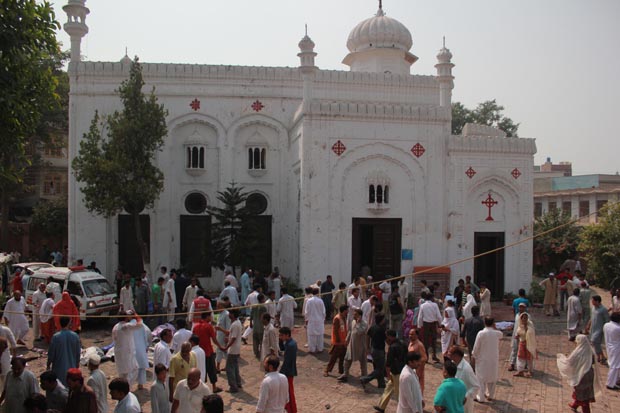
LAHORE, PUNJAB: Pakistan’s history of terrorist attacks against Christians and Christian places of worship has raised continuing concerns abo
Human rights activists launch “Living Wage Campaign” for workers’ rights
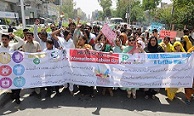
Faisalabad: May 2, 2014. (PCP) The government must calculate the actual cost of living in Pakistan and ensure that workers get a “living wage rather than minimum wage” so that they can lead a dignified life free of debts, bondage and violence. The government must ratify ILO conventions protecting rights of home-based workers (ILO C-177) and domestic workers (ILO C-189), and regularize them to extend social and legal protection coverage to workers engaged in informal sector. These demands were made by the participants of a Protest Rally under “Living Wage Campaign” held in front of Faisalabad Press Club on 30 April 2014 to mark International Workers’ Day. The protest rally was staged by the Peace and Human Development (PHD Foundation), Association of Women for Awareness and Motivation (AWAM), Adara Samaji Behbood (ASB) and Pakistan Interfaith Peace Council and Human Rights.
The protest rally was joined by people hailing from different communities and different socio-economic background. The protesters rejected and strongly criticized the government’s minimum wage policy of announcing a PKR 1,000/- only as an annual increment for workers on international labour day every year. Holding placards and banners, they enchanted full throat slogans in a scorching heat against low wages, skyrocketing inflation and load-shedding, and urged the government to take tangible steps for the protection of workers’ rights, and ensure a living wage rather than minimum wage for all workers engaged in formal and informal sector.
Speaking on this occasion, the director of the PHD Foundation, Suneel Malik said, “The living wage is the minimum income necessary for a worker to afford the basic needs of his family to maintain a safe, decent standard of living within the community such as food, clothing, utilities, education, health care and transport. Therefore, the government must make the minimum wage a living wage for all workers by taking account of real living costs in Pakistan, for allowing them to lead a dignified life.” “Pakistan’s labour class is among the world’s most underpaid and overworked groups, but it fails to come out of poverty due to enforced labour laws, despite working hard in order to make their both ends meet,” he added.
The director of the AWAM, Nazia Sardar said, “Home-based workers need job security, income security and social security simultaneously, because they still do not have social and legal protection despite their major contribution to the economy.” “The government must prioritize the adoption of policy and legislation for the recognition of home-based workers, as part of labour force, and ratify ILO convention No. 177 on human-based workers to guarantee their access to social security benefits,” she demanded.
A human rights activist, Naseem Anthony said, “The living wage differs from the minimum wage set by the government, as minimum wage fails to meet the requirements of a worker to have a basic quality of life, and fight poverty. The poverty and low pay is closely associated with social disadvantages including poor health, substandard housing and personal debt, and cause suicide attempts and street crimes, therefore the government must award living wages to workers based on the real living costs, for a prosper nation.”
A women’s rights activist, Shazia George said, “Domestic workers are not covered under any labour laws as they do not have recognition as a worker in Pakistan. They are subjected to violence and abuse quite often, but the injustices with most neglected and exploited class of female workers are never redressed.” “The government must approve a legislation presented in Senate on domestic workers’ rights, and ratify ILO convention (ILO C-189) protecting rights of domestic workers, and regularize them as part of labour force to extend social and legal protection coverage to workers engaged in informal sector,” she demanded.
A social activist, Irshad Parkash said, “Most employers have not registered their workers with the Employees Old-age Benefits Institution (EOBI), therefore they are deprived of receiving pension and unemployment benefits. Even employers have not registered their workers with the Employees Social Security Institutions (ESSI), which deprive them of all kinds of financial support from the Workers Welfare Fund, i.e. free medical treatment, death grants, marriage grants, education grants etc. Therefore, the government must ensure the issuance of Computerized National Identity Card (CNIC), social security cards and EOBI cards for all brick kiln and factory workers by registering them with government departments.”
A Political & labour leader, Arif Ayaz said, “Most factories and brick kilns are not registered; therefore labour laws are violated in Pakistan which cause exploitation of workers’ rights. The government must make certain that all unregistered factories and brick kilns are registered, and all labour laws including elimination of bonded labour and child labour are strictly enforced.”
A parliamentarian, Dr. Najma Afzal said, “The government is committed to the protection of workers’ rights, and take all appropriate measures to improve working conditions of workers, and implement existing labour laws and policies in letter and spirit. The government will soon regularize those workers who do not have statutory cover, for ensuring legal protection of their rights.”
You May Also Like
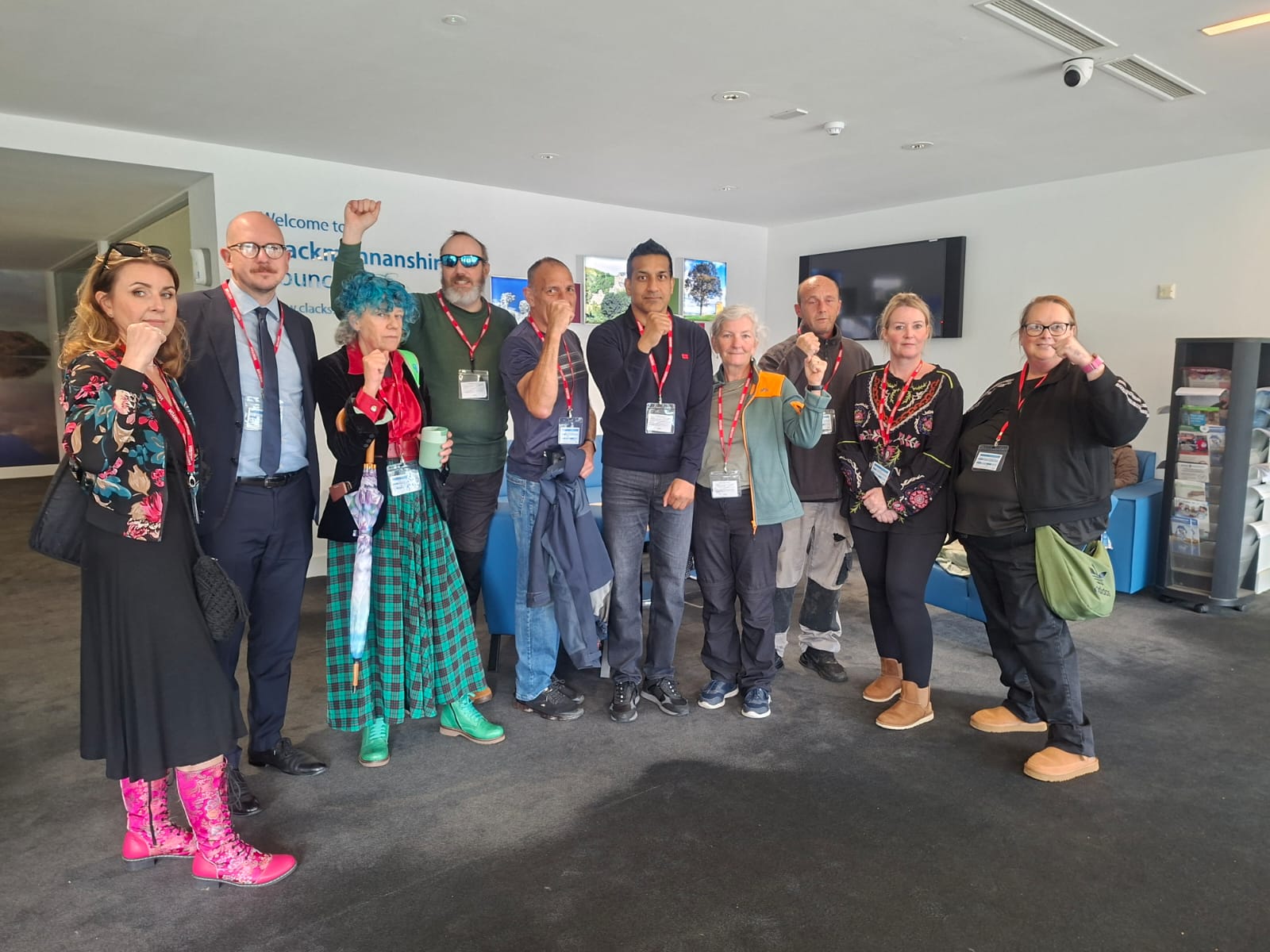
UK: RAAC homeowners in Tillicoultry are formally complaining to Clackmannanshire Council after continuing uncertainty over VAT, financial assistanc

KAMOKE, PUNJAB: Calls for truth, transparency and accountability are growing following the death of David Masih, a young Christian man from Kamoke


PCP need your support that we may provide you better services: click on donate


"Trial of Pakistani Christian Nation" By Nazir S Bhatti
On demand of our readers, I have decided to release E-Book version of "Trial of Pakistani Christian Nation" on website of PCP which can also be viewed on website of Pakistan Christian Congress www.pakistanchristiancongress.org . You can read chapter wise by clicking tab on left handside of PDF format of E-Book.