
Christian families in Sindh are still married and divorced under laws written in 1869 and 1872, for a colonial India that no longer exists. The Sin
Pakistan: RELIGIOUS FREEDOM OF MINORITY STUDENTS MATTER. By Prof. Anjum James Paul
Pakistan came into being on August 14, 1947 as a result of the division of India which had strong diverse multireligious and multicultural background associated with the great Indus Valley Civilization. Pakistan is a beautiful bouquet of eight officially recognized monotheist and polytheist religions. The flowers of the diverse bouquet that make Pakistan are Baha’i, Buddhists, Christians, Hindus, Muslims, Kalasha, Sikhs and Zoroastrians.
Quaid-e-Azam Muhammad Ali Jinnah, laid the foundation of Pakistan on equality basis which is obvious from his historical presidential address to the Constituent Assembly of Pakistan on August 11, 1947 saying, “We are starting in the days when there is no discrimination, no distinction between one community and another, no discrimination between one caste or creed and another. We are starting with this fundamental principle that we are all citizens and equal citizens of one State.”
Freedom of Religion or Belief (FoRB) is a fundamental human right that guarantees all individuals the liberty to hold, choose, change, or abandon their religion without fear of coercion. The Constitution of Pakistan 1973 guarantees freedom of religion in article 20 (a) “every citizen shall have the right to profess, practice and propagate his religion.” The Constitution safeguards the same religious freedom to persons attending educational institutions in article 22 (1) “No person attending any educational institution shall be required to receive religious instruction, or take part in any religious ceremony, or attend religious worship, if such instruction, ceremony or worship relates to a religion other than his own.” The Constitution further guarantees equality of all citizens in article 25 (1) “All citizens are equal before law and are entitled to equal protection of law.”
Pakistan is a state party of International Convention on the Rights of the Child. Article 14 of this Convention describes “States Parties shall respect the right of the child to freedom of thought, conscious and religion.” And further Article 30 of ICRC describes “In those States in which ethnic, religious or linguistic minorities or persons of indigenous origin exist, a child belonging to such a minority or who is indigenous shall not be denied the right, in community with other members of his or her group, to enjoy his or her own culture, to profess and practise his or her own religion, or to use his or her own language.”
Pakistan is also a state party of International Covenant on Civil and Political Rights (ICCPR). Article 18 (2) of (ICCPR) describes “No one shall be subject to coercion which would impair his freedom to have or to adopt a religion or belief of his choice.”
Pakistan is signatory of Universal Declaration of Human Rights (UDHR). Article 26 (2) of UDHR describes “Education shall be directed to the full development of the human personality and to the strengthening of respect for human rights and fundamental freedoms. It shall promote understanding, tolerance and friendship among all nations, racial or religious groups, and shall further the activities of the United Nations for the maintenance of peace. (3) Parents have a prior right to choose the kind of education that shall be given to their children.”
Pakistan is also signatory of Declaration on the Elimination of All Forms of Intolerance and Discrimination Based on Religion or Belief. Article 5 (2) of the Declaration describes “Every child shall enjoy the right to have access the education in the matter of religion or belief in accordance with the wishes of his parents or, as the case may be, legal guardians, and shall not be compelled to receive teaching on religion or belief against the wishes of his parents or legal guardians, the best interests of the child being the guiding principle.”
Pakistan is also a member state of United Nations Educational, Scientific and Cultural Organization (UNESCO) and its guidelines describe “The school’s culture should be consistent with and promote relevant values such as non‐violence, compassion, equality, sustainability, respect for individuals and for differences in appearance, beliefs and customs, tolerance, and respect for human rights.”
The Constitution of Pakistan 1973, International Convention on the Rights of the Child, International Covenant on Civil and Political Rights, Universal Declaration of Human Rights, Declaration on the Elimination of All Forms of Intolerance and Discrimination Based on Religion or Belief, UNESCO guarantee and protect freedom of religion and belief.
I would like to draw the attention of the Federal government and Provincial governments of Pakistan to guarantee freedom of religion or belief in the curriculum, textbooks and educational institutions as guaranteed in the Constitution of Pakistan 1973 and the international Covenants, Conventions and Declarations being the state party, signatory and a member state. Pakistan Minorities Teachers’ Association (PMTA) is making efforts for equality of all Pakistani students without discrimination since its inception 2004. As a result of its constant efforts subject of ‘Religious Education’ for seven minority religions Baha’i Faith, Buddhism, Christianity, Hinduism, Kalasha, Sikhism and Zoroastrianism was approved in 2023 replacing the subject of Ethics introduced in the national curriculum 2006-2007 for religious minority students. The federal and provincial ministries of education have not implemented the subject of Religious Education with letter and spirit as textbooks are not available and the minority students are bond to study the subject of Ethics. The Credit goes only to the Ministry of Education Punjab that has published textbooks on Masihi Taleem (Christianity) for all grades in 2026 but the textbooks of the other minority religions are not available for all grades. So, the religious minority students are still bond to study the subject of Ethics at the federal and provincial level. According to the various researches of PMTA on the national curriculum and textbooks in the subjects of social sciences, basic sciences and languages grades I-XII, students of all officially recognized religions of Pakistan have Muslim identity. Due to this, they feel constant threat to their religious freedom and they are mostly in a state of fear that anything can happen to them anytime and their lives and beliefs can be in danger. They are psychologically in depression and this is the reason that drop out ratio of minority students from educational institutions is above all.
Reservations
· Though National Curriculum Council, Ministry of Federal Education and Professional Training, Government of Pakistan has approved and notified the Curriculum on ‘Religious Education’ on Baha’i, Buddhism, Christianity, Hinduism, Kalasha, Sikhism and Zoroastrianism in 2023 but due to the unavailability of the textbooks the subject of Ethics is still offered as the primary non- confessional alternative subject in place of Islamiyat. The subject of “Ethics” is a discriminatory one because it has been designed only for the minority students though ethics is needed for all. It is only Punjab Education, Curriculum, Training And Assessment Authority (PECTAA) that has published textbooks on Masihi Taleem (Christianity) for all grades I-IX and XI. PECTAA has published textbooks for grades I-III on Hinduism, Sikhism, Kalasha and Buddhism while grades 1-5 on Zoroastrianism.
· The students of all minority religions are bond to study the subject of Ethics as an alternative of ‘Tarjma-tul-Quran’ (Quranic Translation). The National Assembly of Pakistan approved the Compulsory Teaching of the Holy Quran Bill, making Quranic education with translation compulsory across grades in 2017 and since 2021 it is implemented for school to university level. The subject of Ethics has been imposed on the religious minority students without their consent violating their right to Freedom of Religion of Belief. The minority students are always treated differently because they are systematically segregated from their religious beliefs in the subjects of social sciences, basic sciences and languages and they are all considered as Muslims because they study Islamic beliefs in these subjects and secondly they are confused as they are forced to study the subject of Ethics as an alternative of two subjects ‘Religious Education’ and ‘(Quranic Translation)’.
· Religions is the central theme of the subject of Ethics. Only a child from religious minority diminishes his religious freedom and religious identity in his early childhood as he holds the textbook of ‘Ethics’ in his hands right from grade-I in which he has to study five religions Christianity, Hinduism, Islam, Judaism and Sikhism. Pakistan has religious diversity and there are chances that he might not be a follower of any of these five religions. Thus, a child is deprived of his religious freedom and religious identity from his childhood.
· The curriculum of Ethics consist 56 units/chapters for grades I-XII out of which 14 units are on ethics while 42 units on the beliefs of 10 different religions, 30 personalities out of which mostly religious ones and 9 religious festivals. Thus, 25% units/chapters are based on Ethics while 75% on religions, religious and non-religious personalities and religious festivals.
· There are Teachings and Beliefs on Buddhism in 7 classes, Christianity in 11 classes, Confucianism in 1 class, Hinduism in 11 classes, Islam in 11 classes, Jainism in 1 class, Judaism in 6 classes, Sikhism in 11 classes, Taoism in 1 class and Zoroastrianism in 6 classes from grades I-XII.
· Baha’i and Kalasha are officially recognized religions of Pakistan like Buddhism, Christianity, Hinduism, Islam, Sikhism and Zoroastrianism but Baha’i and Kalasha have not been included in the curriculum of Ethics at any level. On the other, there are chapters on Confucianism and Taoism at grade 8 and Jainism at grade 9. These three religions have not been mentioned in any chapter on ‘Introduction of Religions’ at any level but the teachings and beliefs of these religions are in detail in separate chapters as if these are major religions of Pakistan.
· In Chapter 1 ‘Introduction of religions’ of grade 5, there is a content on ‘Great Prophets’ Adam, Noah, Abraham, Jacob, Moses, Lord Jesus Christ and Hazrat Muhammad (PBUH). Teaching the beliefs of a religion to a student who has different beliefs offends him as it is clearly an open violation of Freedom of Religion or Belief that is guaranteed in the Constitution, Covenants, Conventions and the Declarations.
· Mahavira, the founder of Jainism which is not the recognized religion of Pakistan is the most prominent personality in the subject of Ethics whose Life, Contemporary leaders and Teachings have been placed in chapter 2 of grade 10, otherwise there are at least two Men of God/Personalities/Heroes in the chapter of personalities. Chapter 5 of grade 10 consists on Aristotle, Emmanuel Kant and Sri Aurobindo Ghosh.
An analysis of textbooks on Ethics is presented below that Punjab Curriculum And Textbook Board has published. These textbooks are available on the website of PECTAA. https://pectaa.edu.pk/
Grade wise religions in the textbooks
Chapter 1 of textbooks for all grades is on ‘Introduction of religions’ except Grade 3 that is on ‘Concept of basic religions’.
Grade1: Christianity, Hinduism, Islam, Judaism, Sikhism
Grade 2: Christianity, Hinduism, Islam, Judaism, Sikhism
Grade 3: Chapter 1 Concept of basic religions
Concept of evolutionary religions, Concept of divine religions, Nature worship, Divine god, god/goddess of the earth, Mythological tales (Greece, Babylonian, Egypt), The presence of soul in the objects, The era of magic, Totemism, Fabricated stories and Fables
Grade 4: Buddhism, Christianity, Hinduism, Islam, Judaism, Sikhism, Zoroastrianism
Grade 5: Buddhism, Christianity, Hinduism, Islam, Judaism, Sikhism, Zoroastrianism
Grade 6: Introduction of religions
The edification of humanity - Moral stories - Poems
Pearls of knowledge and wisdom
(Note: Pearls of wisdom have been derived from Christianity, Hinduism, Islam, Sikhism and Zoroastrianism)
Grade 7: Buddhism, Christianity, Hinduism, Islam, Sikhism, Zoroastrianism
Grade 8: Buddhism, Christianity, Hinduism, Islam, Sikhism
Grade 9: Buddhism, Christianity, Hinduism, Islam, Sikhism, Zoroastrianism
Grade 10: Buddhism, Christianity, Hinduism, Judaism, Islam, Sikhism,
Grade 11: Buddhism, Christianity, Hinduism, Islam, Jainism, Sikhism, Zoroastrianism
Grade 12: Christianity, Hinduism, Islam, Judaism, Sikhism, Zoroastrianism
Grade wise Chapters on teachings and beliefs of different religions
Grade 4: Chapter 2 Hinduism (pages 23-32)
Chapter 3 Buddhism (pages 33-44)
Grade 5: Unit 2 World Religions
Judaism (pages 27-27)
Christianity (pages 27-30)
Islam (pages 30-32)
Grade 6: Chapter 2 Sikhism (pages 17-29)
Grade 7: Chapter 2 Zoroastrianism (pages 13-17)
Grade 8: Chapter 2 World religions
Confucianism (pages 14-17)
Taoism (pages 18-20)
Grade 9: Chapter 2 Jainism (pages 14-24)
Grade 11: Chapter 2 Different religions in Pakistan
Islam (pages 16-32)
Christianity (pages 33-41)
Grade 12: Chapter 2 Different religions in Pakistan
Sanatan/ Hinduism (pages 12-33)
Zoroastrianism (pages 34-46)
Sikhism (pages 47-62)
Men of God/Important Personalities/Personalities/Heroes
Thirty (30) personalities, Founders of Religions, Prophets, Reformers, Philosophers and Social Activists of several religions have been placed in the units/chapters under the title of Men of God/Religious Personalities/Heroes in all grades I-XII. The names of these personalities with grades are;
Grade 1: Chapter 3 Men of God
Lord Jesus Christ (pages 19-23)
Moses, a Pious Man (pages 24-29)
Grade 2: Chapter 3 Men of God
Shri Krishan Bhagwan (pages 20-23)
Sri Guru Nank Sahib Ji (pages 24-29)
Grade 3: Chapter 3 Introduction of Abraham (pages 30-36)
Strong faith and preaching
Journey, Righteousness, Sacrifice of son
Grade 4:Chapter 5 Important Personalities
Bhagwan Shri Krishan Ji Maharaj (pages 55-62)
Life, Teachings (Geeta)
A unique method of preaching of Mahama Budha (pages 63-66)
Grade 5: Unit 4 Personalities
Life of David (pages 46-47)
Life of Saint Paul (Teachings, preaching and letters) (pages 47-48)
Grade 6: Chapter 6 Heroes
Mary (pages 57-58)
Ashok (pages 58-59)
Saint Thomas Aquinas (pages 59-60)
Grade 7: Chapter 6 Personalities
Rabia Basri (pages 76-77)
Zoroaster (pages 80-81)
Saint Thomas the Apostle (page 84)
Grade 8: Chapter 5 Personalities
Mirabai (pages 41-42)
Saint Augustine (pages 42-43)
Abraham Lincoln (pages 43-44)
Ahmad Ibn Muhammad Miskawayh (pages 44-45)
Grade 9: Chapter 5 Heroes
Imam Ghazali (pages 59-62)
Florence Nightingale (pages 63-66)
Grade 10: Chapter 5 Heroes
Aristotle (pages 52-57)
Emmanuel Kant (pages 58-62)
Sri Aurobindo Ghosh (pages 63-65)
Grade 11: Chapter 5 Heroes
Abdul Sattar Edhi (pages 58-64)
Mother Teresa (pages 65-68)
Jamshed Nusserwanjee Mehta (pages 69-74)
Grade 12: Chapter 5 Heroes
Nelson Mandella (pages 85-89)
Dr. Muhammad Younas (pages 90-93)
Najeeb Mahfooz (pages 94-97)
Religious festivals in Pakistan
Grade 6: Chapter 3 Religious festivals in Pakistan
Christmas (page 30)
Eid ul Fitr (pages 31-32)
Birthday of Guru Nanak Sahib Dev Ji (page 32)
Grade 7: Chapter 3 Religious festivals in Pakistan
Eid ul Adha (page 20)
Easter (pages 20-21)
Holi (pages 24-25)
Nauroz (pages 28-29)
Grade 8: Chapter 3 Religious festivals in Pakistan
Birthday of Bhagwan Shri Krishan (pages 23-25)
Baisakhi/Vaisakhi a seasonal festival (pages 25-26)
Recommendations
· Freedom of Religion or Belief and equality of each and every student must be ensured and protected as guaranteed in articles 20 (a), article 22 (1) and 25 (1) of the Constitution of Pakistan 1973, article 14 and article 30 of International Convention on the Rights of the Child, article 18 (2) of International Covenant on Civil and Political Rights, Universal Declaration of Human Rights (UDHR). Article 26 (2), Article 5 (2) of Declaration on the Elimination of All Forms of Intolerance and Discrimination Based on Religion or Belief and guidelines of United Nations Educational, Scientific and Cultural Organization.
· Religious contents must be restricted only in the subject of Religious Education to avoid offending or violation of freedom of religion or belief of any student.
· Textbooks in the subject of Religious Education must be published and be in the access of the students of all seven officially recognized religions of Pakistan.
· There must be immediately recruitment of religious teachers to teach the subject of Religious Education according to the faith of each and every student.
· The subject of Ethics that offends the religious identity and religious feelings of Baha’i, Buddhist, Christian, Hindu, Kalasha, Sikh and Zoroaster students must be immediately replaced with the subject of Religious Education according to the religious identity of each and every student.
· Paper setting and paper marking must be from the religious minorities teachers.
· Offending and hate based contents must be replaced from the curriculum and textbooks with the contents of human dignity, peaceful coexistence, human rights, respecting diversity, multiculturalism and respecting religions and their followers.
Prof. Anjum James Paul
Chairman
Pakistan Minorities Teachers' Association (PMTA)
Cell No.+92-300-769-5653
+92-333-993-3922
WhatsApp: +92-300-769-5653
Blog: http://pmtapk.blogspot.com/
Facebook: https://www.facebook.com/Pakistan-Minorities-Teachers-Association-1510226999243934/?ref=settings
https://www.facebook.com/anjumjames.paul
YouTube:https://www.youtube.com/channel/UCoUaTrgaYLWWIdBQf0xImIw?view_as=subscriber
PMTA is making efforts since 2004 for education reforms through advocacy, lobbying and analyses on the textbooks of Pakistan to promote diversity and peaceful coexistence through the Pakistani education system.. Pakistani religious minorities are not enjoying fully constitutionally their civil and political rights and they are facing challenges of equal citizenship, equal rights and equal opportunities. Due to religious persecution lives, beliefs, families and properties of religious minorities are always at risk. Pakistani public sector education system promotes violence, intolerance, hatred and extremism through the language and images of the textbooks against non-Islamic religions, non-Muslims and non-Islamic Civilizations. Thus Pakistani religious minorities become the direct target of the intolerance and extremism that Pakistani education system promotes.
You May Also Like
Islamabad: A remarkable photograph taken by a British doctor approaching Islamabad Airport prompted an internet search that uncovered reports of an
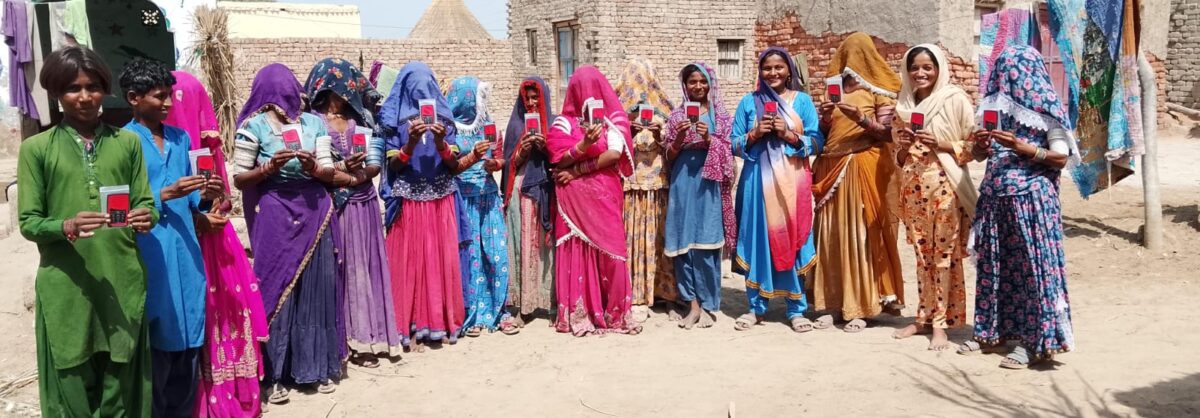
Sindh, Pakistan: BACA Compassionate Outreach: Audio Bibles Bring the Word of God to Christian Community in Berani, Sindh
BACA distributed


PCP need your support that we may provide you better services: click on donate


"Trial of Pakistani Christian Nation" By Nazir S Bhatti
On demand of our readers, I have decided to release E-Book version of "Trial of Pakistani Christian Nation" on website of PCP which can also be viewed on website of Pakistan Christian Congress www.pakistanchristiancongress.org . You can read chapter wise by clicking tab on left handside of PDF format of E-Book.