
Geneva, Islamabad: Sardar Mushtaq Gill Welcomes UN Committee’s Focus on Bonded Labour in Pakistan, Calls for International Investigation into
Pakistan's Blasphemy Laws Cast a Shadow of Fear Over Justice: Even Judges Fear for Their Lives – Sardar Mushtaq Gill
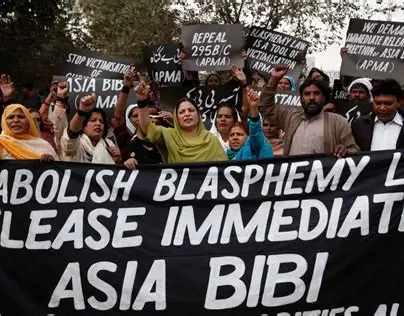
Islamabad, Pakistan: The misuse of blasphemy laws is a serious human rights concern that threatens not only accused individuals but also judges, lawyers, witnesses, and those seeking justice. When even judges fear for their lives while hearing blasphemy-related cases, it exposes a deeply troubling climate of intimidation surrounding judicial proceedings in Pakistan. No law should become an instrument of persecution, personal vendettas, or injustice. The state must protect everyone involved in judicial proceedings and ensure that justice is administered independently, without fear or external pressure.
Sardar Mushtaq Gill, a prominent human rights defender and lawyer, Founder and International Advocacy Director of LEAD Ministries, has expressed grave concern over the alarming remarks made by Islamabad High Court Justice Sardar Ejaz Ishaq Khan regarding the security threats confronting judges and witnesses involved in blasphemy-related cases in Pakistan.
Gill stated that the judge's observations reveal a deeply disturbing reality: the climate of fear surrounding Pakistan's blasphemy laws has reached a point where even members of the judiciary fear for their lives while performing their constitutional and judicial responsibilities.
He emphasized that when judges themselves feel unsafe hearing sensitive cases, it raises serious questions about judicial independence, the rule of law, and the state's ability to guarantee protection to ordinary citizens facing accusations under blasphemy provisions.
EVEN JUDGES FEAR FOR THEIR LIVES: AN ALARMING REALITY
During a recent hearing before a two-member bench comprising Justice Sardar Ejaz Ishaq Khan and Justice Khadim Hussain Soomro, the court heard appeals filed by individuals convicted in a blasphemy case and suspended their sentences pending further proceedings.
The most concerning aspect of the proceedings was Justice Sardar Ejaz Ishaq Khan's candid disclosure of the security threats and fear he had experienced while hearing blasphemy-related matters.
Referring to his experience while hearing the Noor Fatima writ petition concerning a blasphemy case, the judge disclosed that he had feared on a daily basis that someone might enter the courtroom, shoot him, and leave.
He observed that sitting on the bench without fear had become extremely difficult and acknowledged that security concerns were discouraging judges from hearing such sensitive appeals. He further indicated that he would hear these cases alone if circumstances permitted.
The judge also questioned the state's failure to provide adequate security to judges and witnesses, observing that several judges had lost their lives.
In another concerning observation, he reportedly expressed apprehension that speaking openly about these matters could result in another reference being filed against him.
These observations have brought renewed attention to the security challenges surrounding blasphemy-related judicial proceedings in Pakistan.
WHEN FEAR ENTERS THE COURTROOM, JUSTICE SUFFERS
Commenting on the situation, Sardar Mushtaq Gill said that the remarks of a sitting High Court judge should be taken seriously by the government, judicial authorities, and the international human rights community.
According to Gill, the concerns surrounding Pakistan's blasphemy laws extend far beyond individuals accused of blasphemy. Judges, lawyers, witnesses, journalists, human rights defenders, and family members may also face threats, intimidation, and pressure because of their involvement in these cases.
He observed that the possibility of violence and intimidation can create an environment in which individuals become reluctant to perform their professional responsibilities or participate freely in judicial proceedings.
Gill raised a fundamental question:
If a judge fears being shot inside a courtroom for hearing a blasphemy-related case, what protection can an ordinary accused person, a witness, a lawyer, or a human rights defender realistically expect?
He stressed that a judicial system cannot function independently when fear and threats interfere with the administration of justice.
No judge should have to fear assassination for performing judicial duties. No witness should have to risk their life for telling the truth. No lawyer should face intimidation for representing an accused person.
MISUSE OF BLASPHEMY LAWS MUST NEVER BECOME AN INSTRUMENT OF PERSECUTION
Sardar Mushtaq Gill emphasized that the misuse of blasphemy laws is a serious human rights concern requiring urgent attention.
He stated that no law should become an instrument for personal revenge, intimidation, discrimination, or persecution. Allegations must be examined through credible evidence, lawful procedures, and independent judicial scrutiny.
Every accused person must be presumed innocent until proven guilty through a fair judicial process and must be afforded the right to legal representation and due process.
Gill further emphasized that the protection of fundamental rights must not depend on the nature of an accusation, religious identity, social status, or public pressure.
He warned that when allegations are accompanied by threats, intimidation, or mob pressure, the fundamental principles of justice and equality before the law are placed at risk.
The state must ensure that legal proceedings are determined by evidence and law rather than fear, threats, or external influence.
THE STATE MUST NOT SURRENDER JUSTICE TO FEAR
Gill stressed that protecting judges and witnesses is a fundamental responsibility of the state.
The government and relevant security institutions must ensure that judges hearing sensitive cases receive effective protection. Witnesses must be able to testify without intimidation, and accused individuals must have access to fair judicial proceedings.
He also expressed concern over appeals remaining pending for years amid security concerns and pressure, emphasizing that delays in judicial proceedings can have serious consequences for individuals awaiting justice.
The state must not allow threats, intimidation, or fear of violence to determine which cases can be heard and which individuals can obtain justice.
Judicial independence is not merely an institutional privilege; it is a fundamental requirement for protecting the rights of every citizen.
LEAD MINISTRIES CALLS FOR IMMEDIATE ACTION
Sardar Mushtaq Gill called upon the Government of Pakistan, judicial authorities, law enforcement agencies, and international human rights organizations to take the judge's observations seriously.
He urged the authorities to:
Provide effective security arrangements for judges hearing blasphemy-related cases.
Establish reliable protection mechanisms for witnesses, lawyers, accused individuals, and their families.
Investigate threats and acts of intimidation against members of the judiciary.
Ensure that pending appeals are heard without unreasonable delays or external pressure.
Safeguard judicial independence and guarantee the right to a fair trial for every individual.
Take appropriate action against individuals responsible for threats, violence, and intimidation intended to obstruct the administration of justice.
Ensure that human rights defenders and lawyers can perform their professional responsibilities without fear of retaliation.
Gill also urged international human rights organizations, United Nations human rights mechanisms, and diplomatic missions to closely monitor the situation and raise concerns about the safety of judges, witnesses, and other individuals involved in blasphemy-related proceedings in Pakistan.
JUSTICE MUST BE STRONGER THAN FEAR
Sardar Mushtaq Gill stated that the remarks of Justice Sardar Ejaz Ishaq Khan should serve as a serious warning to Pakistan's institutions and the international human rights community.
When judges fear for their lives, witnesses fear speaking the truth, and appeals remain unheard amid intimidation, the entire foundation of the justice system comes under question.
He emphasized that Pakistan cannot uphold the rule of law if those responsible for administering justice are afraid to perform their duties.
Gill reiterated that every human being deserves dignity, protection, equality before the law, and access to justice. No accusation should deprive an individual of these fundamental rights.
He further stressed that the misuse of blasphemy laws must be challenged through lawful and peaceful means, while the fundamental freedoms and judicial rights of all individuals must be protected.
Blasphemy laws must never become weapons of persecution. The misuse of these laws must be challenged, fundamental freedoms must be protected, and every accused person must receive justice through fair and independent judicial proceedings.
A courtroom should be a place where the law speaks without fear, not a place where judges fear for their lives.
Justice must prevail over intimidation. Human dignity must prevail over persecution. And the rule of law must prevail over fear.
Sardar Mushtaq Gill
Human Rights Defender | Lawyer
Founder and International Advocacy Director
LEAD Ministries
You May Also Like

CHRISTIANOPHOBIA IS REAL: AN URGENT APPEAL FOR EQUAL RECOGNITION OF ANTI-CHRISTIAN HATRED IN UN GENEVA'S PUBLIC COMMUNICATIONS
To: Th

New Jersy, USA: It has been forty-two (42) years since the start of the prolonged decade and a half long Sikh Genocide which was carried out from 1


PCP need your support that we may provide you better services: click on donate


"Trial of Pakistani Christian Nation" By Nazir S Bhatti
On demand of our readers, I have decided to release E-Book version of "Trial of Pakistani Christian Nation" on website of PCP which can also be viewed on website of Pakistan Christian Congress www.pakistanchristiancongress.org . You can read chapter wise by clicking tab on left handside of PDF format of E-Book.