

Sheikhupura, Pakistan: (By Sardar Mushtaq Gill) LEAD Ministries has raised an urgent humanitarian appeal over the financial crisis facing Mehboob M
When a Sportswear Logo Becomes a Religious Offence: What Libya's Nike Fatwa Tells Us About Faith, Freedom and the Future of the West

London: (Wilson Chowdhry) An unusual religious ruling in Libya has reignited a much wider question: how should modern societies balance freedom of religion with the rights of individuals to live free from religious restrictions they do not share?
A pair of Nike trainers or a sweatshirt bearing the familiar swoosh might seem an unlikely source of religious controversy. Yet in Libya, one of the world's best-known sportswear brands has found itself at the centre of a dispute over Islamic teachings, ancient Greek mythology and the boundaries of religious authority.
Libya's Dar al-Ifta, an influential Islamic religious institution based in Tripoli, has issued a fatwa declaring that Muslims should refrain from buying, selling or wearing products displaying the Nike brand. Read more (here).
The ruling, numbered 6697 and reported by Libyan media at the beginning of November, argues that Nike's name derives from the ancient Greek goddess of victory, while its swoosh logo was inspired by the goddess's wings.
According to the religious authorities, displaying these symbols risks promoting associations with polytheism, the belief in multiple gods, which conflicts with Islam's strict monotheistic teachings.
The institution also accused Nike of supporting Israel, linking its ruling to earlier calls for boycotts over the conflict in Gaza. This allegation should be distinguished from the separate theological argument about the logo.
The decision was endorsed by Libya's Grand Mufti, Sadiq al-Ghariani.
Importantly, the fatwa is a religious ruling rather than a law passed by the Libyan state. It does not establish a nationwide criminal prohibition, and no legal penalties for wearing Nike clothing have been announced.
Nevertheless, in societies where religious authorities exercise considerable influence, such pronouncements can shape behaviour even without formal legal enforcement.
And that is arguably the more interesting issue.
From religious guidance to social pressure
This is not the first time Libya's religious authorities have challenged internationally recognised brands.
In 2025, the Dar al-Ifta reportedly objected to jewellery produced by French luxury company Van Cleef & Arpels, arguing that its distinctive clover motif carried religious or symbolic associations incompatible with Islamic teachings.
These decisions raise questions about how far religious interpretation should extend into everyday commercial and cultural life.
For some believers, following religious guidance on clothing, food, finance and personal conduct is a legitimate expression of faith. Religious freedom must include the right to make such choices.
However, a distinction exists between an individual voluntarily deciding not to wear a particular brand and a religious authority encouraging an entire community to regard that brand as unacceptable.
The concern becomes more serious where people face intimidation, ostracism or other consequences for declining to follow such guidance.
In Libya, where political institutions remain fragmented following the overthrow of Muammar Gaddafi in 2011, religious pronouncements also take place against a backdrop of competing sources of authority.
The Nike controversy is therefore about more than sportswear. It highlights the potential influence of religious institutions over personal choices and the public sphere.
Why this matters beyond Libya
It would be misleading to suggest that a fatwa issued in Libya automatically has implications for Muslims living in Britain, France, Germany or elsewhere in Europe.
Muslim communities are not uniform in their religious beliefs, cultural traditions or attitudes towards the relationship between faith and government. Many Muslims support democratic institutions and regard religious observance as a personal matter.
Nevertheless, Western countries are experiencing demographic and cultural changes that make the relationship between religious identity and secular government an increasingly important subject for public discussion.
Research published by the Pew Research Center in 2017 examined possible changes in Europe's Muslim population through to 2050.
Using a range of migration scenarios, researchers estimated that Muslims, who accounted for approximately 4.9% of the population in the countries studied in 2016, could represent between 7.4% and 14% by 2050.
These were conditional projections rather than predictions of inevitable outcomes. They also do not tell us what future generations will believe or how they will vote.
But they illustrate why discussions about religious pluralism, integration and shared civic principles are unlikely to disappear.
As religious communities grow and become more established, it is natural that their members will seek representation, recognition and accommodation of their beliefs.
Most such requests are entirely compatible with democratic life.
The more difficult questions arise when particular interpretations of religious obligations appear to conflict with individual freedom, equality between men and women, freedom of expression or the authority of civil law.
The question of Sharia and one law for all
Britain already has experience of debating the relationship between Islamic religious practices and the national legal system.
In 2018, an independent review commissioned by the Home Office examined the operation of Sharia councils in England and Wales.
The review considered concerns about the treatment of women, particularly in religious divorce proceedings, and the possibility that some individuals might feel compelled to accept decisions that did not fully protect their rights under civil law.
This is an important distinction. Sharia is not a single, universally agreed legal code. Its interpretations differ widely, and many Muslims understand it primarily as a framework for personal religious conduct.
However, where religious institutions become involved in marriage, divorce, family disputes or other matters affecting legal rights, questions about consent, fairness and accountability cannot simply be dismissed as religious sensitivities.
A woman seeking a religious divorce, for example, should never be placed in a position where community expectations effectively deny her rights available under British law.
Nor should individuals feel unable to leave a faith, reject a religious ruling or pursue a different way of life because of pressure from relatives, community leaders or religious authorities.
The principle should be straightforward: everyone is free to practise their religion, but nobody should be compelled to live under another person's interpretation of it.
Britain's legal system already protects religious freedom while reserving legal authority to Parliament and the courts. Maintaining that distinction is essential.
Extremism and the danger of parallel authority
It is equally important to distinguish ordinary religious conservatism from political extremism.
Holding traditional beliefs, observing strict religious practices or expressing opposition to particular products does not, in itself, make somebody an extremist.
The concern arises when religious or political movements seek to deny others their fundamental freedoms, replace democratic institutions with authoritarian religious government, or enforce conformity through threats and coercion.
In its 2024 definition of extremism, the British Government specifically identified ideologies rooted in violence, hatred or intolerance that seek to undermine fundamental rights or parliamentary democracy.
The Government has also acknowledged Islamist extremism as a threat to social cohesion and national security, while making clear that Islamist movements do not represent British Muslims as a whole.
These distinctions matter.
A society that fails to recognise genuine extremist activity risks allowing intolerance to develop unchecked. But a society that treats an entire religious population as inherently suspect risks creating precisely the mistrust and division it should be trying to prevent.
One legitimate concern is the possibility of parallel sources of authority emerging within communities, where informal religious expectations become more influential over personal decisions than the rights guaranteed by national law.
Such pressures need not involve terrorism or organised political movements. They may arise through family expectations, social ostracism, restrictions on relationships or pressure to conform to conservative interpretations of religious rules.
The appropriate response is not to restrict religious freedom but to ensure that every individual can exercise that freedom independently.
Could Western societies become more divided?
Population growth alone does not establish that religious extremism will increase. Nor does it demonstrate that demands for religious law will become more widespread.
Those outcomes depend on political leadership, education, integration, economic opportunity, religious interpretation and the strength of democratic institutions.
Nevertheless, several potential sources of tension deserve serious consideration.
One is the increasing politicisation of religious identity. If citizens begin to regard themselves primarily as members of separate religious communities rather than participants in a shared civic society, disagreements over values can become more difficult to resolve.
Another is the possibility of religious accommodation becoming confused with religious obligation.
Allowing someone to wear religious clothing is an expression of liberty. Pressuring others to dress according to religious rules is a restriction on liberty.
Allowing voluntary religious mediation can be compatible with civil law. Permitting coercion or unequal treatment under the guise of religious authority is not.
Similar distinctions apply to education, freedom of speech, gender equality and the right to criticise or leave a religion.
These issues are not exclusive to Islam. Other religious and ideological movements have also attempted to extend their authority beyond willing followers.
However, concerns involving political Islam and strict interpretations of Sharia deserve examination on their own terms, particularly where there is evidence of attempts to subordinate individual rights or democratic institutions to religious doctrine.
Avoiding the subject for fear of causing offence would not serve either Muslim communities or wider society.
Indeed, some of those with the greatest interest in maintaining strong protections against religious coercion are Muslims who hold liberal, reformist or secular views, along with former Muslims who wish to live outside religious expectations.
A test of democratic confidence
The controversy surrounding Nike in Libya may seem distant from everyday life in Britain.
There is no evidence that this particular ruling will produce similar prohibitions in Western countries, and it would be wrong to portray such an outcome as inevitable.
Yet it offers a useful reminder of how differently societies can understand the relationship between religious authority and individual choice.
The long-term challenge for Western democracies is not the presence of Islam, or any other faith, within their borders. It is ensuring that religious diversity develops within a shared framework of equal citizenship.
That requires governments to defend freedom of worship and religious expression, while being equally willing to confront coercion, discrimination and attempts to undermine democratic rights.
It also requires the confidence to discuss Islamist extremism and the political ambitions of religious movements without confusing them with the beliefs of millions of ordinary Muslims.
One law for all must mean exactly that: equal protection, equal responsibility and equal freedom, regardless of faith.
The question raised by Libya's Nike fatwa is ultimately not whether people should be allowed to reject a sportswear brand on religious grounds. Of course they should.
It is whether the freedom to follow a religious ruling will always be matched by an equally protected freedom to ignore it.
That is a principle worth defending in any society, whatever its religious composition.
“The decision by religious authorities in Libya to prohibit Muslims from wearing Nike clothing demonstrates how religious interpretations can extend into even the most ordinary aspects of daily life. While everyone has the right to practise their faith, that freedom must also include the right to reject religious rulings without fear of intimidation, discrimination or social exclusion.
“As Muslim populations grow across Europe and other Western countries, it is important that governments remain vigilant against attempts by extremist or authoritarian religious movements to impose their beliefs on wider society. This is not about questioning the rights of Muslims to practise their religion, but about ensuring that no religious authority is permitted to override individual liberties, democratic values or the principle of one law for all.
“Religious diversity should enrich our societies, not create parallel systems of authority or divisions between communities. We must defend freedom of conscience, equality before the law and the right to question religious teachings. These protections are just as important for Muslims who reject conservative interpretations of Islam as they are for people of other faiths or none.”
— Wilson Chowdhry, Chairman of United by Faith
You May Also Like

UK: RAAC-affected homeowners in Tillicoultry have expressed deep disappointment with Clackmannanshire Council's Stage 2 complaint response, whi
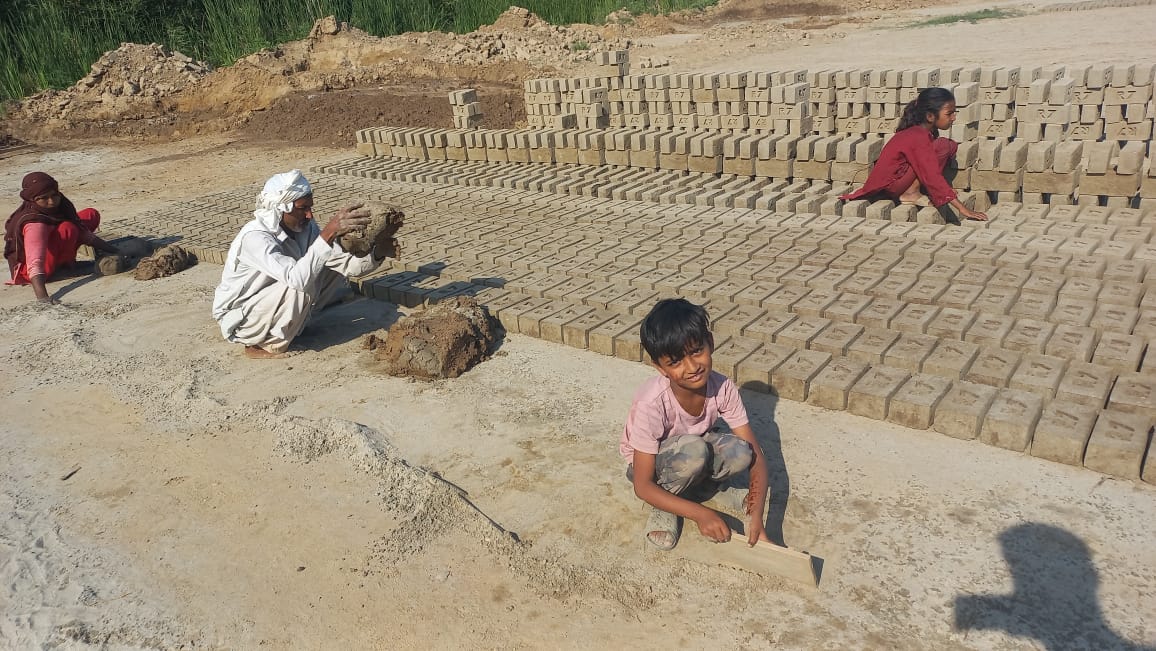
Geneva, Islamabad: Sardar Mushtaq Gill Welcomes UN Committee’s Focus on Bonded Labour in Pakistan, Calls for International Investigation into


PCP need your support that we may provide you better services: click on donate


"Trial of Pakistani Christian Nation" By Nazir S Bhatti
On demand of our readers, I have decided to release E-Book version of "Trial of Pakistani Christian Nation" on website of PCP which can also be viewed on website of Pakistan Christian Congress www.pakistanchristiancongress.org . You can read chapter wise by clicking tab on left handside of PDF format of E-Book.