
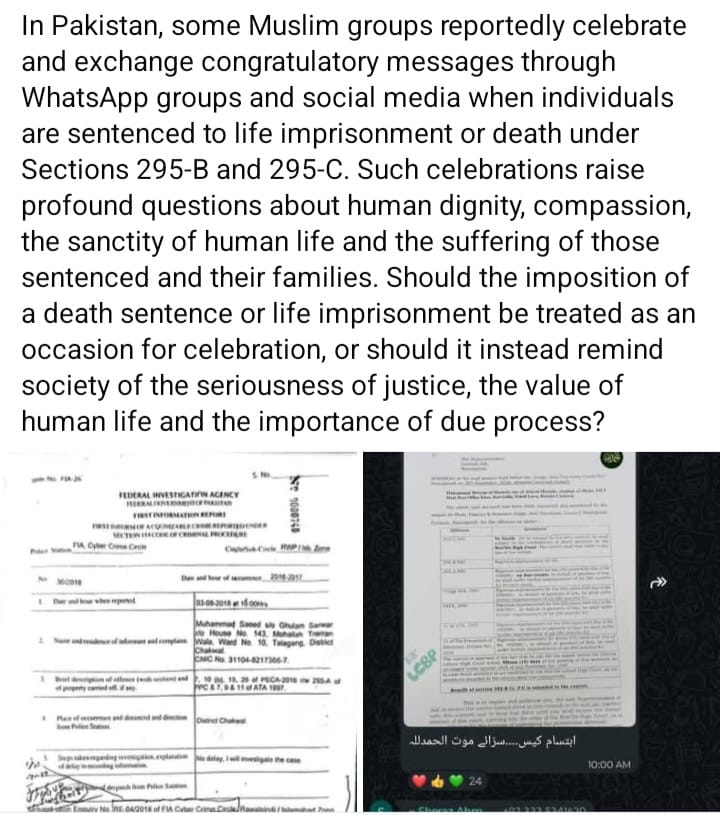
Rawalpindi, Pakistan: RELIGIOUS PROTECTION FOR ALL OR SELECTIVE JUSTICE? Sardar Mushtaq Gill, Human Rights Defender and Lawyer, raises serious huma
CLF demands consultation of Church of Pakistan and Catholic Church on Christian Marriage Bill of Sindh Government. Report by Arif Pervez Naqeeb
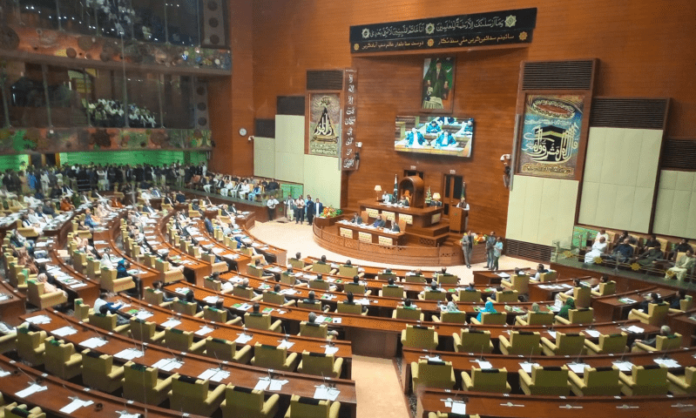
Karachi, Pakistan: Christian Lawyers Forum’s CLF calls for a comprehensive review of the Bill, particularly considering the following concerns:
- Constitutional concerns regarding the protection of religious freedom under Article 20 of the Constitution;
- Matters relating to the rights of religious minorities;
- Financial implications;
- Procedural shortcomings in the consultation process.
Accordingly, the Forum demands that, before the Bill is taken forward for further legislation, it should be redrafted through a transparent, comprehensive, inclusive, and nationwide consultative process. This process must involve all major Christian Churches, constitutional experts, parliamentarians, legal experts, theologians, and representatives of the Christian community.
This position is further strengthened by the fact that the Church of Pakistan and the Roman Catholic Church, which represent the overwhelming majority of Christians in Pakistan, have already rejected the present form and spirit of the Bill. They have consistently advocated for uniform personal laws for Christians throughout Pakistan, rather than separate, fragmented, and divergent provincial laws.
Therefore, the Bills introduced in Sindh and Khyber Pakhtunkhwa should be referred to the Federal Government through the constitutional mechanism, or alternatively, the limited reform model adopted by the Punjab Assembly should be followed, under which amendments were made to the Christian Marriage Act, 1872.
PART II: L. Implications of Article 144, Article 20, and Judicial Precedents Following the 18th Constitutional Amendment
An additional constitutional concern arises from the fact that substantially similar Bills relating to Christian family laws have been introduced by members of the provincial assemblies of Punjab, Sindh, and Khyber Pakhtunkhwa. The members who introduced these Bills in Sindh and Khyber Pakhtunkhwa belong to the same political party, namely the Pakistan Peoples Party (PPP).
This legislative development demonstrates that the matter is not merely of provincial significance; rather, it concerns the personal laws of a religious minority residing across multiple provinces of Pakistan.
In such circumstances, the constitutional framework established under Article 144 assumes particular importance. Article 144 was specifically incorporated into the Constitution to provide a mechanism whereby, when two or more Provincial Assemblies consider it necessary for a matter to be regulated uniformly beyond provincial boundaries, they may empower Parliament to legislate on that subject.
Therefore, the spirit, purpose, and fundamental mechanism of Article 144 must be understood in harmony with Article 20 of the Constitution. Article 20 guarantees every religious denomination or sect the right to profess, practise, and propagate its religion and to manage its religious institutions.
Matters relating to Christian marriage, divorce, family life, inheritance, and other aspects of personal status cannot be separated from their religious beliefs, ecclesiastical order, and religious identity. Consequently, any legislation affecting these matters must not only fulfil the constitutional requirements concerning legislative competence but must also satisfy the standards of Article 20 and the broader constitutional safeguards afforded to religious minorities.
Furthermore, following the 18th Constitutional Amendment, constitutional judgments and judicial precedents of the superior courts have consistently emphasised the following principles:
- Cooperative federalism between the Federal and Provincial Governments;
- Protection of minority rights;
- Participatory governance;
- Constitutional inclusiveness;
- Respect for the distinct religious and cultural identities of minority communities.
The superior courts have repeatedly recognised the principle that meaningful consultation with the concerned community is essential when legislation affects the constitutional rights of minorities. Such legislation must be interpreted in a manner that strengthens, rather than diminishes, religious autonomy and constitutional safeguards.
Accordingly, where substantially similar legislation concerning the personal laws of Christians is under consideration simultaneously in multiple provinces, the more constitutionally appropriate course would be to adopt a coordinated nationwide legal framework through the constitutional mechanism provided under Article 144.
Before doing so, the views of the major Christian Churches and relevant stakeholders across Pakistan must be obtained through meaningful consultation. This would ensure legal uniformity, ecclesiastical harmony, and equal treatment of Christians residing in different provinces as well as in the federally administered territories, instead of creating conflicting laws in different jurisdictions.
Therefore, the Christian Lawyers Forum Sindh maintains that the Sindh Christian Family Laws Bill, 2026, and the Khyber Pakhtunkhwa Christian Family Laws Bill, 2026, should be referred to the Federal Government for consideration of a uniform legal framework applicable throughout Pakistan.
Alternatively, the proposed reforms should be restricted to the limited reform model adopted by the Punjab Assembly in relation to the Christian Marriage Act, 1872.
This approach would preserve constitutional harmony, nationwide legal uniformity, and the rights guaranteed under Articles 20, 25, and 36 of the Constitution.
PART III: M. Additional Submissions Regarding the Khyber Pakhtunkhwa Christian Family Laws Bill, 2026
The declaration of an emergency on 11 October 2026 and the assumption of provincial affairs in Khyber Pakhtunkhwa under Articles 232 and 234 of the Constitution further highlight the constitutional complexities associated with regulating the personal laws of Christians through provincial legislation.
The uncertainty surrounding the future of the Khyber Pakhtunkhwa Christian Family Laws Bill, 2026, further reinforces the need for extreme caution before amending or consolidating longstanding federal laws, such as the Christian Marriage Act, 1872, and the Divorce Act, 1869.
In circumstances where the provincial constitutional framework is suspended or has undergone significant changes, the question of maintaining uniformity and continuity in the personal laws of Christians becomes even more significant.
The Christian Lawyers Forum Sindh maintains that, if legal reforms are considered necessary, Article 144 of the Constitution provides a more appropriate and legally coherent mechanism. Under this provision, two or more Provincial Assemblies may voluntarily empower Parliament to legislate on the subject.
This constitutional mechanism would ensure legal uniformity throughout Pakistan, prevent conflicting provincial laws, and maintain equal treatment of all Christian citizens.
The situation in Khyber Pakhtunkhwa further strengthens the Forum's position that fragmented provincial legislation and the consolidation of marriage and divorce laws into separate provincial codes are neither constitutionally desirable nor practically sustainable.
Therefore, any comprehensive reform process should preferably be undertaken through a coordinated constitutional framework under Article 144. The process must include meaningful consultation with Churches across Pakistan, Christian legal experts, and all relevant stakeholders.
### PART IV: N. The Punjab Model Should Be Followed
Following an extensive review, the Punjab Assembly largely confined its legislative reforms to the Christian Marriage Act, 1872.
As a result of this cautious approach:
- Legal certainty and stability were maintained;
- Constitutional controversies were avoided;
- Nationwide legal uniformity was preserved;
- The concerns of relevant stakeholders were taken into consideration.
You May Also Like

Ferozewala, Punjab, Pakistan: BACA’s legal team has filed a post-arrest bail application for Christian man Kamran Masih, who was arrested fol

Sindh, Pakistan: A devastating fire has destroyed the homes and belongings of three impoverished families—one Christian and two Hindu—i


PCP need your support that we may provide you better services: click on donate


"Trial of Pakistani Christian Nation" By Nazir S Bhatti
On demand of our readers, I have decided to release E-Book version of "Trial of Pakistani Christian Nation" on website of PCP which can also be viewed on website of Pakistan Christian Congress www.pakistanchristiancongress.org . You can read chapter wise by clicking tab on left handside of PDF format of E-Book.