

Nigeria is preparing to take centre-stage in the global fight against drug resistance or antimicrobial resistance (AMR), with the Federal Governmen
The Revolutionary Guard Factions Now Competing to Rule Iran. By Erfan Fard
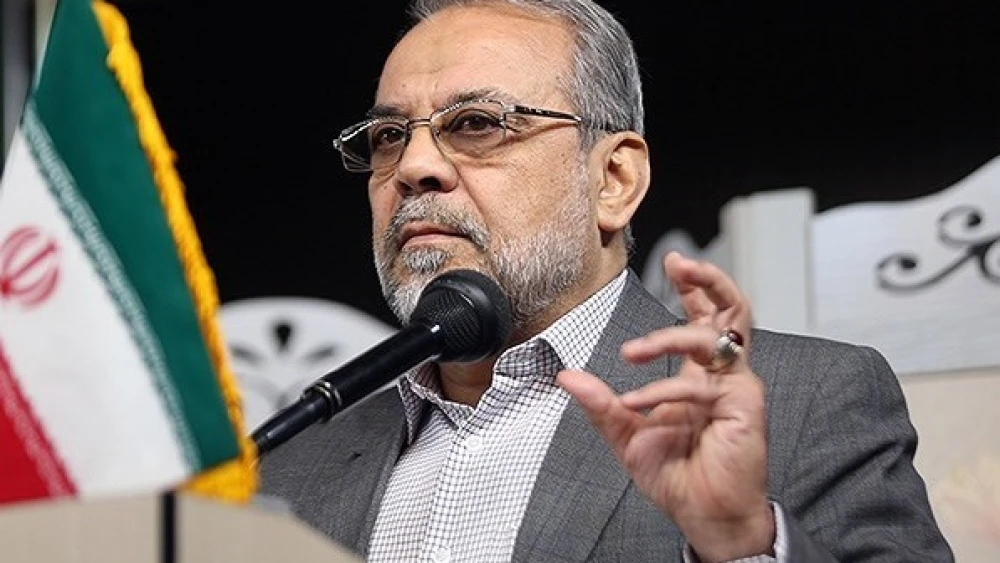
Several Radical Figures Continue to Promote Hardline, Anti-American Positions That Undercut Diplomatic Signaling.
Mohammad Baqer Zolghadr, secretary of the Supreme National Security Council, headed the Islamic Revolutionary Guard Corps’ irregular warfare division.
Mohammad Baqer Zolghadr, secretary of the Supreme National Security Council, headed the Islamic Revolutionary Guard Corps’ irregular warfare division.Tasnim News Agency, CC BY 4.0, via Wikimedia Commons
The U.S. and Israel war with Iran decapitated much of the Islamic Republic’s leadership in the first hours of the conflict. Nominal Supreme Leader Mojtaba Khamenei remains unseen since. While the regime issues statements in his name, it remains unclear who authors them and if Mojtaba is even conscious or alive. As negotiations continue, any pretense that President Masoud Pezeshkian is anything more than a figurehead has dissolved.
Most analysts accept that Iran’s Islamic Revolutionary Guard Corps is in charge. But the Guard is not homogenous. Its members remain faction-ridden with competing individuals and power centers. Identifying the power centers is necessary to determining who is in charge and, against the backdrop of negotiations, who can deliver and who might obstruct.
Most analysts accept that Iran’s Islamic Revolutionary Guard Corps is in charge. But the Guard is not homogenous.
The faction with which President Donald Trump appears willing to negotiate centers around Mohammad Bagher Ghalibaf, a four-time presidential candidate and former Revolutionary Guardsman who now serves as speaker of the parliament. His bloc operates at the intersection of formal governance and the security establishment. He positions himself to Trump’s intermediaries as ambitious and willing to deal, but he remains anchored in regime foundations. His strength lies in his supposed ability to translate security priorities into legislative and administrative action.
The second faction centers around Mohammad Baqer Zolghadr, who now serves as the secretary of the Supreme National Security Council following the death of his predecessor, Ali Larijani. Zolghadr co-directed the Islamic Revolutionary Guard Corps’ educational department and then headed its irregular warfare division; he also long has had a foot in the judiciary, serving as an advisor to Chief Justice Sadegh Larijani. His faction focuses on internal control, prioritizing surveillance, judicial leverage, and crisis management. It focuses on regime preservation through containment, rather than adaptation.
A third bloc, tied both to former Defense Minister Ahmad Vahidi, the mastermind of the 1994 Buenos Aires bombing, and former Islamic Revolutionary Guard Corps Navy commander, Ali Fadavi, reflects a more operational and externally oriented posture. With roots in military and security structures, this network emphasizes regional dynamics and maintains a harder line in foreign policy.
Finally, a traditional clerical establishment centered in Qom continues to provide religious legitimacy, though its influence appears to be diminishing as security actors expand their authority. Its relationship with the other blocs is increasingly transactional. Their buy-in is still necessary for symbolic validation but is less decisive in shaping policy outcomes.
Divergent messaging among prominent figures has underscored the absence of a unified narrative. For example, while Ghalibaf leads negotiations in Islamabad, Saeed Jalili, a former secretary of the Supreme National Security Council, and Mohsen Rezaei, a former commander of the Revolutionary Guard, tilt toward Vahidi and promote anti-American ideology. Neither shows any inclination toward dialogue with the United States. These differences, visible in public statements and amplified across Iranian outlets and social platforms, suggest deeper competition over strategic direction. For Washington, this should matter, given uncertainty about whether the Islamic Revolutionary Guard Corps remains more loyal to Fadavi, Jalili, and Rezaei than to the ambitious Ghalibaf.
Uncertainty surrounding future leadership appears to be intensifying rivalries among factions, each seeking to secure influence.
Additional signals reinforce this pattern. Parliamentary reactions across committees have varied in tone and substance, indicating disagreement over policy priorities. Messaging from the foreign ministry does not always align with narratives promoted by outlets such as Kayhan, the flagship broadsheet whose editor the supreme leader appoints, pointing to a lack of coordination. Several radical figures continue to promote hardline, anti-American positions that undercut diplomatic signaling, suggesting that internal factional dynamics—not just inconsistency—drive the regime’s fragmented messaging.
Uncertainty surrounding future leadership appears to be intensifying rivalries among factions, each seeking to secure influence in a post-transition environment. This rivalry is unlikely to remain confined to rhetoric. As competition deepens, it may manifest in institutional obstruction, slander campaigns, and efforts to sideline rivals. These dynamics may stop short of open rupture but can still shift the internal balance of power.
Control over the regime’s media remains central to this struggle. In a system where the regime tightly manages perception, the ability to define reality becomes authority. In some cases, hardline rhetoric against the United States and Israel appears calibrated less for external signaling than for domestic positioning, an effort to demonstrate ideological consistency and maintain support within pro-regime constituencies.
For U.S. policymakers, these dynamics carry implications. An internally fragmented system is unpredictable. Competing military factions may pursue different approaches, increasing the risk of miscalculation. Fragmentation also complicates diplomatic engagement. It is not always clear which actors can commit the system, or how internal networks—including those tied to the supreme leader’s circles—shape decision-making authority. At its heart, this raises the question about whether Washington’s partners in engagement can deliver and also should raise concerns about spoiler factions targeting the United States, Israel, and rival Iranians even if those regime officials negotiating with Trump are sincere.
Mohammad Baqer Zolghadr, secretary of the Supreme National Security Council, headed the Islamic Revolutionary Guard Corps’ irregular warfare division.
Mohammad Baqer Zolghadr, secretary of the Supreme National Security Council, headed the Islamic Revolutionary Guard Corps’ irregular warfare division.Tasnim News Agency, CC BY 4.0, via Wikimedia Commons
The U.S. and Israel war with Iran decapitated much of the Islamic Republic’s leadership in the first hours of the conflict. Nominal Supreme Leader Mojtaba Khamenei remains unseen since. While the regime issues statements in his name, it remains unclear who authors them and if Mojtaba is even conscious or alive. As negotiations continue, any pretense that President Masoud Pezeshkian is anything more than a figurehead has dissolved.
Most analysts accept that Iran’s Islamic Revolutionary Guard Corps is in charge. But the Guard is not homogenous. Its members remain faction-ridden with competing individuals and power centers. Identifying the power centers is necessary to determining who is in charge and, against the backdrop of negotiations, who can deliver and who might obstruct.
Most analysts accept that Iran’s Islamic Revolutionary Guard Corps is in charge. But the Guard is not homogenous.
The faction with which President Donald Trump appears willing to negotiate centers around Mohammad Bagher Ghalibaf, a four-time presidential candidate and former Revolutionary Guardsman who now serves as speaker of the parliament. His bloc operates at the intersection of formal governance and the security establishment. He positions himself to Trump’s intermediaries as ambitious and willing to deal, but he remains anchored in regime foundations. His strength lies in his supposed ability to translate security priorities into legislative and administrative action.
The second faction centers around Mohammad Baqer Zolghadr, who now serves as the secretary of the Supreme National Security Council following the death of his predecessor, Ali Larijani. Zolghadr co-directed the Islamic Revolutionary Guard Corps’ educational department and then headed its irregular warfare division; he also long has had a foot in the judiciary, serving as an advisor to Chief Justice Sadegh Larijani. His faction focuses on internal control, prioritizing surveillance, judicial leverage, and crisis management. It focuses on regime preservation through containment, rather than adaptation.
A third bloc, tied both to former Defense Minister Ahmad Vahidi, the mastermind of the 1994 Buenos Aires bombing, and former Islamic Revolutionary Guard Corps Navy commander, Ali Fadavi, reflects a more operational and externally oriented posture. With roots in military and security structures, this network emphasizes regional dynamics and maintains a harder line in foreign policy.
Finally, a traditional clerical establishment centered in Qom continues to provide religious legitimacy, though its influence appears to be diminishing as security actors expand their authority. Its relationship with the other blocs is increasingly transactional. Their buy-in is still necessary for symbolic validation but is less decisive in shaping policy outcomes.
Divergent messaging among prominent figures has underscored the absence of a unified narrative. For example, while Ghalibaf leads negotiations in Islamabad, Saeed Jalili, a former secretary of the Supreme National Security Council, and Mohsen Rezaei, a former commander of the Revolutionary Guard, tilt toward Vahidi and promote anti-American ideology. Neither shows any inclination toward dialogue with the United States. These differences, visible in public statements and amplified across Iranian outlets and social platforms, suggest deeper competition over strategic direction. For Washington, this should matter, given uncertainty about whether the Islamic Revolutionary Guard Corps remains more loyal to Fadavi, Jalili, and Rezaei than to the ambitious Ghalibaf.
Uncertainty surrounding future leadership appears to be intensifying rivalries among factions, each seeking to secure influence.
Additional signals reinforce this pattern. Parliamentary reactions across committees have varied in tone and substance, indicating disagreement over policy priorities. Messaging from the foreign ministry does not always align with narratives promoted by outlets such as Kayhan, the flagship broadsheet whose editor the supreme leader appoints, pointing to a lack of coordination. Several radical figures continue to promote hardline, anti-American positions that undercut diplomatic signaling, suggesting that internal factional dynamics—not just inconsistency—drive the regime’s fragmented messaging.
Uncertainty surrounding future leadership appears to be intensifying rivalries among factions, each seeking to secure influence in a post-transition environment. This rivalry is unlikely to remain confined to rhetoric. As competition deepens, it may manifest in institutional obstruction, slander campaigns, and efforts to sideline rivals. These dynamics may stop short of open rupture but can still shift the internal balance of power.
Control over the regime’s media remains central to this struggle. In a system where the regime tightly manages perception, the ability to define reality becomes authority. In some cases, hardline rhetoric against the United States and Israel appears calibrated less for external signaling than for domestic positioning, an effort to demonstrate ideological consistency and maintain support within pro-regime constituencies.
For U.S. policymakers, these dynamics carry implications. An internally fragmented system is unpredictable. Competing military factions may pursue different approaches, increasing the risk of miscalculation. Fragmentation also complicates diplomatic engagement. It is not always clear which actors can commit the system, or how internal networks—including those tied to the supreme leader’s circles—shape decision-making authority. At its heart, this raises the question about whether Washington’s partners in engagement can deliver and also should raise concerns about spoiler factions targeting the United States, Israel, and rival Iranians even if those regime officials negotiating with Trump are sincere.
You May Also Like
History is a stern teacher, but nations that refuse to learn from its lessons are condemned to repeat its tragedies. The Muslim world, blessed with

The USA should not be apologetic about controlling & leading the world militarily in the interest of establishing and running a ‘new huma


PCP need your support that we may provide you better services: click on donate


"Trial of Pakistani Christian Nation" By Nazir S Bhatti
On demand of our readers, I have decided to release E-Book version of "Trial of Pakistani Christian Nation" on website of PCP which can also be viewed on website of Pakistan Christian Congress www.pakistanchristiancongress.org . You can read chapter wise by clicking tab on left handside of PDF format of E-Book.