
Jammu and Kashmir has witnessed one of the longest and most painful chapters of terrorism and violence in the modern history of the region. The sit
Longer lives, equal rights: Why ageing needs a gendered human rights response. By BOBBY RAMAKANT
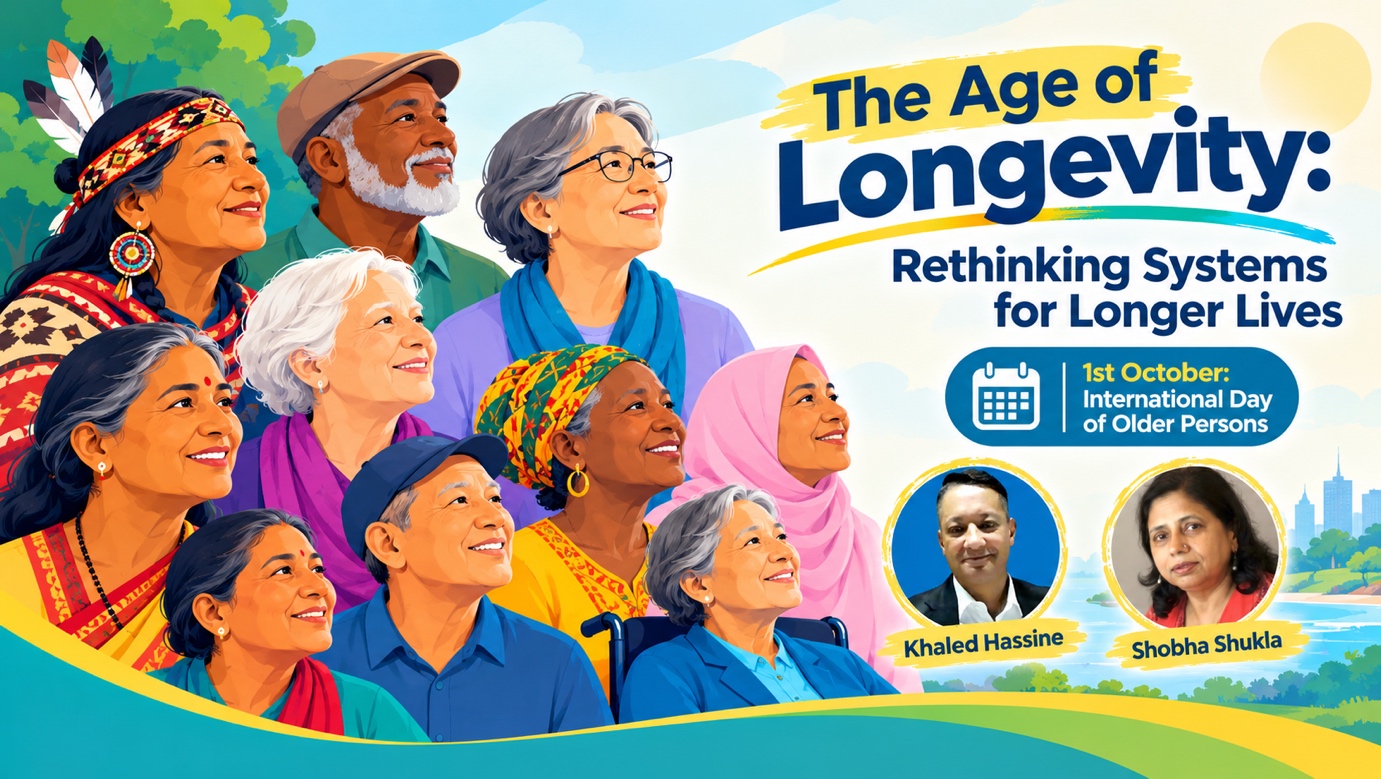
October 2026 may mark a pivotal moment in the global fight for equality and human rights for older persons. On 1st October the world observes the International Day of Older Persons under the theme "The Age of Longevity: Rethinking Systems for Longer Lives." Later that same month, the UN Inter-Governmental Working Group on the Human Rights of Older Persons reconvenes at UN in Geneva to advance work on the drafting of a legally binding international treaty.
The stakes go far beyond demographic policy to respond to population ageing: the process will test whether longer lives will also mean lives lived with autonomy, equality, dignity and freedom from discrimination - or whether age will continue to compound existing inequalities, especially for older women and other marginalised groups.
A human rights response to an ageing world
Khalid Hassine, Secretary of the Inter-Governmental Working Group (IGWG) on the Human Rights of Older Persons at the Office of the United Nations High Commissioner for Human Rights, explained that the treaty process has emerged in response to a profound demographic transformation: people are living longer and societies are ageing.
He outlined the significance of the process. IGWG was established by the UN Human Rights Council in early 2025 and is mandated to elaborate a legally binding instrument (or treaty). Hassine leads the Secretariat facilitating the intergovernmental process in line with UN Human Rights Council resolutions and UN rules of procedure.
Speaking at a SHE & Rights session, Hassine said that while governments have previously responded to demographic change (of population ageing) before, through initiatives such as the Madrid International Plan of Action on Ageing (adopted in 2002) and the UN Open-Ended Working Group on Ageing established in 2010, governments have now chosen to pursue a response grounded in human rights to this structural change, with the objective of developing a legally binding international instrument.
Hassine clarified that the UN Secretariat's role is to provide neutral and impartial support to the state-led negotiations. It supports the Chair and Bureau of the IGWG, facilitates the process and serves as an interface with stakeholders including national human-rights institutions and civil-society organisations.
But the Secretariat cannot substitute itself for governments or prejudge the substantive negotiations. That distinction is important because the treaty will ultimately be shaped through a state (government)-led process.
Civil society is not on the sidelines
But that does not mean civil society has to remain on the sidelines. In fact, Hassine sees civil-society engagement between formal negotiating IGWG sessions as potentially decisive. The IGWG is expected to hold two sessions each year, but the periods between sessions offer consequential opportunities for civil society engagement. Building coalitions, sustaining political momentum, and keeping the human rights of older persons visible on national and regional agendas are essential. Research, litigation, treaty engagement, and strategic use of the Universal Periodic Review can all help accumulate the evidence member states need to define what is specific and essential about the human rights situation of older persons.
Ageing is not gender-neutral
One of the clearest messages is that ageing cannot be treated as gender-neutral. Older women are a particular focus group for this treaty as they often experience discrimination due to intersection of ageism and gender inequality.
Hassine noted that older women have received specific attention in the work of the UN Special Rapporteur on Violence Against Women and Girls Ms Reem Alsalem who has specifically addressed the situation of older women. Reem released a special report on Violence Against Older Women in August 2026.
The challenge is to ensure that the emerging and possible legally binding treaty on human rights of older persons, establishes a global minimum standard capable of protecting the human rights of all older persons, while recognising the specific forms of discrimination and violence experienced by older women and other vulnerable and marginalised populations.
Lived experience demands centrality and a feminist approach
For Shobha Shukla, a person with lived experience and Chairperson of Development Justice for Older Persons (DJ4OP), this intersection between population ageing, gender and development justice, must be built into the treaty from the beginning - and not added later as an afterthought.
Shobha Shukla, who has participated in previous IGWG meetings, expressed hope that the legally binding instrument will be grounded in a feminist approach and the development justice model, ensuring the centrality of older persons from the Global South and from marginalised and vulnerable communities - particularly women, gender-diverse people, indigenous persons, and persons with disabilities.
This emphasis matters because older people are not a homogeneous group. The inequalities experienced by women earlier in life can accumulate into old age. Poverty, unequal access to health services, discrimination, violence, unpaid care work and exclusion from decision-making can all shape what ageing looks like.
A rights framework cannot ignore those accumulated inequalities, stressed Shobha Shukla. A treaty that fails to reflect those differences, risks reproducing the very inequalities it is meant to address.
From charity to rights
Perhaps the strongest challenge to conventional thinking about ageing comes from Shobha Shukla’s insistence that older people must stop being viewed primarily as recipients of care or charity.
"We are not asking for mercy. We are asking for our long overdue rights. Older persons must be recognised not as burdens but as rights holders and contributors to families, communities, economies and public life," says Shobha Shukla.
For too long, older persons have often been framed as people who need pensions, healthcare, family support and/or social protection. Those needs could be real, but a rights-based approach asks not simply: 'What do older people need?' but "What are older people entitled to?"
Protecting women's rights means recognising women not merely as mothers, caregivers or members of families, but as individuals with rights and agency throughout their lives. The same principle must apply as women grow older. Age should never become a reason for losing visibility, autonomy or dignity, she said.
Civil society can shape what governments take to the table
Even though the proposed treaty is being negotiated through a state-led process, civil society has multiple avenues to influence its direction. The formal rules of the IGWG allow participation by member states, observer states, specialised agencies, other international organisations, national human-rights institutions with A-status accreditation and NGOs with ECOSOC consultative status.
But Hassine stressed that formal participation is not the only way civil society can influence the negotiations. Written submissions are particularly important. During the previous IGWG session held in July 2026 the process received more than 200 submissions from various stakeholders, which are feeding into the negotiations and informing facilitators working on different topics.
Another potentially more powerful route is influencing national governments before they arrive at the negotiating table.
Hassine urged civil-society organisations to engage directly with their own governments, relevant ministries and national delegations. "Shaping a national position is often more impactful than making a formal statement," he said. Civil-society organisations can work with ministries and national delegations to bring ground-level experience and real cases into government positions.
Hassine pointed to the long ratification journey of the legally binding Protocol to the African Charter on Human and People's Rights on the Rights of Older Persons (adopted in 2016, came into force in 2024) as an example of why coordinated efforts matter.
October offers a moment to build momentum
The next session of the Inter-Governmental Working Group (IGWG) on Human Rights of Older Persons in October 2026 will be an important step in the drafting of this legally binding treaty. According to Hassine, the Chairperson is expected to move forward in a consensus-oriented and inclusive manner, including with regard to non-member-state participation.
The International Day of Older Persons on 1st October provides yet another opportunity to widen that conversation. Its theme "The Age of Longevity: Rethinking Systems for Longer Lives" offers a natural entry point for governments, civil society, researchers, older persons' organisations and communities to examine whether existing systems are prepared for longer lives.
It should also provoke us to ask a more fundamental question: longer lives for whom, and on whose terms?
Longevity without dignity is not progress. Longer lives accompanied by poverty, discrimination, violence, exclusion or loss of autonomy cannot be considered a human-rights success, says Shobha Shukla.
Hassine urged stakeholders to use the International Day of Older Persons not only to engage with the theme of longevity but also to gather and share evidence and good practices that can strengthen the treaty process.
The lesson from the broader rights agenda is clear: having treaties and declarations is not enough. Implementation and accountability determine whether those commitments change lives.
The proposed treaty on the human rights of older persons offers another opportunity to get that equation right. Its success will depend not only on the language eventually adopted by governments, but also on whose experiences shape that language. If older women, people with disabilities, indigenous peoples, gender-diverse communities and other marginalised older persons are visible in the process; if evidence from communities informs negotiations; if civil society can influence national positions; and if older people themselves are recognised as rights holders, the treaty could become more than another international instrument. It could help change how the world understands and responds to ageing.
Bobby Ramakant – CNS (Citizen News Service)
The stakes go far beyond demographic policy to respond to population ageing: the process will test whether longer lives will also mean lives lived with autonomy, equality, dignity and freedom from discrimination - or whether age will continue to compound existing inequalities, especially for older women and other marginalised groups.
A human rights response to an ageing world
Khalid Hassine, Secretary of the Inter-Governmental Working Group (IGWG) on the Human Rights of Older Persons at the Office of the United Nations High Commissioner for Human Rights, explained that the treaty process has emerged in response to a profound demographic transformation: people are living longer and societies are ageing.
He outlined the significance of the process. IGWG was established by the UN Human Rights Council in early 2025 and is mandated to elaborate a legally binding instrument (or treaty). Hassine leads the Secretariat facilitating the intergovernmental process in line with UN Human Rights Council resolutions and UN rules of procedure.
Speaking at a SHE & Rights session, Hassine said that while governments have previously responded to demographic change (of population ageing) before, through initiatives such as the Madrid International Plan of Action on Ageing (adopted in 2002) and the UN Open-Ended Working Group on Ageing established in 2010, governments have now chosen to pursue a response grounded in human rights to this structural change, with the objective of developing a legally binding international instrument.
Hassine clarified that the UN Secretariat's role is to provide neutral and impartial support to the state-led negotiations. It supports the Chair and Bureau of the IGWG, facilitates the process and serves as an interface with stakeholders including national human-rights institutions and civil-society organisations.
But the Secretariat cannot substitute itself for governments or prejudge the substantive negotiations. That distinction is important because the treaty will ultimately be shaped through a state (government)-led process.
Civil society is not on the sidelines
But that does not mean civil society has to remain on the sidelines. In fact, Hassine sees civil-society engagement between formal negotiating IGWG sessions as potentially decisive. The IGWG is expected to hold two sessions each year, but the periods between sessions offer consequential opportunities for civil society engagement. Building coalitions, sustaining political momentum, and keeping the human rights of older persons visible on national and regional agendas are essential. Research, litigation, treaty engagement, and strategic use of the Universal Periodic Review can all help accumulate the evidence member states need to define what is specific and essential about the human rights situation of older persons.
Ageing is not gender-neutral
One of the clearest messages is that ageing cannot be treated as gender-neutral. Older women are a particular focus group for this treaty as they often experience discrimination due to intersection of ageism and gender inequality.
Hassine noted that older women have received specific attention in the work of the UN Special Rapporteur on Violence Against Women and Girls Ms Reem Alsalem who has specifically addressed the situation of older women. Reem released a special report on Violence Against Older Women in August 2026.
The challenge is to ensure that the emerging and possible legally binding treaty on human rights of older persons, establishes a global minimum standard capable of protecting the human rights of all older persons, while recognising the specific forms of discrimination and violence experienced by older women and other vulnerable and marginalised populations.
Lived experience demands centrality and a feminist approach
For Shobha Shukla, a person with lived experience and Chairperson of Development Justice for Older Persons (DJ4OP), this intersection between population ageing, gender and development justice, must be built into the treaty from the beginning - and not added later as an afterthought.
Shobha Shukla, who has participated in previous IGWG meetings, expressed hope that the legally binding instrument will be grounded in a feminist approach and the development justice model, ensuring the centrality of older persons from the Global South and from marginalised and vulnerable communities - particularly women, gender-diverse people, indigenous persons, and persons with disabilities.
This emphasis matters because older people are not a homogeneous group. The inequalities experienced by women earlier in life can accumulate into old age. Poverty, unequal access to health services, discrimination, violence, unpaid care work and exclusion from decision-making can all shape what ageing looks like.
A rights framework cannot ignore those accumulated inequalities, stressed Shobha Shukla. A treaty that fails to reflect those differences, risks reproducing the very inequalities it is meant to address.
From charity to rights
Perhaps the strongest challenge to conventional thinking about ageing comes from Shobha Shukla’s insistence that older people must stop being viewed primarily as recipients of care or charity.
"We are not asking for mercy. We are asking for our long overdue rights. Older persons must be recognised not as burdens but as rights holders and contributors to families, communities, economies and public life," says Shobha Shukla.
For too long, older persons have often been framed as people who need pensions, healthcare, family support and/or social protection. Those needs could be real, but a rights-based approach asks not simply: 'What do older people need?' but "What are older people entitled to?"
Protecting women's rights means recognising women not merely as mothers, caregivers or members of families, but as individuals with rights and agency throughout their lives. The same principle must apply as women grow older. Age should never become a reason for losing visibility, autonomy or dignity, she said.
Civil society can shape what governments take to the table
Even though the proposed treaty is being negotiated through a state-led process, civil society has multiple avenues to influence its direction. The formal rules of the IGWG allow participation by member states, observer states, specialised agencies, other international organisations, national human-rights institutions with A-status accreditation and NGOs with ECOSOC consultative status.
But Hassine stressed that formal participation is not the only way civil society can influence the negotiations. Written submissions are particularly important. During the previous IGWG session held in July 2026 the process received more than 200 submissions from various stakeholders, which are feeding into the negotiations and informing facilitators working on different topics.
Another potentially more powerful route is influencing national governments before they arrive at the negotiating table.
Hassine urged civil-society organisations to engage directly with their own governments, relevant ministries and national delegations. "Shaping a national position is often more impactful than making a formal statement," he said. Civil-society organisations can work with ministries and national delegations to bring ground-level experience and real cases into government positions.
Hassine pointed to the long ratification journey of the legally binding Protocol to the African Charter on Human and People's Rights on the Rights of Older Persons (adopted in 2016, came into force in 2024) as an example of why coordinated efforts matter.
October offers a moment to build momentum
The next session of the Inter-Governmental Working Group (IGWG) on Human Rights of Older Persons in October 2026 will be an important step in the drafting of this legally binding treaty. According to Hassine, the Chairperson is expected to move forward in a consensus-oriented and inclusive manner, including with regard to non-member-state participation.
The International Day of Older Persons on 1st October provides yet another opportunity to widen that conversation. Its theme "The Age of Longevity: Rethinking Systems for Longer Lives" offers a natural entry point for governments, civil society, researchers, older persons' organisations and communities to examine whether existing systems are prepared for longer lives.
It should also provoke us to ask a more fundamental question: longer lives for whom, and on whose terms?
Longevity without dignity is not progress. Longer lives accompanied by poverty, discrimination, violence, exclusion or loss of autonomy cannot be considered a human-rights success, says Shobha Shukla.
Hassine urged stakeholders to use the International Day of Older Persons not only to engage with the theme of longevity but also to gather and share evidence and good practices that can strengthen the treaty process.
The lesson from the broader rights agenda is clear: having treaties and declarations is not enough. Implementation and accountability determine whether those commitments change lives.
The proposed treaty on the human rights of older persons offers another opportunity to get that equation right. Its success will depend not only on the language eventually adopted by governments, but also on whose experiences shape that language. If older women, people with disabilities, indigenous peoples, gender-diverse communities and other marginalised older persons are visible in the process; if evidence from communities informs negotiations; if civil society can influence national positions; and if older people themselves are recognised as rights holders, the treaty could become more than another international instrument. It could help change how the world understands and responds to ageing.
Bobby Ramakant – CNS (Citizen News Service)
You May Also Like

Federal anti-terrorism command center, with a big screen and radar surveillance used for reconnaissance on satellite system.
Federal anti

Some deaths merely close the chapter of a life. Others transform an entire existence into an everlasting trust. The passing of Quaid-e-Azam Muhamma


PCP need your support that we may provide you better services: click on donate


"Trial of Pakistani Christian Nation" By Nazir S Bhatti
On demand of our readers, I have decided to release E-Book version of "Trial of Pakistani Christian Nation" on website of PCP which can also be viewed on website of Pakistan Christian Congress www.pakistanchristiancongress.org . You can read chapter wise by clicking tab on left handside of PDF format of E-Book.