

The freedom to move independently is often taken for granted, but for many women in Pakistan, it remains an aspiration negotiated against social ex
Islamophobia: The Concept of Human Rights in Islam and the Universal Declaration of Human Rights. By Dr. Ghulam Nabi Fai
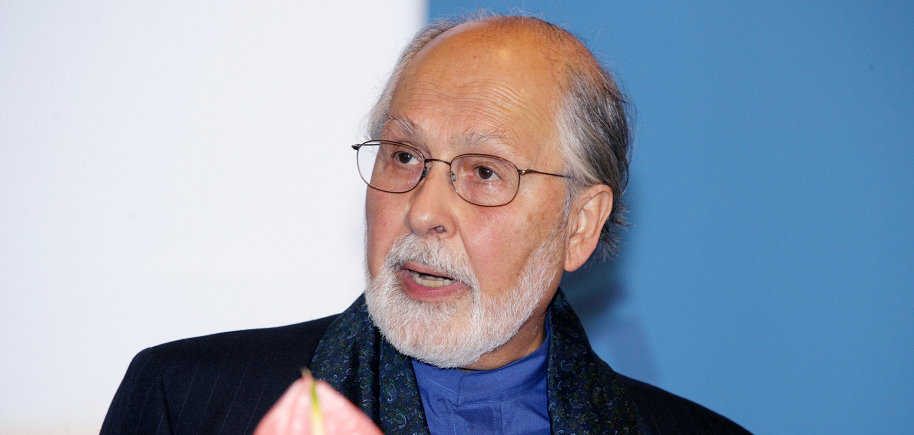
Part 1: This is a long article, so it is divided into four parts to give readers time to consider the message of each section.
Introduction: Islamophobia and the Universal Principle of Human Dignity
It is heartening that the United Nations General Assembly designated March 15 as the International Day to Combat Islamophobia in 2022. Observed annually, the day calls for international solidarity against anti-Muslim hatred, discrimination, and prejudice. It also provides an opportunity to promote mutual understanding, religious tolerance, and respect for the diversity of human beliefs and traditions.
Miguel Ángel Moratinos, United Nations Under-Secretary-General, holding the position of High Representative for the Alliance of Civilizations (UNAOC) said on October 27, 2026, during 6th Ministerial Meeting of the Baku Process — and 7th World Forum on Intercultural Dialogue at Baku, Azerbaaijan that “In my capacity as United Nations Special Envoy to Combat Islamophobia, my Office is advancing work towards a United Nations Action Plan to Combat Islamophobia.”
He added that “Institutions are often measured by the number of meetings they organize or programmes they deliver. Those indicators matter. But in our field, we should also ask whether we have helped build trust where mistrust existed, whether we have enabled cooperation across cultural or religious divides, and whether successful local initiatives have been given opportunities to grow and inspire others. That is where the practical value of dialogue becomes most visible. That is also the spirit that connects the Baku Process and the work of UNAOC.”
At the United Nations observance in March 2023, Secretary-General António Guterres condemned anti-Muslim hatred and emphasized that Muslims, despite their diversity and contributions to humanity, continue to face bigotry and prejudice because of their faith. Other international leaders similarly called for concerted efforts to challenge discrimination, hate speech, and the targeting of Muslim communities.
These concerns are not new. In 2004, former UN Secretary-General Kofi Annan expressed concern that the world had found it necessary to coin the term Islamophobia to describe growing prejudice and intolerance. His observation underscored the troubling reality that religious identity can become a pretext for exclusion and discrimination.
In 1997, the Runnymede Trust published Islamophobia: A Challenge for Us All, defining Islamophobia as an outlook involving an unfounded fear and dislike of Muslims that leads to exclusion and discrimination.
Other scholars have examined the phenomenon as a form of anti-Muslim racism, while Professor Seyyed Hossein Nasr of George Washington University has emphasized that it involves not only fear but also hatred.
Islamophobia can manifest itself in discriminatory policies, restrictions on religious expression, hate speech, harassment, violence, and the portrayal of Muslims as inherently incompatible with modern society. It can also be reinforced by misconceptions about Islamic teachings, particularly those concerning human rights, religious freedom, equality, and democracy.
One persistent misconception is that Islam and universal human rights are fundamentally opposed. This assumption deserves careful examination.
The central argument of this article is that Islamic teachings and the Universal Declaration of Human Rights (UDHR) share fundamental commitments to human dignity, justice, equality, compassion, and the protection of human life. Although Islamic legal traditions and modern international human rights law have different histories, foundations, and interpretive frameworks, there is substantial common ground on which Muslims and non-Muslims can work together.
Recognizing this compatibility does not require overlooking human rights violations in some Muslim-majority countries or elsewhere. Rather, it requires distinguishing the ethical principles of a religious tradition from the actions of governments and individuals who may fail to uphold them.
Islam, Human Dignity, and Universal Values
The word Islam is commonly understood as referring to submission to Allah and is associated with the Arabic root connected with peace. Islamic teachings place considerable emphasis on justice, mercy, accountability, and the dignity of human beings.
The Qur'an presents its moral guidance as relevant to humanity, not merely to a particular ethnic group or nation. It calls upon people to act justly, fulfill their obligations, care for the vulnerable, and refrain from oppression.
The Qur'anic vision of human dignity also shares important ethical themes with Judaism and Christianity. All three Abrahamic traditions contain teachings concerning compassion, justice, charity, the sanctity of life, and responsibility toward one's neighbors. These traditions have influenced many societies and have contributed to broader moral discussions about human rights.
The modern international human rights framework, however, also reflects contributions from many other philosophical, cultural, religious, and legal traditions. The UDHR was developed through an international process involving representatives from different regions and legal backgrounds. Its universal character rests on the proposition that human rights belong to all people by virtue of their humanity.
Islamic teachings can contribute meaningfully to this common endeavor without needing to be presented as a mere imitation of Western ideas. Nor should Western societies be treated as the sole representatives of human rights or democracy. Human rights violations have occurred across cultures and political systems, just as movements for justice and freedom have emerged within diverse societies.
The objective should not be to impose one country's political model on the rest of the world. It should be to encourage governments everywhere to protect human dignity, uphold the rule of law, and guarantee fundamental freedoms.
A Common Human Family: Qur'an 49:13
One of the clearest Qur'anic foundations for human equality appears in verse 13 of Surah Al-Hujurat: "O mankind, indeed, We have created you from male and female and made you peoples and tribes that you may know one another. Indeed, the most noble of you in the sight of Allah is the most righteous of you. Indeed, Allah is Knowing and Acquainted." — Qur'an 49:13
This verse addresses humanity as a whole. It recognizes differences among peoples and communities while rejecting the notion that ancestry, ethnicity, or tribal identity establishes a person's ultimate worth.
Human diversity is presented as an opportunity for recognition and understanding rather than a justification for hostility. The verse places moral character and righteousness above inherited social distinctions.
This principle resonates strongly with Articles 1 and 2 of the UDHR. Article 1 declares that all human beings are born free and equal in dignity and rights, while Article 2 affirms that everyone is entitled to the rights and freedoms set forth in the Declaration without discrimination based on race, color, sex, language, religion, national or social origin, or other status.
The Qur'anic emphasis on a shared human origin and the UDHR's affirmation of equal dignity provide a foundation for cooperation across religious, racial, and national boundaries.
Prophet Muhammad (peace be upon him) is also reported to have declared in his Farewell Sermon that an Arab has no superiority over a non-Arab, nor a non-Arab over an Arab, also a white has no superiority over a black, nor does a black have any superiority over a white except by piety and good action. And that a person's moral standing does not derive from racial identity. This teaching reinforces the rejection of racial arrogance and inherited superiority. The principle is straightforward: no human being should be treated as inferior simply because of the community into which they were born.
An often-recounted historical account illustrates this ideal. During the caliphate of Umar ibn al-Khattab, a dispute reportedly arose after the son of Amr ibn al-As, the governor of Egypt, struck an Egyptian who had defeated him in a race. According to the account, Umar condemned the abuse of power and invoked the freedom with which people are born. The story expresses an enduring principle of justice: authority does not place anyone above accountability.
The British historian Arnold Toynbee also wrote approvingly of Islam's contribution to overcoming racial distinctions among Muslims. His observation remains relevant in a world where racial prejudice and religious discrimination continue to undermine human solidarity.
(To be continued)
(Dr. Ghulam Nabi Fai can be reached at: WhatsApp: 1-202-607-6435 gnfai2003@yahoo.com)
You May Also Like

A Bible being placed into somebody’s hands can be a beautiful moment. A Bible becoming accessible to somebody who could not previously use a

2026 Russia Energy Week Forum: A Wider Energy Trade Network Across Asia, Eurasia, Africa And The West: Analysis Russia Energy Week (REW) 2026


PCP need your support that we may provide you better services: click on donate


"Trial of Pakistani Christian Nation" By Nazir S Bhatti
On demand of our readers, I have decided to release E-Book version of "Trial of Pakistani Christian Nation" on website of PCP which can also be viewed on website of Pakistan Christian Congress www.pakistanchristiancongress.org . You can read chapter wise by clicking tab on left handside of PDF format of E-Book.