

Pakistan cannot escape scrutiny by repeatedly raising the Kashmir issue while terrorism, corruption, political instability and economic challenges
Formation of the 2026 Electoral Reforms Committee in Pakistan: Minorities Denied Representation. By Dr. Emanuel Adil Ghouri
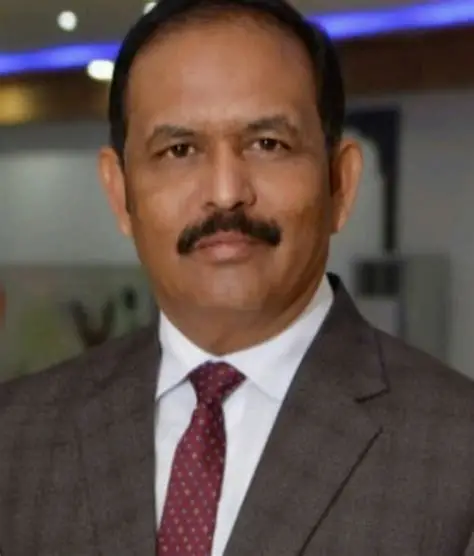
In Pakistan’s political history, every ruling party—during its tenure—introduces electoral reforms of its own choosing to pave the way for continued success. The current coalition government, following this tradition, also appears to be pursuing electoral reforms. On October 30, 2026, the National Assembly approved the formation of a new 30-member parliamentary committee tasked with ensuring transparency and implementing reforms within the electoral system. The committee will comprise 20 members from the National Assembly and 10 from the Senate, with representation allocated in proportion to the numerical strength of the respective political parties. The parties within the ruling coalition—including the Pakistan Peoples Party (PPP), Muttahida Qaumi Movement (MQM), Istehkam-e-Pakistan Party (IPP), and Pakistan Muslim League-Q (PML-Q)—have already submitted their nominations.
Meanwhile, consultations continued regarding the opposition parties' demands for equal representation on the committee, as well as other political demands.
In Pakistan, various committees have been formed at different times regarding electoral reforms. For instance, the first Constituent Assembly established the 'Basic Principles Committee' on March 12, 1949, which worked to determine the principles for the franchise (the right to vote). In 1955, following complaints of irregularities in the early provincial elections, the government set up a commission consisting of a chairman and two members. Furthermore, in response to allegations of rigging in the general elections and demands from political parties, the Speaker of the National Assembly constituted the 'Parliamentary Committee on Electoral Reforms' (PCER) on July 25, 2014, comprising representatives from all major political parties. In 2017, as a result of extensive consultations by this committee, existing electoral laws were consolidated, leading to the enactment of the 'Elections Act, 2017'. . Legal Review: The Election Commission of Pakistan established a 'Law Reforms Committee' to further improve the Elections Act, 2017, and align it with constitutional requirements; this committee formulated recommendations for various legal amendments ahead of the 2024 general elections. Notably, there is no representation for minorities in any of the committees mentioned above that were constituted to address electoral matters. Furthermore, the electoral systems adopted for minority representation from 1949 to 2024 were implemented without consulting the minority communities themselves—which is precisely why, to this day, minorities remain dissatisfied with their representation in Parliament. .Surprisingly, according to unverified data, the population of minorities has now reached approximately ten million. While all major and minor political parties in the country maintain dedicated wings for minorities, the authority to determine their political future remains in the hands of the majority-based political parties. The members of the committees on electoral reforms—who decide the minorities' future—lack any real understanding of the issues faced by these communities. Similarly, when 'All-Parties Conferences' are convened to address national issues, minorities are not represented. The current system gives the impression that minorities are, in effect, a paralyzed segment of the nation's political body. In the discussion on electoral reforms, the point is always raised that the representation of minorities, women and backward classes should be made more effective and they should have equal rights in the electoral process. But this is limited to speeches only, it does not happen in practice. In the committee being formed for electoral reforms in 2026, minorities also seem to be deprived of representation. Will the political parties claiming equal rights for minorities also include the name of any minority representative for their representation in this committee? Here, political parties will get representation in this committee based on their number of members.These parties should nominate representatives from among the minorities so that the issues faced by them can be brought to the committee's attention, and decisions regarding their future can be made in accordance with their aspirations. Otherwise, the dissatisfaction among minorities concerning their political rights will persist, just as it always has.
You May Also Like
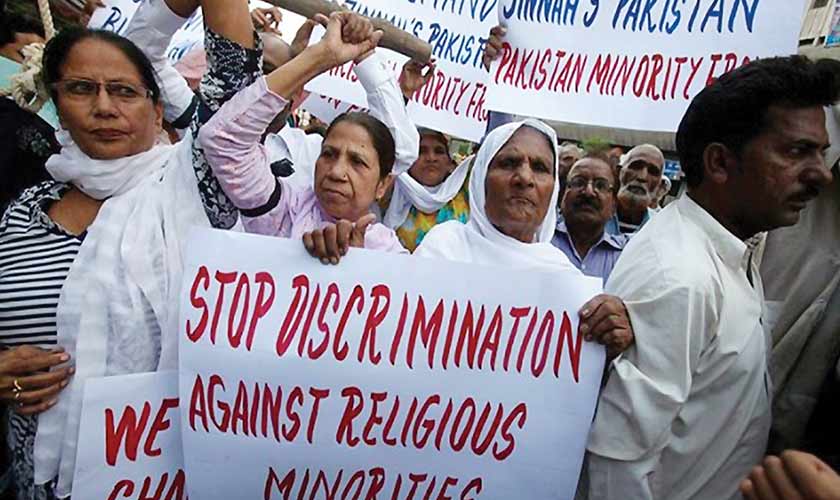
Following the release of the Religious Freedom 2026 and Persecution and Discrimination against Christians 2026 yearbooks in Berlin, Sardar Mushtaq
The Success of Muslim Candidates in US Midterm Elections: True Democracy. By Dr. Emanurl Adil Ghouri
The United States is the world’s premier democracy, characterized by a fine democratic tradition: a candidate who loses an election graciousl


PCP need your support that we may provide you better services: click on donate


"Trial of Pakistani Christian Nation" By Nazir S Bhatti
On demand of our readers, I have decided to release E-Book version of "Trial of Pakistani Christian Nation" on website of PCP which can also be viewed on website of Pakistan Christian Congress www.pakistanchristiancongress.org . You can read chapter wise by clicking tab on left handside of PDF format of E-Book.