

This refers to Secretary Rubio’s forthcoming visit to India which has triggered happy talks and good-wishes among commentators in Indian medi
More countries restrict Muslim women’s ability to wear religious symbols or attire: Pew Research
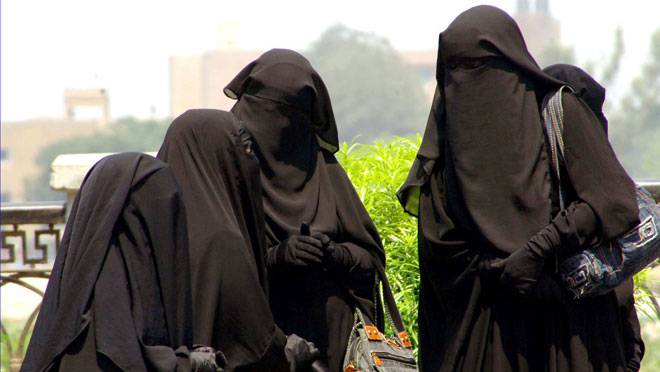
In many countries around the world, women’s choices about their attire and appearance are restricted to some degree by government laws, policies or regulations. In recent years, most of these countries have had laws or policies that ban women from wearing religious attire in public places or limit their ability to do so in some circumstances. By comparison, far fewer countries require women to wear particular types of attire (such as headscarves or long dresses) for religious reasons.
As part of its annual study on government restrictions on religion and social hostilities involving religion, Pew Research Center tracks the number of countries where some level of government – national, provincial or local – regulates “the wearing of religious symbols, such as head coverings for women and facial hair for men.”1 Looking at only those laws, policies or regulations that apply specifically to women, the Center finds that 50 of the 198 countries and territories included in the study had at least one law or policy regulating women’s religious attire in 2012 and 2013, the two most recent years for which data are available. About three-quarters of those countries (39 of the 50, or 78%) had a law or policy limiting women’s ability to wear religious attire, while about a quarter (12 of the 50, or 24%) had at least one law or policy requiring women to wear particular attire. Some of these laws or policies applied nationwide, while others were imposed at the provincial, state or local level. One country – Russia – had policies forbidding women from wearing religious attire (in the territory of Stavropol, where Muslim headscarves, or hijabs, were banned in public schools) as well as policies requiring women to wear religious attire (in Chechnya, where women were required to wear hijabs in all public buildings).2
Laws or policies limiting women’s ability to wear religious attire were particularly common in Europe, where 18 of the region’s 45 countries (40%) had at least one such restriction in 2012-2013.3 Several European countries effectively banned certain types of religious garb in public places. In France, for example, authorities continued to enforce a law passed in 2010 that prohibits people from covering their faces in public places, including government buildings, public transportation and venues such as restaurants and movie theaters. Those who did not comply with a police officer’s request to uncover their face could be fined or ordered to attend a citizenship class.4 A similar policy was in effect in Belgium, where police continued to enforce a 2011 federal law banning people from wearing clothing that covers the face, or large parts of it, in public places. Violators could be fined and/or detained for up to seven days.5 In December 2012, Belgium’s Constitutional Court upheld the ban, ruling that it was necessary to protect public safety, ensure equality between men and women and preserve “a certain conception of ‘living together’ in society.”6
As part of its annual study on government restrictions on religion and social hostilities involving religion, Pew Research Center tracks the number of countries where some level of government – national, provincial or local – regulates “the wearing of religious symbols, such as head coverings for women and facial hair for men.”1 Looking at only those laws, policies or regulations that apply specifically to women, the Center finds that 50 of the 198 countries and territories included in the study had at least one law or policy regulating women’s religious attire in 2012 and 2013, the two most recent years for which data are available. About three-quarters of those countries (39 of the 50, or 78%) had a law or policy limiting women’s ability to wear religious attire, while about a quarter (12 of the 50, or 24%) had at least one law or policy requiring women to wear particular attire. Some of these laws or policies applied nationwide, while others were imposed at the provincial, state or local level. One country – Russia – had policies forbidding women from wearing religious attire (in the territory of Stavropol, where Muslim headscarves, or hijabs, were banned in public schools) as well as policies requiring women to wear religious attire (in Chechnya, where women were required to wear hijabs in all public buildings).2
Laws or policies limiting women’s ability to wear religious attire were particularly common in Europe, where 18 of the region’s 45 countries (40%) had at least one such restriction in 2012-2013.3 Several European countries effectively banned certain types of religious garb in public places. In France, for example, authorities continued to enforce a law passed in 2010 that prohibits people from covering their faces in public places, including government buildings, public transportation and venues such as restaurants and movie theaters. Those who did not comply with a police officer’s request to uncover their face could be fined or ordered to attend a citizenship class.4 A similar policy was in effect in Belgium, where police continued to enforce a 2011 federal law banning people from wearing clothing that covers the face, or large parts of it, in public places. Violators could be fined and/or detained for up to seven days.5 In December 2012, Belgium’s Constitutional Court upheld the ban, ruling that it was necessary to protect public safety, ensure equality between men and women and preserve “a certain conception of ‘living together’ in society.”6
You May Also Like

India is arguably the oldest civilization of the world but it is difficult to believe that how such a vast civilization was invaded and ruled by fo

Jammu & Kashmir is moving forward with a new spirit of hope, confidence and ambition. Today, the youth of Kashmir are making their mark in spor


PCP need your support that we may provide you better services: click on donate


"Trial of Pakistani Christian Nation" By Nazir S Bhatti
On demand of our readers, I have decided to release E-Book version of "Trial of Pakistani Christian Nation" on website of PCP which can also be viewed on website of Pakistan Christian Congress www.pakistanchristiancongress.org . You can read chapter wise by clicking tab on left handside of PDF format of E-Book.