

The United States is the world’s premier democracy, characterized by a fine democratic tradition: a candidate who loses an election graciousl
The Concept of Human Rights in Islam and the Universal Declaration of Human Rights: Part Four. By Dr. Ghulam Nabi Fai
Al-Quran recognizes the religious significance of Judaism and Christianity and repeatedly refers to their followers in discussions of revelation, moral responsibility, and shared religious history.
The Qur'an speaks of earlier prophets, including Abraham, Moses, and Jesus, and calls upon Muslims to recognize the broader history of divine revelation. Qur'an 29:46, among other passages, encourages respectful engagement with the People of the Book. Such teachings provide a foundation for interfaith dialogue and cooperation. They also challenge the assumption that Islam necessarily requires hostility toward other religious communities.
The history of Muslim-Jewish and Muslim-Christian relations, however, is complex. There have been periods of coexistence, intellectual exchange, and cultural flourishing, as well as periods of discrimination, conflict, and persecution. A credible account should recognize both realities.
Muslim Spain, particularly during parts of the medieval period, became an important center of intellectual and cultural exchange involving Muslim, Jewish, and Christian communities. The period is often associated with significant Jewish cultural achievements, although the conditions experienced by religious minorities varied across time and place.
The lesson is not that any civilization has an unblemished record. It is that traditions of coexistence can be recovered and strengthened, while historical injustices must be acknowledged honestly.
A funeral story often cited in Islamic tradition offers a simple expression of respect for human dignity. When Prophet Muhammad (PBUH) reportedly stood as a Jewish funeral procession passed, those around him observed that the deceased was Jewish. The Prophet is said to have responded by asking, in effect, whether the person was not a human soul. The story conveys a powerful moral principle: the dignity of a human being does not disappear because that person belongs to another faith.
The Universal Declaration of Human Rights (UDHR) is a foundational international declaration, but it is not an exhaustive catalogue of every moral responsibility or every emerging human rights concern. Subsequent international agreements and evolving legal interpretations have addressed many issues that were not fully developed in 1948.
Islamic ethical teachings also address responsibilities within families, obligations toward neighbors, the fair treatment of workers, care for vulnerable people, and the preservation of natural resources
The Qur'an encourages honesty, forgiveness, generosity, humility, the fulfillment of promises, reconciliation, and restraint from mockery, fraud, and corruption. These values contribute to a broader vision of a just society.
The distinction between rights and responsibilities should not be used to diminish individual freedoms. Rather, it should help explain how a community can protect personal dignity while encouraging conduct that benefits others.
A person's freedom should not be used as a justification for violating another person's fundamental rights. Equally, appeals to social harmony or moral responsibility should not become excuses for arbitrary restrictions, persecution, or discrimination. A balanced approach recognizes both individual rights and the responsibilities that enable people to live together peacefully.
The United Nations was established in 1945, following the devastation of the Second World War. Its Charter identified respect for human rights and fundamental freedoms as a central purpose of international cooperation. The UDHR followed in 1948, establishing a common standard to which all peoples and nations could aspire.
The Declaration was a landmark achievement in the development of international human rights. Its adoption should be understood in its historical context, including the experience of war, the struggle against oppression, and the desire to establish a more just international order.
For Muslims, the Declaration need not be viewed as an alien set of values. Its commitments to dignity, equality, life, conscience, justice, and social well-being resonate with important teachings in the Qur'an and the Prophetic tradition.
At the same time, the UDHR and Islamic ethical and legal traditions are not identical in every respect. They differ in their foundations, methods of interpretation, and approaches to particular questions. Compatibility in fundamental principles does not mean that every provision has an exact counterpart in every school of Islamic jurisprudence.
Acknowledging these distinctions strengthens the argument. It creates space for serious discussion about how shared moral commitments can be translated into law, public policy, and institutional practice.
The central question should not be whether one civilization can claim exclusive ownership of human rights. It should be whether all societies are willing to protect human beings from violence, discrimination, exploitation, and arbitrary power.
Conclusion: Building a Partnership Against Islamophobia
Do Western scholars, policymakers, and members of the public fully appreciate the resources within Islamic tradition for defending human rights? Do Muslims themselves always recognize how closely many of their ethical teachings correspond with the principles expressed in the UDHR? These questions deserve serious consideration at a time when religious prejudice continues to divide communities and undermine international cooperation.
Islamic teachings concerning the common origin of humanity, the sanctity of life, the obligation to act justly, the rejection of coercion in religion, and the duty to care for the vulnerable offer substantial common ground with universal human rights principles.
Prophet Muhammad's teachings, as understood and transmitted in Islamic tradition, emphasize mercy, fairness, responsibility, and respect for human dignity. The Qur'an repeatedly calls upon believers to uphold justice, even when doing so conflicts with personal interests or group loyalties.
These principles must be applied consistently. Muslim-majority societies, Western democracies, and all other political systems should be judged by their treatment of people, particularly minorities, dissidents, migrants, and other vulnerable communities. No country should claim moral superiority while overlooking violations committed within its own borders.
Religious ideas, institutions, and government policies of any country can be examined and debated. What must be rejected is the collective demonization of Muslims, the denial of their equal rights, and the attribution of wrongdoing to an entire religious community.
The international community should therefore pursue two complementary objectives: combating anti-Muslim prejudice and strengthening the protection of universal human rights for everyone. Muslim scholars, Jewish and Christian leaders, Western intellectuals, civil society organizations, and governments can contribute to this effort by promoting education, interfaith dialogue, legal equality, and practical cooperation.
The Qur'anic vision of humanity as diverse peoples called to know one another offers a fitting conclusion. Human differences should be an invitation to understanding, not a pretext for hatred. Justice should transcend religious and national boundaries, and human dignity should not depend on identity, status, or belief.
Islamic principles of human dignity and justice can serve as partners in the universal pursuit of human rights. By recognizing shared values, addressing genuine differences honestly, and holding every society accountable to the protection of human dignity, we can build a world that is more peaceful, tolerant, equitable, and just.
(Concluded)
Dr. Ghulam Nabi Fai can be reached at:
WhatsApp: 1-202-607-6435
gnfai2003@yahoo.com
You May Also Like

The issue of forced marriage and religious conversion of girls from minority communities—particularly Christians—in Pakistan is a long-
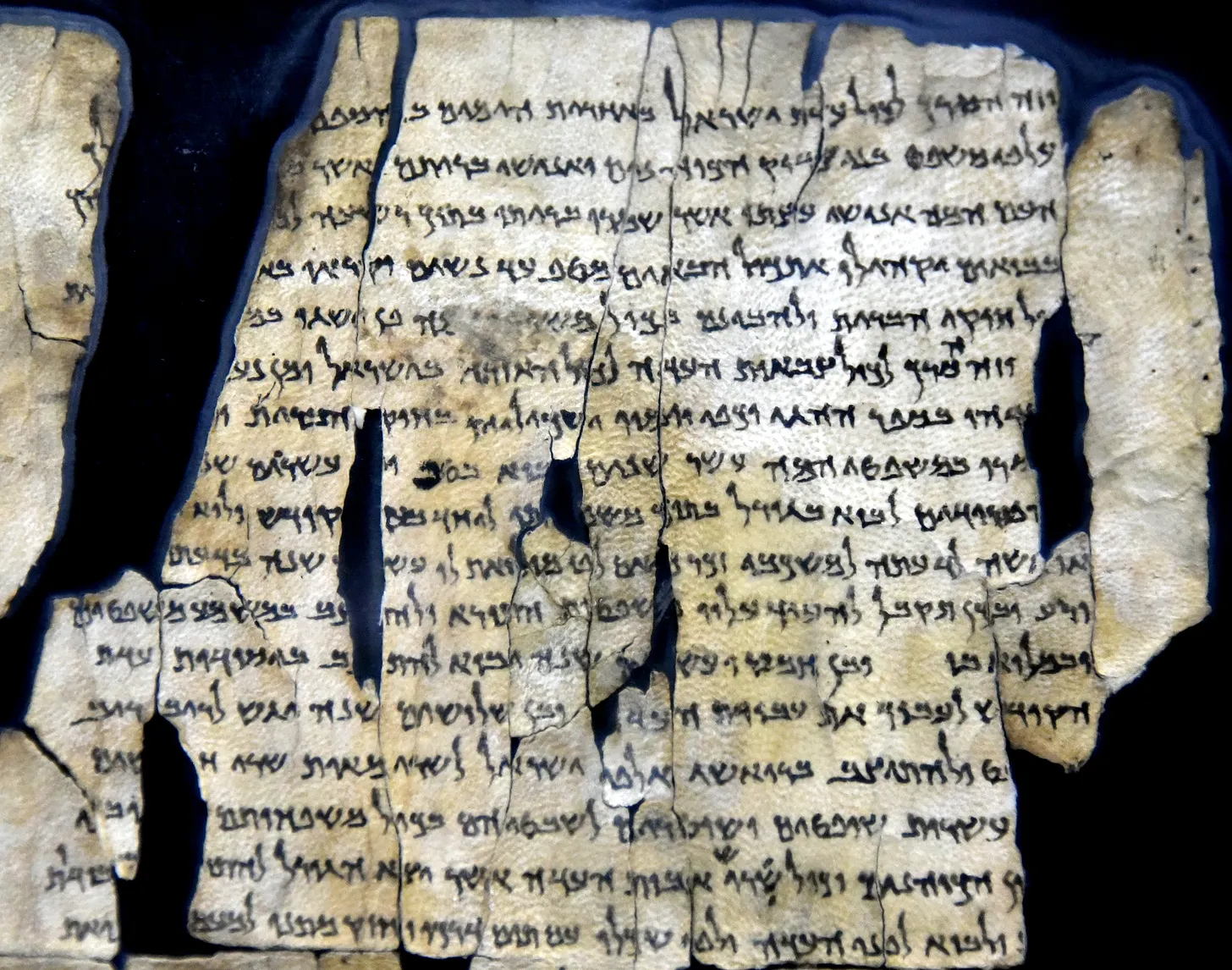
The Bible has served as both a spiritual guide and a historical record for centuries now. Many people claimed the findings were legendary or unprov


PCP need your support that we may provide you better services: click on donate


"Trial of Pakistani Christian Nation" By Nazir S Bhatti
On demand of our readers, I have decided to release E-Book version of "Trial of Pakistani Christian Nation" on website of PCP which can also be viewed on website of Pakistan Christian Congress www.pakistanchristiancongress.org . You can read chapter wise by clicking tab on left handside of PDF format of E-Book.