

This refers to Secretary Rubio’s forthcoming visit to India which has triggered happy talks and good-wishes among commentators in Indian medi
Two Israeli and Jordanian journalists tell the story no one else will. By Ruth Eglash and Hani Hazaimeh

It was supposed to be an exercise in cross-cultural reporting: find a story that would highlight the common humanity shared by all nations and peoples.
As a Jordanian and an Israeli we were a logical pairing. Our countries are neighbours supposedly at peace, yet both are part of a regional conflict that has raged for so long. As such, we felt there would be many areas of potential cooperation we could highlight.
We discussed writing on environment, water, human trafficking, arms smuggling and refugees before settling upon the younger generation in each of our nations, focusing specifically on education. We began to wonder, what are our children learning about the people on the other side of our shared border?
When the peace treaty between Israel and Jordan was signed in 1994 there was an emphasis on normalising ties in all areas – social, cultural and economic – not just political. However, the focus has remained on politics at the expense of all other issues. Unfortunately, this emphasis has led to the deterioration of relations to the point where they are now arguably worse than before the treaty was signed.
For this article, we interviewed school children, university students, teachers, Education Ministry officials and various experts in both countries. What we found was shocking, and both of us were ashamed to admit that the stereotypes and myths held by our fellow citizens about our neighbours are certainly not the beliefs that would allow peace to move in a positive direction.
In Israel, we learned that the education system is surprisingly in favour of teaching children Arabic and Islamic studies. Every Israeli student is obligated to learn spoken Arabic, and Islamic studies is optional. However, out of the 1.5 million students in any one of Israel’s three Jewish school systems – secular, religious and ultra-Orthodox – only 500 study Islam until high school graduation, according to the Education Ministry.
In Jordan, the situation is even more disheartening. Students are not offered the chance to study Judaism, let alone Hebrew or any of the positive aspects of Israeli life or culture. Moreover, younger children are often told by their teachers that Israel is “the enemy”.
With these discoveries it seemed that writing this article would not succeed in crossing any borders or reaching out to people. In fact, if Israelis or Jordanians got wind of how the other nation perceived them or what children were learning, it could serve to further fuel existing hatred.
We were also not sure who would be brave enough to run such a story, risking social censure in Jordan or Israel and, in the West, reinforcing what many already believe about Israelis and Arabs – that they will never find peace.
Instead, we listened to the voice of humanity and decided not to write the full story about what children in both countries are learning about each other, but to focus instead on the other lessons learned from this joint project, namely our story of finding common ground between two people from different countries, cultures and religions.
For both of us the friendship we have formed is our first real interaction with a person from “the other country”. We both worked hard to break down the pre-existing notions that we were brought up with. We even visited each other’s countries, meeting friends and families. We both quickly realised that human beings are all the same whether they are Jewish or Muslim, Israeli or Jordanian.
We both grew up under the shadow of mistrust, but at the end of the day we all just want to live and enjoy our basic human rights – a common humanity that is stronger than any propaganda.
While we cannot write the full story for you, we do urge others in this region to follow our example, we urge young people to come together under formal or non-formal programmes in order to learn that “the others” are human beings like themselves. Only interactions and personal connections will allow peace to flourish.
Of course we are under no illusion that moving beyond stereotypes and standing up against what has been ingrained in one’s brain from an early age is an easy task. However, if the two of us can come together in a united voice speaking for peace, friendship, trust and humanity, then anyone can.
###
* British-born Ruth Eglash is a senior reporter at The Jerusalem Post and has lived in Israel for 15 years. Hani Hazaimeh has been a reporter and editor at The Jordan Times since 2000. This article was written for the Common Ground News Service (CGNews).
As a Jordanian and an Israeli we were a logical pairing. Our countries are neighbours supposedly at peace, yet both are part of a regional conflict that has raged for so long. As such, we felt there would be many areas of potential cooperation we could highlight.
We discussed writing on environment, water, human trafficking, arms smuggling and refugees before settling upon the younger generation in each of our nations, focusing specifically on education. We began to wonder, what are our children learning about the people on the other side of our shared border?
When the peace treaty between Israel and Jordan was signed in 1994 there was an emphasis on normalising ties in all areas – social, cultural and economic – not just political. However, the focus has remained on politics at the expense of all other issues. Unfortunately, this emphasis has led to the deterioration of relations to the point where they are now arguably worse than before the treaty was signed.
For this article, we interviewed school children, university students, teachers, Education Ministry officials and various experts in both countries. What we found was shocking, and both of us were ashamed to admit that the stereotypes and myths held by our fellow citizens about our neighbours are certainly not the beliefs that would allow peace to move in a positive direction.
In Israel, we learned that the education system is surprisingly in favour of teaching children Arabic and Islamic studies. Every Israeli student is obligated to learn spoken Arabic, and Islamic studies is optional. However, out of the 1.5 million students in any one of Israel’s three Jewish school systems – secular, religious and ultra-Orthodox – only 500 study Islam until high school graduation, according to the Education Ministry.
In Jordan, the situation is even more disheartening. Students are not offered the chance to study Judaism, let alone Hebrew or any of the positive aspects of Israeli life or culture. Moreover, younger children are often told by their teachers that Israel is “the enemy”.
With these discoveries it seemed that writing this article would not succeed in crossing any borders or reaching out to people. In fact, if Israelis or Jordanians got wind of how the other nation perceived them or what children were learning, it could serve to further fuel existing hatred.
We were also not sure who would be brave enough to run such a story, risking social censure in Jordan or Israel and, in the West, reinforcing what many already believe about Israelis and Arabs – that they will never find peace.
Instead, we listened to the voice of humanity and decided not to write the full story about what children in both countries are learning about each other, but to focus instead on the other lessons learned from this joint project, namely our story of finding common ground between two people from different countries, cultures and religions.
For both of us the friendship we have formed is our first real interaction with a person from “the other country”. We both worked hard to break down the pre-existing notions that we were brought up with. We even visited each other’s countries, meeting friends and families. We both quickly realised that human beings are all the same whether they are Jewish or Muslim, Israeli or Jordanian.
We both grew up under the shadow of mistrust, but at the end of the day we all just want to live and enjoy our basic human rights – a common humanity that is stronger than any propaganda.
While we cannot write the full story for you, we do urge others in this region to follow our example, we urge young people to come together under formal or non-formal programmes in order to learn that “the others” are human beings like themselves. Only interactions and personal connections will allow peace to flourish.
Of course we are under no illusion that moving beyond stereotypes and standing up against what has been ingrained in one’s brain from an early age is an easy task. However, if the two of us can come together in a united voice speaking for peace, friendship, trust and humanity, then anyone can.
###
* British-born Ruth Eglash is a senior reporter at The Jerusalem Post and has lived in Israel for 15 years. Hani Hazaimeh has been a reporter and editor at The Jordan Times since 2000. This article was written for the Common Ground News Service (CGNews).
You May Also Like
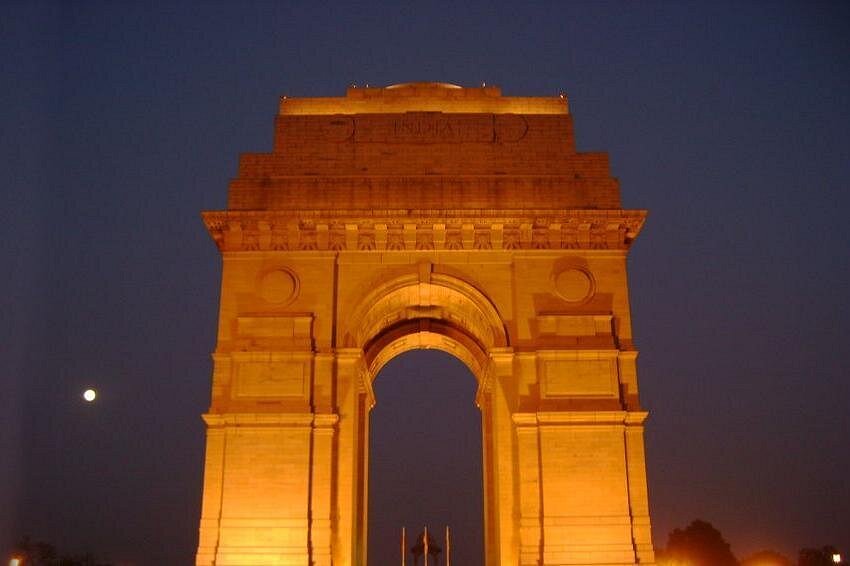
India is arguably the oldest civilization of the world but it is difficult to believe that how such a vast civilization was invaded and ruled by fo

Jammu & Kashmir is moving forward with a new spirit of hope, confidence and ambition. Today, the youth of Kashmir are making their mark in spor


PCP need your support that we may provide you better services: click on donate


"Trial of Pakistani Christian Nation" By Nazir S Bhatti
On demand of our readers, I have decided to release E-Book version of "Trial of Pakistani Christian Nation" on website of PCP which can also be viewed on website of Pakistan Christian Congress www.pakistanchristiancongress.org . You can read chapter wise by clicking tab on left handside of PDF format of E-Book.